


Decoding the 1 kW Solar Panel Price in Poland: Your Investment, Your Energy Future
If you're a homeowner in Poland researching solar energy, you've likely typed "1 kW solar panel price Poland" into your search engine. It's a logical starting point, but the answer you find—often a single, tempting number—only tells a fraction of the story. The real question isn't just about the cost of the panels on your roof; it's about the value of energy independence, long-term savings, and building a resilient home for the future. In Poland's dynamic energy market, with its significant growth in solar capacity, understanding the full picture is crucial. Let's move beyond the basic price tag and explore what a 1 kW system truly entails for your Polish home.
The Real Price Breakdown: More Than Just Panels
When we talk about a "1 kW solar panel system," we refer to a setup with a peak power output of 1 kilowatt under ideal conditions. In Poland, such a system typically consists of 3-4 modern photovoltaic panels. However, the total installed price per kW is a composite of several key components:
- Photovoltaic Panels: The most visible part. Prices vary based on efficiency and technology (monocrystalline, polycrystalline).
- Inverter: The brain of the system, converting DC solar power into usable AC power for your home. Its quality is paramount for system longevity.
- Mounting System & Hardware: The secure, often aluminum structure that anchors your panels to your roof, designed to withstand Polish winters.
- Electrical Components & Cabling: All the safety switches, connectors, and DC/AC cabling that ensure safe operation.
- Installation & Labor: The expertise of certified installers who design, permit, and commission your system correctly.
As of 2024, the total installed price for a standard-quality, grid-tied 1 kW solar system in Poland typically ranges from PLN 4,500 to PLN 6,500. This range accounts for the variables above. It's essential to view quotes through this lens: a significantly lower price might indicate compromises on component quality or installer experience, which can cost you more in the long run.
Beyond Installation: The Lifetime Value Equation
The initial price is just your entry ticket. The true value of your solar investment is calculated over 25+ years. This is where factors like:
| Factor | Impact on Value |
|---|---|
| System Efficiency & Yield | Higher-quality panels produce more kWh per kW installed, especially on less-than-perfect roof angles common in Polish cities. |
| Component Warranty | 25+ year performance warranties on panels and 10+ years on inverters protect your investment. |
| Ongoing Maintenance | Minimal but necessary; keeping panels clean from snow and dust ensures optimal performance. |
From Quote to Kilowatt: A Real Polish Case Study
Let's make this tangible with a real-world example from the Greater Poland (Wielkopolskie) region. The Nowak family, living in a single-family home near Poznań, decided to invest in solar in early 2023. Their primary goal was to offset their consistent 3,200 kWh annual electricity consumption and shield themselves from rising tariffs.
They received three quotes for a 4 kWp system (slightly larger than 1 kW, but the principles scale). The cheapest quote came in at PLN 18,000, focusing on budget panels with a lower efficiency rating. The most comprehensive quote, which they chose, was PLN 22,400. It included:
- High-efficiency monocrystalline panels (21.8% efficiency)
- A reputable hybrid inverter (allowing for future battery addition)
- A detailed shading analysis and optimal positioning plan
- Full regulatory compliance and grid connection support
In its first full year, the system generated 4,150 kWh. With Poland's net-metering scheme (prosument), they offset nearly 100% of their annual bill. At an average electricity price of ~PLN 0.85/kWh, this translates to annual savings of approximately PLN 3,525. Their simple payback period sits at just under 6.5 years, after which the next 19+ years of production will be virtually free energy. This case shows that the right "price" is the one that delivers the highest reliable yield over decades.

Image Source: Unsplash (Representative image of a Polish home with solar)
Maximizing Your Investment: The Role of Smart Energy Storage
Here's a pivotal insight for Polish homeowners: a solar-only system, while valuable, leaves untapped potential on the table. Why? Under net-metering, you "bank" surplus daytime energy with the grid for later use. But the financial compensation for this exported energy is often lower than the retail price you pay to import it at night. This is where the equation evolves from "solar panel price" to "integrated energy system value."
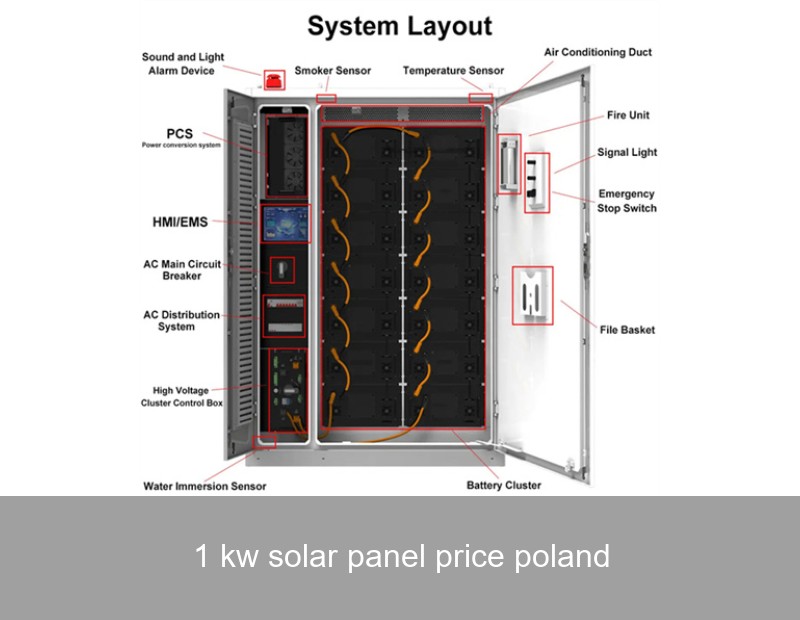
Adding a battery storage system transforms your setup. It allows you to store your own excess solar energy and use it in the evening, dramatically increasing your self-consumption rate—the percentage of your solar energy you use directly. This makes you less dependent on grid price fluctuations and turns your system into a true personal power plant, providing backup power during outages, a feature increasingly valued.
The Highjoule Advantage: Intelligent Storage for the Polish Market
This is where Highjoule's expertise becomes directly relevant to your Polish solar journey. As a global leader in advanced energy storage systems since 2005, we understand that a battery is not just a simple box. It's the intelligent heart of a modern home energy system.
For homeowners in Poland considering a system based on a "1 kW solar panel price," integrating a Highjoule solution from the start—or adding one later—unlocks the next level of energy independence. Our Residential Energy Storage (RES) Series is designed for the European market, with features tailored to climates like Poland's:
- Adaptive Thermal Management: Ensures optimal battery performance and longevity through cold Polish winters and warm summers. Intelligent Energy Management Software (EMS): This is the true differentiator. Our EMS doesn't just store energy; it learns your household patterns, weather forecasts, and electricity tariffs to autonomously decide when to charge from solar, when to discharge to power your home, and when to interact with the grid for maximum economic benefit.
- Scalable & Modular Design: Start with what you need (e.g., 5 kWh) and easily expand capacity as your family's needs or your solar array grows.
- Seamless Hybrid Integration: Our systems are designed to work flawlessly with leading solar inverter brands, making integration into your new or existing solar setup straightforward for your certified installer.
By pairing your solar panels with a Highjoule storage system, you shift the focus from the cost per kilowatt of panels to the value per kilowatt-hour you control. You maximize the utility of every złoty invested in your solar array.

Image Source: Unsplash (Representative image of a home battery storage unit)
Planning for a Smarter System
When you request quotes for your solar installation, ask about including storage readiness or a full Highjoule storage solution. Discuss with your installer how a hybrid inverter (compatible with storage) versus a standard one might affect your initial "1 kW price" and your long-term flexibility. The most future-proof investment is one that gives you control for decades to come.
The Future of Polish Solar: What's Next?
The Polish solar market is maturing rapidly. As initial net-metering agreements will eventually phase towards new models, the economics of high self-consumption will become even more critical. Technologies like smart energy storage, supported by companies with deep expertise like Highjoule, are not just add-ons; they are becoming central to the value proposition of home solar.
So, the next time you ponder the "1 kW solar panel price in Poland," we encourage you to ask a broader set of questions: How can I design a system that gives me the most energy security and financial resilience for the next 25 years? How do I ensure my home is ready for the evolving energy landscape?
Is your primary goal simply to see a lower number on your initial quote, or to achieve the highest possible degree of energy independence for your household in the years ahead?
 Inquiry
 Online Chat