


Understanding the 10 kW Solar Plant Cost in Sweden 2024: Investment, Returns, and Smart Storage
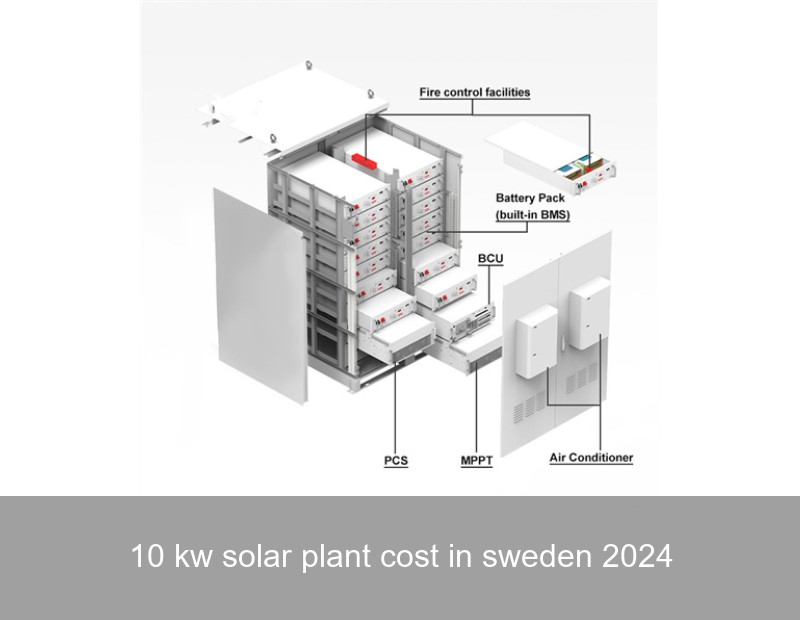
If you're a homeowner or a small business owner in Sweden looking at solar energy in 2024, you've likely asked the key question: what is the real cost of a 10 kW solar plant? While the initial price tag is important, the true story lies in the long-term value, energy independence, and how you can maximize your investment, especially during Sweden's dark winters. This article will break down the 2024 cost components, showcase real savings data, and explain why integrating a smart battery storage system, like those from Highjoule, is becoming an essential part of the modern Swedish solar calculation.
Table of Contents
- 2024 Cost Breakdown for a 10 kW Solar Plant in Sweden
- Beyond Panels: The Critical Role of Energy Storage
- Real-World Case: The Lund Family Home
- The Highjoule Solution: Intelligent Storage for Swedish Conditions
- Navigating Financial Incentives & ROI
- Future-Proofing Your Energy Investment
2024 Cost Breakdown for a 10 kW Solar Plant in Sweden
As of 2024, the total installed cost for a typical 10 kW rooftop solar photovoltaic (PV) system in Sweden ranges between 95,000 SEK to 135,000 SEK (approximately €8,300 - €11,800) before any subsidies. This variation depends on equipment quality, roof complexity, and installer rates. Let's dissect this investment.
| Cost Component | Approximate Share | Details |
|---|---|---|
| Solar Panels & Inverters | 40-50% | High-efficiency monocrystalline panels and a reliable string or micro-inverter system. |
| Mounting System & Electrical Components | 15-20% | Roof-integrated or on-rack mounting, cabling, safety switches. |
| Installation & Labor | 25-35% | Professional installation, grid connection paperwork, and commissioning. |
| Planning & Permits | 5-10% | Costs associated with local municipality permits and grid operator fees. |
It's crucial to get multiple quotes from certified installers. Remember, the cheapest option isn't always the best for long-term performance and warranty support.
Beyond Panels: The Critical Role of Energy Storage
Here's the modern energy reality: a solar-only system captures energy when the sun shines, but your consumption peaks often occur in the morning and evening. Without storage, excess daytime energy is sold back to the grid at a lower price than you buy it for later. This is where the economics shift.
Adding a battery storage system allows you to store your surplus solar energy for self-use, dramatically increasing your energy self-consumption from 30-40% to 70-80% or more. For the Swedish context, with its significant seasonal variation, a robust storage solution is not a luxury; it's the key to year-round resilience and maximizing the utility of your solar plant.

Think of it this way: your solar panels are your energy harvesters, and the battery is your personal energy pantry. Would you grow a summer garden only to sell the harvest at a low price and buy expensive imported food in winter? Probably not. The same logic applies to your electricity.
Real-World Case: The Lund Family Home in Västra Götaland
Let's look at concrete data. The Lund family installed a 10.2 kW solar system with a 10 kWh lithium-ion battery in early 2023.
- System Cost (after Swedish tax deduction): 115,000 SEK for solar + 65,000 SEK for battery = 180,000 SEK total.
- Annual Solar Production: ~9,500 kWh (monitored data).
- Self-Consumption Rate (without battery): Estimated 35%.
- Self-Consumption Rate (with battery): Achieved 82%.
- Annual Electricity Bill Savings: Increased from an estimated 12,000 SEK/year (solar only) to over 21,000 SEK/year (solar + battery).
This case, documented by the Swedish Energy Agency, shows the battery paid for itself in under 7 years, enhancing the overall return on investment for the entire system and providing backup power during grid outages—a valuable benefit.
The Highjoule Solution: Intelligent Storage for Swedish Conditions
This is where Highjoule's expertise becomes directly relevant to your "10 kW solar plant cost in Sweden" project. As a global leader in advanced energy storage since 2005, we understand that a battery is more than just a box of cells. It's an intelligent energy manager.
For a Swedish home with a 10 kW solar array, our Highjoule ResiFlex Pro series is an ideal match. This modular lithium iron phosphate (LFP) battery system is designed for safety, longevity (over 6,000 cycles), and high performance in a range of temperatures. Its integrated energy management system (EMS) doesn't just store energy; it learns your consumption patterns, weather forecasts, and electricity price signals to optimize when to charge, discharge, or hold energy.
Why does this intelligence matter for your investment?
- Maximizes ROI: It automatically prioritizes using cheap stored solar power during expensive peak tariff periods.
- Winter Resilience: The system can be configured to ensure a critical load reserve is always available for essential appliances during long, dark periods or grid instability.
- Seamless Integration: Our systems are designed to work flawlessly with major solar inverter brands, ensuring a plug-and-play experience for your installer.
When calculating your total system cost, considering a Highjoule storage solution means you're investing in a complete energy ecosystem, not just generation. This holistic approach is the standard for modern, efficient homes in Europe and North America.

Navigating Financial Incentives & ROI
Sweden's financial support mechanisms significantly impact the net cost. The primary incentive is the tax deduction for renewable energy production (solcellssubvention), which as of 2024, covers 20% of the labor cost for installation. Furthermore, you can sell excess electricity back to the grid, though prices fluctuate.
The most impactful financial calculation, however, is the reduced payback period when adding storage. While the upfront cost increases, the dramatic reduction in purchased electricity accelerates ROI. A high-quality solar + storage system in Sweden now typically sees a payback period of 8-12 years, with a system lifetime of 25+ years for panels and 15+ years for batteries. This represents decades of nearly free, clean electricity and unparalleled price stability.
For detailed, updated figures on electricity prices and trends, resources like Nord Pool provide authoritative market data.
Future-Proofing Your Energy Investment
Investing in a 10 kW solar plant today is a decision for the next quarter-century. When evaluating costs, consider future-proofing:
- Electric Vehicle (EV) Readiness: Adding an EV is like adding a second home to your energy bill. Your solar-storage system can be sized or later expanded to cover a significant portion of your charging needs.
- Grid Services: Advanced systems like Highjoule's can potentially participate in future grid-balancing programs, creating a potential revenue stream.
- Technology Evolution: Choosing a modular storage system allows you to expand capacity as your family's needs grow, protecting your initial investment.
The conversation around solar cost is evolving from "price per watt installed" to "lifetime cost of energy independence." With the right partner and a system designed for intelligence, not just production, your investment delivers value far beyond the kilowatt-hours.

Given the rapid evolution of energy markets and technology, what specific energy goals—be it total self-sufficiency, backup power security, or EV integration—are most critical for your household as you consider this investment?
 Inquiry
 Online Chat