


The 10 kWh Solar Battery: Your Key to Energy Independence in 2024
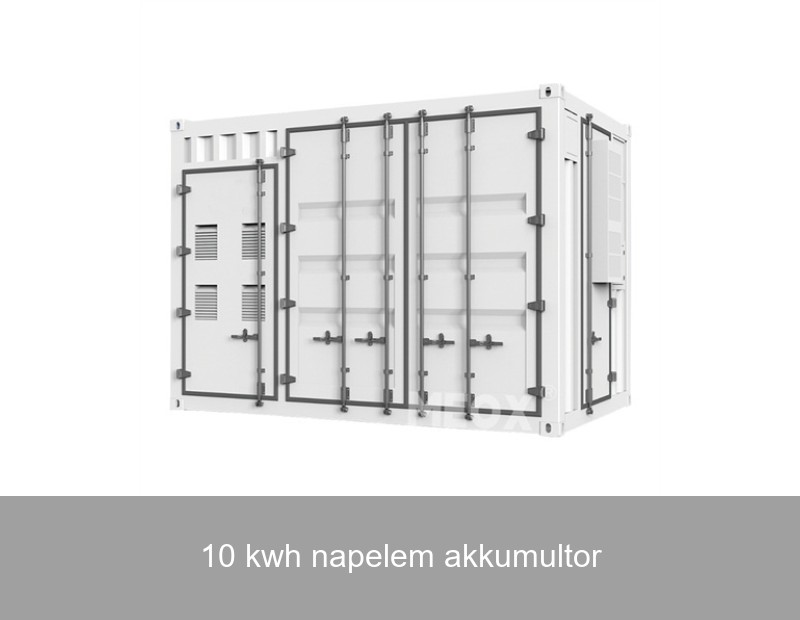
Have you ever watched your electricity meter spin backwards on a sunny afternoon, only to wonder where all that clean energy goes when the clouds roll in or the sun sets? You're not alone. This is the central challenge of solar power: it's intermittent. But what if you could capture that midday surplus and use it precisely when you need it most? Enter the 10 kWh solar battery – the game-changing component that is transforming homes and businesses from passive energy consumers into proactive energy managers. This isn't just about backup power; it's about fundamentally redefining your relationship with the grid, maximizing your renewable investment, and taking a decisive step toward true energy independence.
Table of Contents
- Why 10 kWh? The Sweet Spot for Modern Energy Needs
- Beyond Backup: The Multi-Layered Value of a Solar Battery
- A Real-World Case: The Schmidt Family in Bavaria
- Choosing the Right 10 kWh Battery System: Key Considerations
- Highjoule's Solution: Engineered for Intelligence and Durability
- The Future is Modular and Smart
Why 10 kWh? The Sweet Spot for Modern Energy Needs
Let's break down the numbers. A 10 kilowatt-hour (kWh) battery can deliver 10 kilowatts of power for one hour, 5 kilowatts for two hours, and so on. For the average European or American household consuming between 20-30 kWh per day, a 10 kWh battery is strategically sized. It can typically cover essential loads (refrigeration, lighting, internet, critical appliances) overnight or during a short grid outage. More importantly, it aligns perfectly with the daily generation curve of a standard residential solar array (often 6-10 kWp). It's large enough to store a significant portion of your daytime solar excess but not so large that it becomes cost-prohibitive or underutilized. Think of it as the "Goldilocks" capacity: just right for maximizing self-consumption of solar energy.

Image Source: Unsplash - A typical home setup where a 10kWh battery maximizes solar use.
The Data Behind the Decision
According to the U.S. Department of Energy's Solar Energy Technologies Office, pairing storage with solar can increase the value of solar energy by 30% or more by shifting usage. In Germany, studies by the Fraunhofer Institute for Solar Energy Systems ISE show that for a family home with a 8 kWp PV system, adding a 8-12 kWh battery can increase self-consumption from around 30% to 60-80%. This is the core promise: using more of what you produce.
Beyond Backup: The Multi-Layered Value of a Solar Battery
The immediate thought is often, "Great, I'll have power during a blackout." And that's a fantastic benefit. But the value proposition of a modern 10 kWh napelem akkumulátor (solar battery) extends far beyond emergency backup.
- Maximized Self-Consumption: This is the primary economic driver. Store cheap, self-produced solar energy for use in the high-rate evening hours, slashing your electricity bills.
- Grid Services & Incentives: In many regions, utilities offer programs where your battery can provide grid stability (virtual power plant programs) and earn you credits or revenue.
- Peak Shaving: For businesses or homes on demand-charge tariffs, the battery can discharge during short periods of peak demand, avoiding costly power spikes.
- Future-Proofing: As we move towards time-of-use electricity rates and electric vehicle adoption, having a home energy reservoir becomes increasingly strategic.
A Real-World Case: The Schmidt Family in Bavaria
Let's look at a concrete example. The Schmidt family near Munich installed a 9.8 kWp solar system in 2021. While their summer bills plummeted, they found themselves still drawing heavily from the grid in winter and evenings. In early 2023, they integrated a 10.2 kWh lithium iron phosphate (LFP) battery system.
| Metric | Before Battery (2022) | After Battery (2023) | Change |
|---|---|---|---|
| Annual Grid Import | 3,200 kWh | 850 kWh | -73% |
| Self-Consumption Rate | 35% | 89% | +154% |
| Annual Electricity Cost | €1,150 | €310 | -€840 |
"The system isn't just a battery; it's the brain of our home's energy," says Mr. Schmidt. "The app shows us exactly how energy flows, and we have peace of mind during storms. The investment payback, with the state subsidy, is calculated to be under seven years."
Choosing the Right 10 kWh Battery System: Key Considerations
Not all 10 kWh batteries are created equal. Here are the critical factors to evaluate:
- Battery Chemistry: Lithium Iron Phosphate (LFP) is now the dominant choice for stationary storage. It offers superior safety, longer cycle life (often 6,000+ cycles), and excellent performance without using cobalt or nickel.
- Depth of Discharge (DoD): A high DoD (like 90-100%) means you can use almost the full rated capacity without harming the battery.
- Round-Trip Efficiency: This measures how much energy you get out versus what you put in. Look for figures above 90%.
- Integrated Energy Management System (EMS): The software is as important as the hardware. A smart EMS learns your patterns, reacts to weather forecasts, and can integrate with smart home devices or EV chargers.
- Scalability: Can you easily add more battery modules later if your needs grow (e.g., after buying an EV)?
Highjoule's Solution: Engineered for Intelligence and Durability
At Highjoule, with nearly two decades of experience since 2005, we've engineered our H-ES Series residential battery systems to excel in precisely these areas. Our 10.5 kWh LFP battery module is designed as a building block for energy independence.
What sets the Highjoule H-ES apart is its Adaptive Learning EMS. It doesn't just follow simple schedules; it uses predictive algorithms to optimize charging and discharging based on your historical consumption, real-time solar production, and even local weather data. This ensures you have stored energy reserved for a likely grid outage if a storm is forecast, or it might choose to sell a small surplus to the grid if rates are particularly high.
Our systems are built with a modular design, allowing you to start with a single 10.5 kWh unit and seamlessly stack additional units up to 42 kWh as your energy needs evolve. With a 100% usable capacity, 95% round-trip efficiency, and a warranty covering 10 years or 10,000 cycles, the H-ES Series is built for the long haul. We provide complete solutions, from initial consultation and system design to professional installation and ongoing monitoring via our user-friendly Highjoule Energy Hub platform.

Image Source: Unsplash - Professional installation ensures safety and performance.
The Future is Modular and Smart
The journey towards a decarbonized, resilient energy system is accelerating. The 10 kWh solar battery is at the heart of this transition at the household level. The next evolution, which we are actively developing at Highjoule, is the deeper integration of home storage with electric vehicles (bidirectional charging), community microgrids, and fully automated, AI-driven energy optimization that manages your home's ecosystem as a single, efficient organism.
So, as you consider taking control of your energy future, ask yourself this: What would it mean for you to not just generate your own power, but to truly own your daily energy cycle, insulated from price volatility and grid disruptions?
 Inquiry
 Online Chat