


Demystifying the 100 Ah Battery: Your Guide to Power, Performance, and Smart Energy Storage
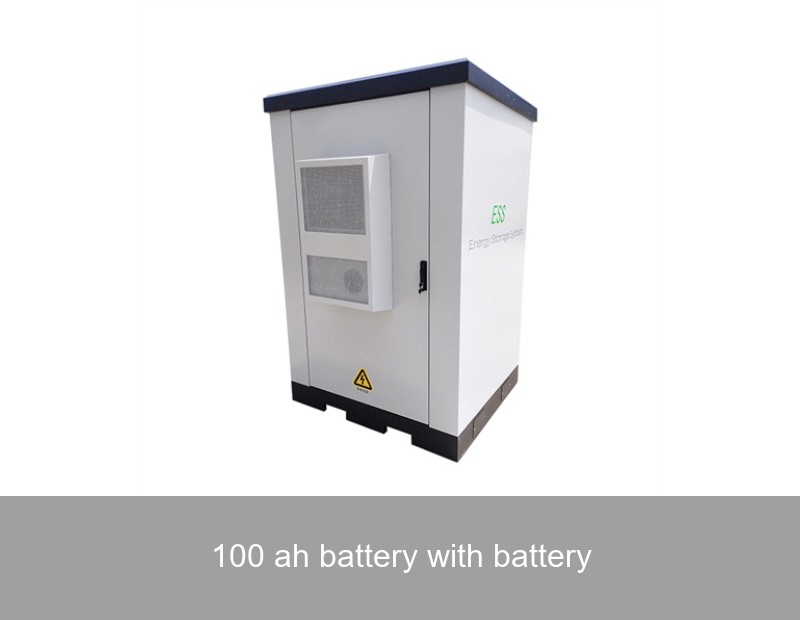
You've likely seen the term "100 Ah battery" pop up everywhere—from RV forums to solar power guides. But what does it really mean for your energy independence? It's more than just a number on a spec sheet. In today's world of rising electricity costs and growing climate consciousness, understanding battery capacity is the first step toward unlocking a resilient, sustainable power solution for your home or business. This deep dive will explore the 100 Ah battery, moving beyond basic specs to how modern, intelligent battery systems like those from Highjoule are revolutionizing energy storage.
Table of Contents
- What Does 100 Ah Really Mean? The Foundation of Capacity
- Beyond the Label: Why Your 100 Ah Battery's Performance Varies
- The Real-World Application: From RVs to Whole-House Backup
- Case Study: The Bavarian Farmhouse – A 100 Ah Reality Check
- The Highjoule Difference: Intelligent Systems, Not Just Batteries
- Choosing Your Perfect Power Solution: Key Questions to Ask
What Does 100 Ah Really Mean? The Foundation of Capacity
Let's break it down. "Ah" stands for Ampere-hour. A 100 Ah battery rating means that, in theory, it can deliver 5 amps of current for 20 hours, 10 amps for 10 hours, or 100 amps for 1 hour before being considered fully discharged. It's a measure of energy capacity, similar to the size of a fuel tank.
However—and this is a crucial point—this is a simplified laboratory rating. Real-world performance is a different story, influenced by battery chemistry, age, temperature, and most importantly, discharge rate. A 100 Ah lead-acid battery might only give you 50-60 Ah of usable power if you don't want to damage it. A modern Lithium Iron Phosphate (LFP) battery, on the other hand, can safely deliver over 90% of that capacity.
Beyond the Label: Why Your 100 Ah Battery's Performance Varies
Picking a battery based solely on its Ah rating is like buying a car based only on horsepower. You need to look under the hood. Here are the key factors that determine real-world performance:
- Chemistry Matters: Traditional lead-acid is heavy and has a shallow depth of discharge (DoD). Lithium-ion, especially LFP, offers longer lifespan, deeper DoD (~90%), and higher efficiency.
- The Depth of Discharge (DoD) Factor: Using 100% of a battery's rated capacity will kill it quickly. Usable capacity is (Ah Rating x DoD). For a 100 Ah LFP battery with 90% DoD, you get a reliable 90 Ah of usable energy.
- System Voltage is Key: A 100 Ah battery at 12V stores 1.2 kWh of energy. The same 100 Ah cell in a 48V system (common in home storage) effectively stores 4.8 kWh. Energy (kWh), not just Ah, is what powers your appliances.
The Chemistry Comparison: A Quick Look
| Chemistry | Typical Cycle Life | Approx. Usable Energy from a "100 Ah" Unit | Best For |
|---|---|---|---|
| Lead-Acid (Flooded) | 300-500 cycles | ~50 Ah (50% DoD) | Budget-conscious, non-daily use |
| AGM | 500-600 cycles | ~60 Ah (60% DoD) | Marine, RV, better performance |
| Lithium Iron Phosphate (LFP) | 3,000-6,000+ cycles | ~90-95 Ah (90-95% DoD) | Daily cycling, solar storage, long-term investment |
The Real-World Application: From RVs to Whole-House Backup
So, what can a 100 Ah LFP battery actually run? Let's contextualize. A 100 Ah, 12V LFP battery holds about 1.2 kWh of usable energy. That could:
- Power a 50W RV refrigerator for about 24 hours.
- Run a 300W laptop and TV setup for 3-4 hours.
- Keep essential LED lights and phone charging operational for days during an outage.
For a modern home, however, energy needs are greater. This is where scalable systems come in. Instead of a single 100 Ah battery, homes and businesses need modular systems that can be stacked to create capacities of 10, 20, or even 30+ kWh. This is the shift from a simple "battery" to an integrated Battery Energy Storage System (BESS).

Image: A modern, modular home battery storage system. Source: Unsplash
Case Study: The Bavarian Farmhouse – A 100 Ah Reality Check
Let's look at a real example from Southern Germany. The Müller family wanted to achieve energy independence for their 180m² farmhouse, complementing their 15 kW rooftop solar array. Their initial research led them to believe that a bank of 12V 100 Ah batteries would suffice.
The Phenomenon: They found that to cover their evening and nighttime load (approx. 10 kWh), they would need over eight 12V 100 Ah LFP batteries wired in series and parallel. This created a complex, space-consuming installation with multiple failure points.
The Data & Solution: After consulting with a Highjoule partner, they opted for a streamlined Highjoule HES Series solution: a single, integrated 48V system with a modular 14.3 kWh capacity. The system's intelligent energy management dynamically prioritizes solar self-consumption, reducing grid reliance by 85%. Crucially, the built-in Battery Management System (BMS) and thermal controls ensure safety and longevity—a stark contrast to managing a DIY bank of individual 100 Ah units.
The Insight: This case highlights that for whole-property solutions, focusing on total energy needs (kWh) and system intelligence is far more critical than the Ah rating of individual cells. The right system simplifies installation, improves safety, and maximizes return on investment.
The Highjoule Difference: Intelligent Systems, Not Just Batteries
At Highjoule, we understand that a battery is just one component of a reliable energy ecosystem. Since 2005, we've evolved from providing advanced battery units to delivering complete, smart energy storage solutions. Our approach moves far beyond the "100 Ah battery" specification to focus on total system performance, safety, and integration.
Our HES (Home Energy Stack) and CIS (Commercial & Industrial Storage) product lines are built with high-density, automotive-grade LFP cells. But the real magic lies in the software and integration. Our systems feature:
- Adaptive AI Management: Algorithms learn your energy consumption patterns to optimize when to store solar energy, when to use it, and when to draw from the grid, maximizing savings.
- Seamless Hybrid Integration: They work flawlessly with most major solar inverters, creating a true plug-and-play experience for installers across Europe and North America.
- Robust Safety Architecture: Multi-layer protection includes cell-level monitoring, active thermal management, and grid-forming capabilities for off-grid resilience.
For applications where modular 48V systems are the ideal fit, our Highjoule PowerCell modules offer a best-in-class energy density and cycle life, providing the reliable building blocks for custom solutions by our network of expert installers.

Image: Advanced monitoring and control are key to modern BESS. Source: Unsplash
Choosing Your Perfect Power Solution: Key Questions to Ask
Ready to move beyond the basic specs? Ask yourself and potential providers these questions:
- What is my daily energy consumption (in kWh), and what are my critical loads during an outage?
- Does the system offer modular scalability so I can add capacity later?
- How does the system's intelligence maximize my solar self-consumption and provide grid services?
- What is the total installed cost per kWh over the system's lifetime, not just the upfront battery price?
By focusing on these questions, you shift the conversation from purchasing a commodity component to investing in a long-term energy strategy.
Want to See the Math for Your Home?
Calculating your exact needs is the first step. While a single 100 Ah battery might be perfect for a cabin or a fishing boat, your home's needs are unique. How many kilowatt-hours do you need to cover your essential loads for a comfortable evening or a brief grid outage? The answer will define the scale and intelligence of the system you require.
To dive deeper into the technical standards and safety considerations behind modern battery storage, you can review resources from the U.S. Department of Energy and the International Energy Agency (IEA).
What energy challenge are you hoping to solve—is it achieving true energy independence, providing backup for critical home office equipment, or simply reducing your next electricity bill? The path to your solution starts with the right questions.
 Inquiry
 Online Chat