


Unlocking Energy Independence: The Rise of Battery Energy Storage Systems in the Philippines
Imagine a hot, humid afternoon in Manila. The air conditioners are humming, businesses are operating at full tilt, and suddenly, the power flickers and dies. For many in the Philippines, this isn't just an inconvenience; it's a regular disruption with real economic costs. But what if there was a way to not just weather these outages but to fundamentally change how energy is used and stored? This is where the Battery Energy Storage System (BESS) steps in, emerging as a game-changing solution for the archipelago's unique energy challenges. From stabilizing the grid in Metro Manila to powering off-grid island communities, BESS technology is paving the way for a more resilient and sustainable energy future for the Philippines.
Table of Contents
- The Philippine Energy Puzzle: High Costs and Unreliable Supply
- What is a Battery Energy Storage System (BESS)?
- Why the Philippines is the Perfect Candidate for BESS
- BESS in Action: A Philippine Case Study
- Highjoule's Role: Tailored BESS Solutions for the Philippine Market
- The Future Outlook and Your Next Step
The Philippine Energy Puzzle: High Costs and Unreliable Supply
Let's talk numbers, because they tell a compelling story. The Philippines has some of the highest electricity rates in Southeast Asia. According to a 2023 report from the International Energy Agency (IEA), the country's reliance on imported fossil fuels for power generation is a primary cost driver. Combine this with a geographically dispersed island grid that is vulnerable to natural disasters, and you have a system prone to instability and frequent power outages, locally known as "brownouts."
This phenomenon isn't just about comfort; it directly impacts business productivity, healthcare services, and overall economic growth. The need for a buffer—a shock absorber for the grid—has never been more critical.

Solar potential in the Philippines is immense, but integrating it smoothly requires advanced storage. (Image credit: Unsplash)
What is a Battery Energy Storage System (BESS)?
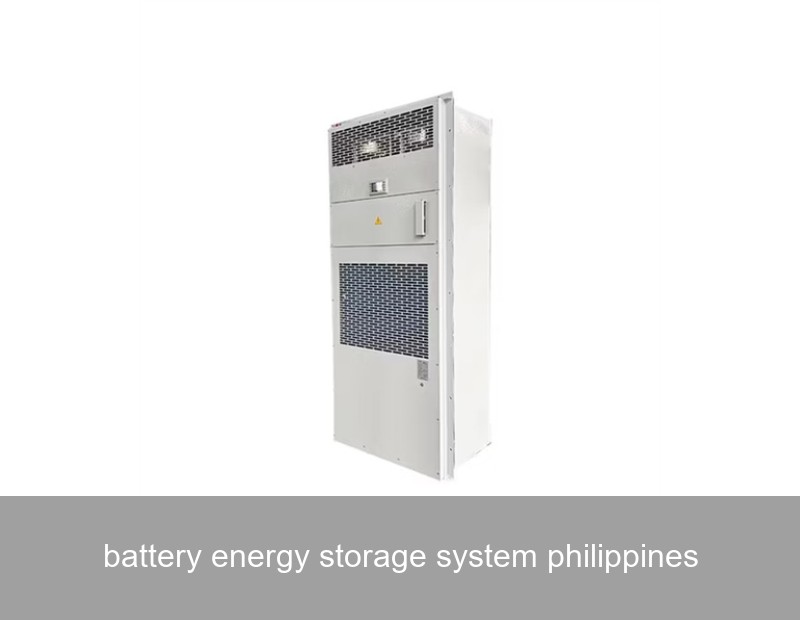
In simple terms, think of a BESS as a giant, smart rechargeable battery for homes, businesses, or even the entire power grid. But it's far more than just a battery pack. A modern BESS is an integrated system comprising:
- Battery Cells: Typically lithium-ion for their high efficiency and declining cost, arranged into modules and racks.
- Power Conversion System (PCS): The "brain" that converts between AC (grid power) and DC (battery power).
- Energy Management System (EMS): The intelligent software that decides when to charge, store, or discharge energy based on signals like electricity price, grid demand, or renewable output.
- Thermal Management & Safety Systems: Crucial components, especially in a tropical climate, to ensure optimal performance and safety.
Its core functions are energy time-shifting (store solar power for use at night), frequency regulation (keeping the grid's heartbeat stable), and backup power (providing instant electricity during outages).
Why the Philippines is the Perfect Candidate for BESS
The synergy between the Philippines' needs and BESS capabilities is remarkable. Here’s why:
| Challenge | How BESS Provides the Solution |
|---|---|
| High Solar & Wind Potential | BESS stores excess renewable energy generated during sunny/windy periods, solving intermittency and allowing for higher clean energy penetration. |
| Fragile Grid Infrastructure | Provides fast frequency response and voltage support, acting as a stabilizer to prevent cascading outages and improve power quality. |
| High Peak Demand Charges | Discharges during expensive peak hours, slashing demand charges for commercial & industrial (C&I) users—a major portion of their electricity bill. |
| Frequent Natural Disasters | Offers critical backup power for essential services (hospitals, evacuation centers) and enables faster grid recovery post-typhoon or earthquake. |
BESS in Action: A Philippine Case Study
Theory is good, but real-world results are better. Let's look at a landmark project. In 2022, a major shopping mall operator in Luzon partnered with a global technology provider to install a 2.5 MW / 2.5 MWh grid-tied BESS at one of its largest complexes.
The Phenomenon: The mall faced crippling peak demand charges and wanted to reduce its carbon footprint by using more of its rooftop solar power.
The Data & Solution: The BESS was programmed to charge during off-peak hours (or from excess solar) and discharge during the daily 2-4 PM peak demand window. The system's EMS seamlessly managed this cycle.
The Result (The Case): Within the first year of operation, the project achieved:
- A 15% reduction in peak demand charges, translating to significant monthly savings.
- Increased on-site consumption of solar energy by over 20%, reducing reliance on the grid.
- Enhanced power quality within the mall, protecting sensitive electronic equipment.
This case, documented in part by the Asian Development Bank's energy project reports, exemplifies the tangible dual benefit of BESS: economic savings and grid decarbonization.
Highjoule's Role: Tailored BESS Solutions for the Philippine Market
As a global leader with nearly two decades of experience, Highjoule doesn't believe in one-size-fits-all solutions. The Philippine market, with its specific climate, grid codes, and economic drivers, requires a nuanced approach. That's where our expertise comes in.
For our Filipino partners—be it a industrial plant in CALABARZON, a resort in Palawan, or a utility-scale solar farm—we provide intelligent, efficient, and sustainable power solutions built around our core BESS technology:
- Climate-Adapted Design: Our containerized and modular systems feature advanced liquid cooling thermal management, essential for maintaining battery life and performance in high heat and humidity.
- Advanced EMS Intelligence: Our proprietary EMS can be configured for multiple revenue streams or savings: peak shaving, solar self-consumption optimization, and even participating in future grid ancillary services markets.
- End-to-End Service: From initial feasibility studies and system design to commissioning, maintenance, and remote monitoring, Highjoule provides a full partnership. We ensure our systems integrate flawlessly with existing solar PV installations or operate as standalone grid support.
Our products are designed for the realities of the Philippine energy landscape, helping businesses achieve energy independence and operational resilience.

Professional maintenance and monitoring are key to long-term BESS performance. (Image credit: Unsplash)
The Future Outlook and Your Next Step
The momentum for BESS in the Philippines is building. Government policies are increasingly supportive, and the economic case becomes stronger as battery costs continue to fall. We are moving beyond seeing storage as just backup power, to recognizing it as the essential enabling technology for a modern, renewable-powered grid.
For a factory manager tired of unpredictable energy costs, a developer planning a new eco-resort, or a local utility looking to defer costly grid upgrades, the question is no longer "if" but "how and when" to integrate a Battery Energy Storage System.
What specific energy challenge—be it reliability, cost, or sustainability—is your business or community facing right now, and how could a tailored storage solution transform that challenge into an opportunity?
 Inquiry
 Online Chat