


Understanding 100 Ah Energy Storage Cabinet Battery Price: A Smart Buyer's Guide
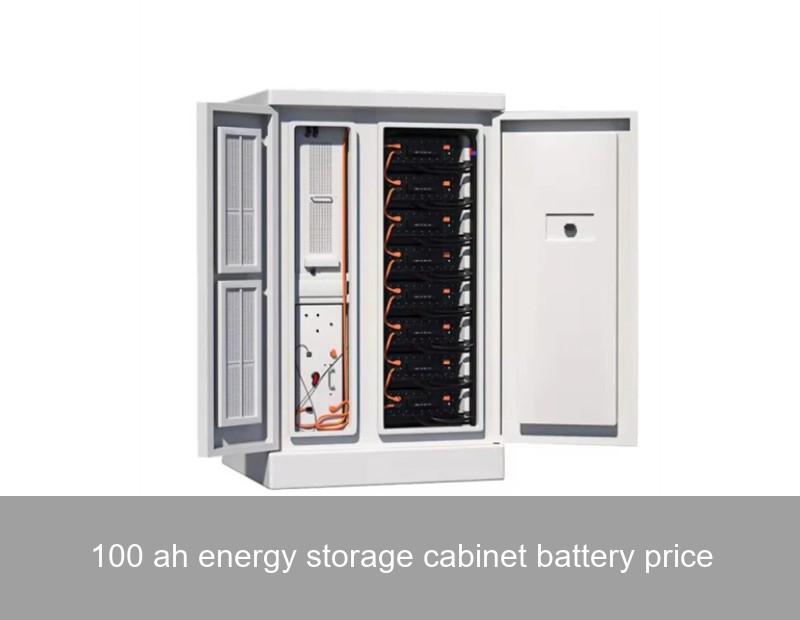
If you're researching energy storage for your business, home, or community project, you've likely encountered the term "100 Ah energy storage cabinet." More importantly, you're probably trying to decipher the 100 ah energy storage cabinet battery price and what truly drives its value. The price tag you see is more than just a number; it's a reflection of technology, safety, longevity, and intelligent engineering. As energy costs fluctuate and grid reliability becomes a growing concern, especially in Europe and the US, making an informed investment in storage is crucial. Let's demystify the factors behind the cost and explore how to evaluate a system that delivers genuine, long-term returns.
Table of Contents
- Key Factors Influencing 100 Ah Cabinet Battery Price
- Looking Beyond the Sticker Price: Total Cost of Ownership
- Why Battery Cell Technology is a Major Price Driver
- Real-World Impact: A Commercial Case Study from Germany
- The Highjoule Approach: Engineered for Value and Performance
- Making the Right Choice for Your Needs
Key Factors Influencing 100 Ah Cabinet Battery Price
You might find a range of prices for what seems to be the same product: a cabinet housing a 100-ampere-hour (Ah) battery. Why the disparity? The cabinet itself is just the tip of the iceberg. The final 100 ah energy storage cabinet battery price is a composite of several critical components:
- Battery Cell Chemistry: This is the heart of the cost. Lithium Iron Phosphate (LFP) cells, known for safety and long cycle life, have a different cost structure than older lithium-ion chemistries. LFP is now the dominant choice for stationary storage due to its stability and lifespan.
- Battery Management System (BMS): Think of this as the brain of the system. A high-quality, sophisticated BMS monitors each cell for voltage, temperature, and state of charge. It ensures safety, prevents overcharging/discharging, and maximizes battery life. A cheaper, less capable BMS is a significant risk and hidden cost.
- Power Conversion System (PCS): This includes the inverter and charger that convert DC battery power to AC for your building and vice-versa. Its efficiency rating (e.g., 97% vs. 94%) directly impacts how much stored energy you actually get to use.
- Thermal Management: A proper cooling/heating system is non-negotiable. Batteries perform best within a specific temperature range. Passive cooling might be cheaper upfront, but active liquid or air cooling maintains optimal temperature, ensuring performance in heatwaves or cold snaps and prolonging lifespan.
- Scalability & Integration: Can you easily add more cabinets later? Is the system designed for seamless integration with solar PV, generators, and grid services? This modularity and intelligence add value that transcends the base price.

Image Source: Unsplash. A well-engineered cabinet's value lies in its integrated components, not just the battery cells.
Looking Beyond the Sticker Price: Total Cost of Ownership
Focusing solely on the initial purchase price is the most common mistake in energy storage. The true metric is Levelized Cost of Storage (LCOS). LCOS accounts for all costs over the system's life: capital investment, installation, operation, maintenance, and eventual replacement, divided by the total energy delivered.
Here’s a simplified comparison:
| Cost Factor | Lower Initial-Price System | Higher Initial-Price, Quality System |
|---|---|---|
| Initial Purchase Price | Lower | Higher |
| Warranted Cycle Life | 3,500 cycles | 6,000+ cycles |
| Round-Trip Efficiency | 92% | 96% |
| Degradation after 10 years | 40% capacity loss | 20% capacity loss |
| Estimated LCOS (per kWh) | $0.18 | $0.12 |
As the table shows, the system with a higher upfront cost often delivers a significantly lower cost per kilowatt-hour over its lifetime, making it the more economical choice in the long run.
Why Battery Cell Technology is a Major Price Driver
LFP chemistry has become the industry benchmark for good reason. It offers a superior combination of safety (it's much more thermally stable), longevity (typically double the cycle life of older NMC chemistries), and maintains strong performance without cobalt. While LFP cells might have a slightly higher initial cost per cell, their TCO is lower. When evaluating a 100 ah energy storage cabinet battery price, insist on knowing the exact cell chemistry and the manufacturer's warranty backing it. Reputable manufacturers provide warranties guaranteeing a certain capacity (e.g., 70%) after a specified number of cycles or years.
Real-World Impact: A Commercial Case Study from Germany
Let's move from theory to practice. A medium-sized bakery in Bavaria, Germany, faced rising electricity costs and wanted to maximize self-consumption from their rooftop solar. Their goal: reduce grid dependence and manage peak demand charges.
- Challenge: High afternoon energy consumption that exceeded solar production, leading to expensive grid imports.
- Solution: Installation of a modular, scalable 100 Ah-class energy storage cabinet system integrated with their existing solar PV.
- Outcome & Data: The system stores excess solar energy generated midday for use during the late afternoon production peak. In the first year, the bakery achieved:
- 68% increase in solar self-consumption.
- 22% reduction in overall grid electricity costs.
- Peak demand charges reduced by an estimated 30%.
The payback period, factoring in local incentives, was calculated at under 7 years. For the bakery, the 100 ah energy storage cabinet battery price was an investment in predictable operational costs and enhanced sustainability, not just an expense. (Fraunhofer ISE, a leading energy research institute, provides extensive data on storage system economics.)
The Highjoule Approach: Engineered for Value and Performance
At Highjoule, with nearly two decades of experience since 2005, we engineer our energy storage solutions with the Total Cost of Ownership as the guiding principle. Our H-Cube Commercial Series cabinets are a prime example of this philosophy applied to the 100 Ah storage segment.
We don't just sell a battery in a box; we provide an intelligent, integrated power solution. The H-Cube cabinet is built around top-grade LFP cells, coupled with our proprietary, multi-layer BMS that offers cell-level monitoring and active balancing. It features an integrated high-efficiency hybrid inverter (up to 97.5% round-trip efficiency) and an advanced liquid cooling system that ensures consistent performance from -20°C to 50°C.
What truly differentiates Highjoule is our Energy Management System (EMS) software. This smart platform allows users to tailor the system's operation to their specific goals—maximizing self-consumption, participating in demand response programs, or providing backup power. For our commercial and industrial clients in Europe and the US, this intelligence transforms a storage asset into a revenue-generating or cost-avoidance tool. The initial 100 ah energy storage cabinet battery price encompasses this full ecosystem of hardware and software, designed to deliver a lower LCOS and peace of mind.

Image Source: Unsplash. Modern energy storage cabinets like Highjoule's H-Cube series are designed for safe, scalable, and intelligent operation.
Making the Right Choice for Your Needs
So, how do you navigate this complex landscape? Start by asking the right questions beyond just the price per cabinet:
- What is the specific cell chemistry and who is the cell manufacturer?
- What is the detailed warranty (cycle life, years, end-of-warranty capacity)?
- What is the actual round-trip efficiency under real operating conditions?
- Is the system scalable, and what are the future expansion costs?
- Does the provider offer advanced software for energy management and monitoring?
Consult with experts who can analyze your energy load profile, solar production, and local utility rates. The U.S. Department of Energy and the European Commission's PVGIS tool are excellent public resources for understanding solar and storage potential.
Your Next Step
The conversation about energy storage is shifting from "What does it cost?" to "What is it worth?" Given your specific energy challenges—whether it's peak shaving, backup power, or integrating more renewables—what would a reduction in your energy costs and an increase in resilience be worth to your operation over the next 15 years?
 Inquiry
 Online Chat