


Beyond the Roar: Why a 100 kVA Generator Diesel is No Longer Your Only Power Solution
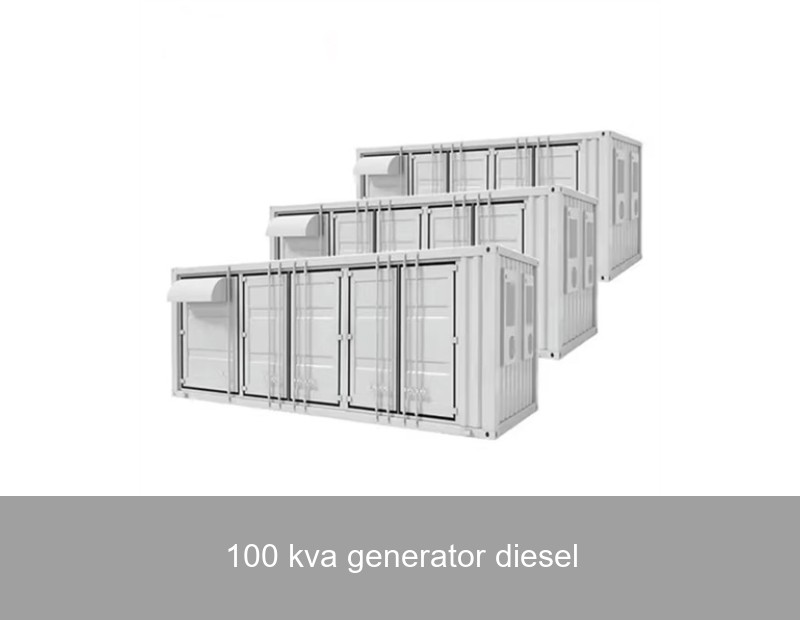
For decades, the distinct rumble of a 100 kVA generator diesel has been the universal soundtrack for backup power. From construction sites to retail stores, it's been the reliable, go-to workhorse. But as energy costs soar and sustainability moves from a buzzword to a boardroom imperative, businesses are asking: is there a smarter, cleaner, and more cost-effective way to ensure power resilience? The answer is a resounding yes. The era of the diesel generator as the default choice is evolving, thanks to advanced energy storage systems that offer silent, emission-free, and intelligent power management.
Table of Contents
- The Shifting Energy Landscape
- The Real Cost of a 100 kVA Diesel Generator
- The Silent Alternative: Battery Energy Storage Systems (BESS)
- Case Study: A European Supermarket's Transition
- The Best of Both Worlds: The Hybrid Power Solution
- How Highjoule Enables the Intelligent Power Transition
- What's Your Power Resilience Strategy?
The Shifting Energy Landscape: More Than Just Backup
Today, power needs are complex. It's not just about keeping the lights on during an outage. For commercial and industrial operations in Europe and the U.S., it's about managing peak demand charges—those hefty fees utilities impose for your highest power draw periods. It's about integrating on-site renewables like solar PV. And increasingly, it's about meeting strict corporate carbon reduction goals and adhering to local emissions regulations, which are particularly stringent in urban areas and across the European Union.
A traditional 100 kVA diesel generator addresses only one piece of this puzzle: emergency backup. It sits idle over 99% of the time, yet requires maintenance and fuel cycling. When called upon, it emits NOx, particulate matter, and CO2, and its fuel supply can be vulnerable. This reactive model is being superseded by a proactive, intelligent approach to energy management.
The Real Cost of a 100 kVA Diesel Generator
Let's break down the total cost of ownership (TCO) beyond the initial purchase price. Understanding this is key for any financial decision-maker.
| Cost Factor | Description | Estimated Annual Impact* |
|---|---|---|
| Fuel | Diesel consumption at full load (~27 L/hr). Costs fluctuate wildly. | $5,000 - $15,000+ |
| Maintenance | Regular oil changes, filter replacements, coolant, and major overhauls. | $1,500 - $3,000 |
| Standby Costs | Fuel stabilization, testing, and potential tank leasing. | $500 - $1,500 |
| Environmental & Compliance | Potential carbon taxes, emissions permits, and noise regulation fines. | Varies by region (increasing) |
| Peak Demand Charges | A diesel generator does nothing to reduce these. This is a major missed opportunity. | Often $10,000s annually (savings potential) |
*Estimates based on typical commercial usage patterns in US/EU markets. Actual costs vary.
The financial picture becomes clear: the operational expenses are substantial and unpredictable. More importantly, the generator is a cost center that doesn't actively contribute to reducing your main utility bill.
The Silent Alternative: Battery Energy Storage Systems (BESS)
This is where modern Battery Energy Storage Systems (BESS) enter the stage. Think of a BESS as a giant, intelligent battery bank for your business. A system sized to match the output of a 100 kVA generator diesel (often a 100 kW / 200+ kWh battery system) provides numerous advantages:
- Peak Shaving: The system automatically discharges stored energy during your building's high-usage periods, slashing peak demand charges. This is where the fastest ROI is often achieved.
- Solar Self-Consumption: Store excess solar energy produced during the day for use at night, maximizing your renewable investment.
- Uninterruptible Power Supply (UPS): Provides seamless, instantaneous backup power during an outage—no startup delay, completely silent.
- Emission-Free Operation: Zero on-site emissions, supporting sustainability targets and improving air quality for workers and communities.
- Grid Services: In some markets, systems can generate revenue by providing grid stability services.

Credit: A modern containerized BESS unit. Image from Unsplash.
Case Study: A European Supermarket Chain's Transition
Let's look at a real-world example. A major supermarket chain in Germany operated multiple stores with aging 100 kVA diesel generators for backup. Their goals were to reduce emissions, cut energy costs, and future-proof operations.
The Solution: They partnered with Highjoule to deploy a standardized "Storage-as-a-Service" model at several locations. Each site received a Highjoule HI-Cube commercial BESS, sized at 120 kW / 240 kWh, integrated with the store's existing electrical infrastructure.
The Data-Driven Results (for a single store, annualized):
- Peak Demand Reduction: 28%, saving over €8,200 per year on grid charges.
- Backup Power: Provided full critical load coverage (refrigeration, lighting, POS) for over 4 hours during grid outages.
- Diesel Displacement: The diesel generator was relegated to emergency-only use, reducing runtime by over 90% and saving 4,500 liters of diesel annually.
- CO2 Reduction: Over 12 tonnes of on-site CO2 emissions eliminated.
- ROI: Achieved solely through demand charge savings in under 5 years, with the system having a projected lifespan of 15+ years.
This case illustrates the multi-faceted value proposition. The BESS wasn't just a backup; it became an active financial asset. (For more on EU energy trends, see the International Renewable Energy Agency).
The Best of Both Worlds: The Hybrid Power Solution
We understand that for some mission-critical applications, absolute redundancy is non-negotiable. This is where Highjoule's expertise in hybrid power systems shines. Instead of an either-or choice, we design integrated solutions where a BESS is the primary backup and grid-buffer, paired with a significantly downsized (and now rarely used) diesel generator for extended backup coverage.
Benefits of this architecture:
- Reduced Generator Size & Runtime: You might only need a 50 kVA generator instead of a 100 kVA unit, as the battery handles instantaneous load pickup and short outages.
- Fuel Savings & Resilience: The generator only starts for prolonged outages, conserving fuel and extending its maintenance intervals.
- Enhanced Sustainability: The system dramatically cuts emissions while maintaining ultimate reliability.
How Highjoule Enables the Intelligent Power Transition
As a global leader in advanced energy storage since 2005, Highjoule is at the forefront of this shift. We don't just sell batteries; we provide intelligent, sustainable power solutions tailored for commercial, industrial, and microgrid applications.
Our flagship product for this scale is the Highjoule HI-Cube Commercial. This modular, containerized BESS is engineered to be the robust, smart alternative or complement to traditional diesel generators.
- Scalable Power (50 kW - 1 MW+): Easily matches and exceeds the output of a standard 100 kVA generator diesel.
- Advanced Battery Management: Built with lithium iron phosphate (LFP) chemistry for safety, longevity, and high cycle life.
- Intelligent Energy Management System (EMS): The brain of the system. Our AI-driven EMS automatically optimizes for cost savings, prioritizing peak shaving, solar storage, and backup readiness based on your tariffs and consumption patterns.
- Seamless Integration: Designed to integrate with existing generators, solar arrays, and grid connections, providing a unified control platform.
Our services encompass everything from initial feasibility studies and financial modeling to system design, installation, and ongoing remote monitoring via our Highjoule Horizon platform. We ensure your transition to smarter power is smooth and profitable. (Learn about battery safety standards from a source like UL Solutions).

Credit: Centralized control is key to modern energy management. Image from Unsplash.
What's Your Power Resilience Strategy?
The question for business leaders and facility managers is no longer simply "Do we need a backup generator?" The modern question is: "How can we build a resilient, cost-effective, and sustainable power infrastructure that supports our financial and environmental goals?"
Is your organization ready to analyze how a intelligent Battery Energy Storage System could reduce your operational costs, enhance your sustainability profile, and provide cleaner, quieter backup power than a standalone 100 kVA generator diesel? What would the financial and environmental impact be for your next facility upgrade or when your current generator reaches end-of-life?
 Inquiry
 Online Chat