


Unlocking Energy Independence: A Deep Dive into the 100 kWh per Day Solar System
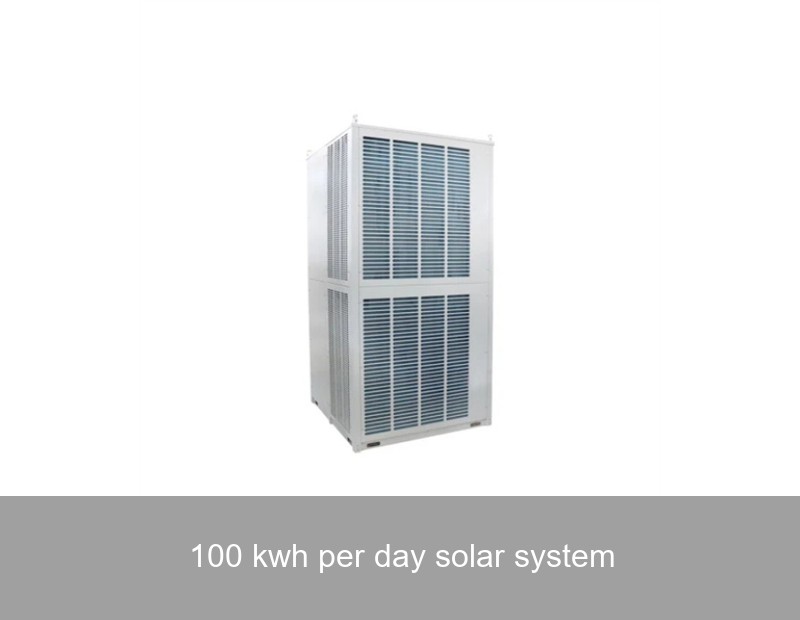
Imagine your business or property generating enough clean electricity daily to power several average American homes—all from the sun. That's the reality and promise of a 100 kWh per day solar system. For commercial enterprises, large estates, agricultural operations, or small industrial facilities, this scale of solar isn't just about going green; it's a strategic move toward financial predictability and operational resilience. But what does such a system truly entail, and is it the right fit for your ambitious energy goals? Let's demystify the technology, economics, and real-world impact of harnessing this level of solar power.
Who Needs This Much Power? The Reality of High-Energy Demands
The concept of a 100 kWh daily output can seem abstract. To put it in perspective, the average U.S. residential utility customer consumes about 29 kWh per day. So, a system of this magnitude typically serves entities with significantly higher baseloads. Think beyond the residential scale.
- Commercial Businesses: Retail stores, restaurants, small manufacturing workshops, and car washes with extended operating hours and high-power equipment.
- Agricultural Operations: Farms with refrigeration, irrigation pumps, ventilation systems, and processing facilities that run day and night.
- Community & Multi-Family Housing: Apartment complexes or homeowner associations aiming to power common areas and reduce individual tenant bills.
- Small Industrial Facilities: Light manufacturing, warehouses with extensive cooling/heating, and data server rooms.
The common thread isn't just high consumption; it's the desire to transform a major, volatile operational cost—the electricity bill—into a fixed, manageable investment. The phenomenon here is the shift from being a passive ratepayer to an active energy producer.
Designing for 100 kWh Daily: It's More Than Just Panel Count
You might be thinking, "How many solar panels do I need for a 100 kWh per day solar system?" That's the right starting question, but the answer is location and technology-dependent. A simple calculation often used is: Daily kWh needed ÷ Peak Sun Hours ÷ System Efficiency = Required kW of panels.
For example, in sunny Southern California averaging 5.5 peak sun hours, you'd need roughly: 100 kWh / 5.5 hours / 0.80 (efficiency factor) ≈ 22.7 kW of solar panels. That could be around 50-60 high-efficiency panels. However, in Germany, with an average of 3 peak sun hours, the required system size jumps to nearly 42 kW. This geographical variance is crucial for planning in our key markets of Europe and the U.S.
| Location (Avg. Peak Sun Hours) | Estimated Solar Array Size Needed | Approx. Number of Premium Panels |
|---|---|---|
| Arizona, USA (6.5 hrs) | ~19 kW | 45-50 |
| Northern Germany (2.8 hrs) | ~45 kW | 110-120 |
| Italy (4.5 hrs) | ~28 kW | 65-70 |
But here's the critical insight: the solar array is only half the story. The sun doesn't shine at night, and consumption doesn't stop. This mismatch between generation and usage patterns is the central challenge a modern system must solve.

Image: A large-scale commercial solar installation. Source: Unsplash (License-free, for illustrative purposes)
Beyond Solar Panels: The Critical Role of Energy Storage
This is where the conversation evolves from a simple solar installation to a comprehensive solar-plus-storage energy system. A 100 kWh per day solar system without storage often means exporting a large surplus to the grid during the day and buying expensive power back at night. With changing net metering policies in many U.S. states and Europe, the financial return on exported energy is decreasing.
The logical step is to store your excess daytime energy for use in the evening, at night, or during grid outages. For a 100 kWh daily generation profile, you wouldn't necessarily need a 100 kWh battery; you size the battery bank based on your specific nighttime or backup load. A typical setup might involve a 40-60 kWh battery system that covers critical evening loads and provides full backup for essential circuits.
This integration is not trivial. It requires an intelligent brain: an advanced inverter and energy management system (EMS) that seamlessly orchestrates solar production, battery charging/discharging, grid interaction, and load management. This ensures maximum self-consumption, protects your equipment, and optimizes every kilowatt-hour for cost savings.
The Highjoule Solution: Intelligent Systems for Maximum ROI
At Highjoule, we've specialized in this exact challenge since 2005. We understand that a 100 kWh per day solar system is a significant capital investment, and our goal is to maximize its return and reliability. Our approach centers on our HPS (Highjoule Power System) series, specifically designed for commercial and industrial applications.
Our HPS integrates high-density lithium-ion battery storage with a suite of bi-directional inverters and our proprietary Adaptive Energy OS. What does this mean for you?
- Peak Shaving: The system automatically uses stored solar energy during periods of high grid electricity rates, dramatically reducing demand charges—a major component of commercial bills.
- Enhanced Resilience: In the event of a grid outage, the transition to backup power is seamless and instantaneous, keeping your operations running. This is vital for facilities with refrigeration, security systems, or critical processes.
- Intelligent Forecasting: Our EMS can connect to weather forecasts and your energy usage patterns, pre-charging the battery system before a cloudy day or a predicted peak rate period.
- Scalable Design: Starting with a 100 kWh per day solar foundation, our modular battery cabinets allow you to easily expand storage capacity as your needs or budget grow.
We don't just sell hardware; we provide a complete turnkey energy solution—from initial site assessment and financial modeling to professional installation, grid interconnection support, and 24/7 system monitoring.
A Real-World Case Study: From Grid Dependency to Energy Sovereignty
Let's ground this in data. Consider a mid-sized dairy farm in Bavaria, Germany. The operation had a consistent daily load of 85-90 kWh, running milking machines, cooling tanks, and facility lighting around the clock. Their grid electricity costs had risen by over 35% in three years, squeezing profitability.
The Challenge: High, volatile energy costs and a need for uninterrupted power for refrigeration.
The Highjoule Solution: A 38 kWp solar array (estimated 105 kWh/day in summer, 40 kWh/day in winter) paired with a Highjoule HPS-50 battery storage system (50 kWh usable capacity). The system was configured for maximum self-consumption and backup priority for the milk cooling tanks.
The Results (12-month period):
- Grid Independence: Achieved an average self-consumption rate of 78%, reducing grid purchases by over 70%.
- Cost Savings: Annual electricity bill reduced by €8,200, projecting a payback period of under 7 years.
- Resilience: Experienced two grid outages (total 5 hours). The cooling tanks and essential farm operations continued without interruption.
- Carbon Impact: Avoided an estimated 18.5 tonnes of CO2 emissions annually.
This case exemplifies the tangible transformation: the farm moved from a cost center mentality to an energy-asset mentality, gaining control and predictability.

Image: A modern, cabinet-based battery energy storage system. Source: Unsplash (License-free, for illustrative purposes)
Is a 100 kWh per Day Solar System Right for You? Key Considerations
Embarking on such a project requires careful evaluation. Here are the critical questions to ask:
- Roof or Ground Space: Do you have sufficient, unshaded space (approximately 1,200-2,500 sq. ft. depending on panel efficiency) for the array?
- Energy Usage Profile: Analyze your utility bills. Is your daily consumption consistently in the 70-150 kWh range? Do you have high demand charges?
- Local Policy & Incentives: What are the net metering or feed-in-tariff rules? Are there substantial federal, state, or local tax credits or grants (like the U.S. ITC or European Union funding programs) available?
- Long-Term Goals: Are you seeking cost reduction, sustainability targets, backup power, or a combination?
This is where expert consultation is invaluable. A quality provider will not just quote a system but will conduct a detailed analysis of your load, site, and financial objectives.
Your Next Step Toward Energy Leadership
The journey to generating 100 kWh of clean power daily is a significant step in operational maturity. It represents a commitment to sustainability, fiscal responsibility, and resilience. With over 18 years of experience powering businesses and communities across Europe and North America, Highjoule is poised to be your guide and partner.
We invite you to reflect on this: If your current energy costs are a predictable line item you simply accept, what would your financial and operational landscape look like if you could lock in a lower, fixed cost for your power for the next 25+ years, while building a shield against grid instability?
Ready to model your potential savings and explore a tailored design for your property? Contact Highjoule's energy consultants today for a complimentary, data-driven feasibility assessment.
 Inquiry
 Online Chat