


Finding a "Solar Power Station Near Me": Your Guide to Local, Resilient Energy
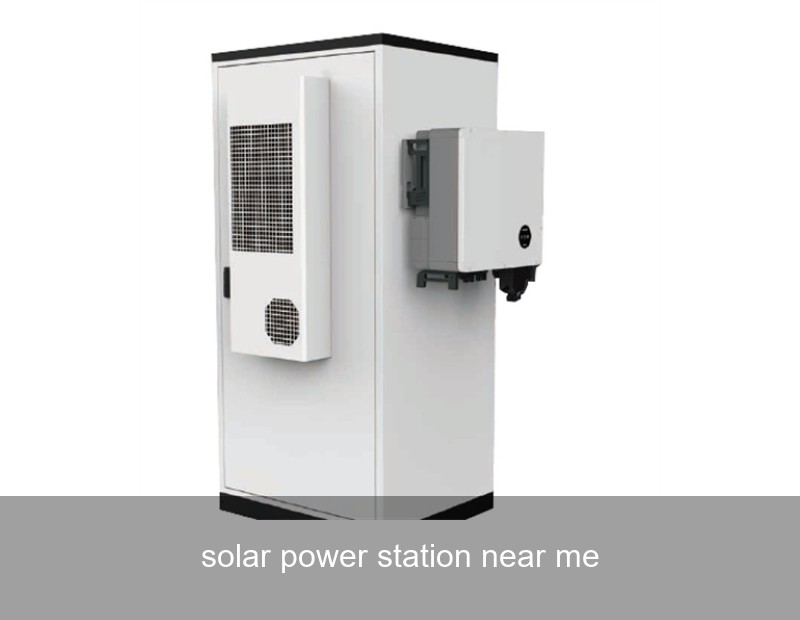
So, you've typed "solar power station near me" into a search engine. Perhaps you're tired of volatile electricity bills, concerned about grid reliability, or simply want to reduce your carbon footprint. That search term tells a powerful story—it's not just about buying solar panels. It's about seeking local energy sovereignty. You're looking for a reliable, self-contained power solution right on your property, be it a home, business, or community space. In essence, you're not just searching for equipment; you're searching for energy independence and a smarter way to manage power. This article will explore what a modern "solar power station" truly entails and how the right technology transforms sunlight into lasting security and savings.
The Local Energy Revolution: More Than Just Panels
Gone are the days when a solar installation simply meant panels on the roof. Today, a true solar power station is an integrated system comprising three core components:
- Solar Photovoltaics (PV): The generators that convert sunlight into direct current (DC) electricity.
- Battery Energy Storage System (BESS): The essential reservoir that stores excess solar energy for use when the sun isn't shining.
- Intelligent Energy Management: The "brain" that optimizes energy flow, deciding when to store, use, or even sell power back to the grid.
Without storage, a significant portion of the solar energy you generate—often produced in the middle of the day when you might not be home—goes unused or is exported to the grid at low rates. The battery is what makes your system a 24/7 power station. Think of it this way: the solar panels are your farm, harvesting the sun's crops. The battery is your silo, storing the harvest for the long winter night or a cloudy day. Without the silo, much of your harvest spoils.

Image: A modern home solar-plus-storage installation, creating a personal power station. Credit: Unsplash
The Grid's New Role: From Sole Supplier to Backup
With a robust solar-plus-storage system, your relationship with the main power grid changes fundamentally. It becomes your backup, not your primary source. This is crucial in regions like California, Texas, or parts of Europe, where grid instability or extreme weather events are increasing concerns. Your local power station provides backup power during outages, ensuring your lights stay on, your food stays cold, and, for businesses, operations continue uninterrupted.
Data Driving the Decision: Why Storage is Non-Negotiable
Let's look at the numbers. According to the Solar Energy Industries Association (SEIA), the U.S. solar market is expected to quadruple by 2030, with storage becoming a standard attachment. In Europe, driven by the REPowerEU plan and energy security aims, solar capacity is soaring. But the key metric is self-consumption.
| Scenario | Solar Only (No Battery) | Solar + Battery Storage |
|---|---|---|
| Energy Self-Consumption | 30-50% (Excess energy exported) | 70-90%+ (Excess energy stored for later) |
| Grid Independence During Outage | None | Hours to Days, depending on system size |
| Bill Savings Potential | Moderate (reduces daytime import) | High (reduces peak evening import, avoids tariffs) |
The data is clear: to maximize the value of your solar investment and achieve true resilience, storage is not an add-on; it's the core of your personal power station.
Case Study: A Bavarian Dairy Farm's Journey to Energy Independence
Let's make this concrete with a real example from our work at Highjoule. We partnered with a medium-sized dairy farm in Bavaria, Germany. The farm had significant daytime energy needs for milking machines and cooling but faced crippling peak-time energy costs and wanted to ensure uninterrupted operation for their refrigeration systems.
The Challenge: High grid dependency, exposure to time-of-use rates, and vulnerability to power outages threatening milk spoilage.
The Highjoule Solution: A 120 kWp solar array was integrated with a Highjoule HES-100 commercial battery storage system (100 kWh capacity) and our advanced energy management platform.
The Results (12-month period):
- Grid Independence: Increased on-site consumption of solar power from 35% to 88%.
- Cost Savings: Reduced overall electricity costs by 74%, largely by avoiding peak grid charges.
- Resilience: The system provided full backup power for critical loads (cooling, basic operations) for over 14 hours during a regional winter grid failure, preventing tens of thousands of euros in potential losses.
- ROI: Projected payback period of under 7 years, with decades of low-cost operation ahead.
This farm no longer searches for a "solar power station near me." They own and operate one. Their Highjoule system is their private, intelligent utility.

Image: Commercial solar installation for agricultural use. Credit: Unsplash
Highjoule: The Intelligent Heart of Your Local Power Station
Since 2005, Highjoule has been at the forefront of making energy independence a practical reality. We understand that a "solar power station" is defined by its storage and intelligence. Our products and services are designed to be the robust, smart core of your system.
Our Core Technology: Built for Durability and Intelligence
Highjoule's battery energy storage systems, like the HES Series for homes and the more powerful HEC Series for commercial/industrial applications, are engineered with longevity and safety in mind. We use premium lithium iron phosphate (LFP) battery chemistry, known for its thermal stability, long cycle life (often over 6,000 cycles), and safety. But hardware is only half the story.
The Highjoule Energy Operating System (EOS)
This is what sets a Highjoule-powered station apart. Our proprietary EOS is an AI-driven software platform that:
- Predicts energy generation and consumption patterns using weather data and usage history.
- Optimizes charging and discharging in real-time to maximize self-use and financial return, whether you're on net metering, time-of-use rates, or dynamic tariffs.
- Controls the entire system, providing seamless backup power switching and remote monitoring via a user-friendly app.
For microgrids or larger community projects, our systems can orchestrate multiple storage units and generation sources, creating a truly localized and resilient energy network. You can learn more about grid services and storage fundamentals from the U.S. Department of Energy's Energy Storage Hub.
Finding Your "Solar Power Station Near Me" Solution
Your journey starts with the right questions and the right partner. When evaluating installers or solutions, look beyond the panels. Here is a actionable checklist:
- Audit & Goals: Start with a detailed energy audit. What are your peak loads? What are your critical circuits? Is your goal savings, backup power, or both?
- Storage-Centric Design: Choose a provider who designs the system around the storage, not just adds it as an afterthought. The inverter and battery must be perfectly matched.
- Technology & Software: Inquire about the battery chemistry (LFP is the industry standard for safety/longevity), warranty (look for 10+ years), and the capabilities of the energy management software. Can it adapt to changing tariffs?
- Partner Expertise: Work with certified installers who have proven experience with integrated solar-storage systems. They should be able to model your financial and energy outcomes accurately.
Highjoule works through a global network of certified, vetted installation partners. These professionals are trained not just to install hardware, but to deliver a turnkey local power station tailored to your specific needs and local regulations in Europe and North America.

Image: Technician monitoring a large-scale battery energy storage system. Credit: Unsplash
The Future is Local and Connected
As virtual power plants (VPPs) emerge, your local power station could become part of a larger, grid-stabilizing network, earning you revenue by providing services to the utility during times of high demand. This future is already here in many markets. A report from the IEA highlights the plummeting costs and rapid innovation in battery technology, making these systems more accessible than ever.
So, the next time you think "solar power station near me," remember that you're not just looking for a location on a map. You are looking to become that location. The question is no longer where to find one, but what first step will you take to build your own?
 Inquiry
 Online Chat