


Unlocking Grid Independence: The Power of the 10kV Solar Energy Storage Cabinet
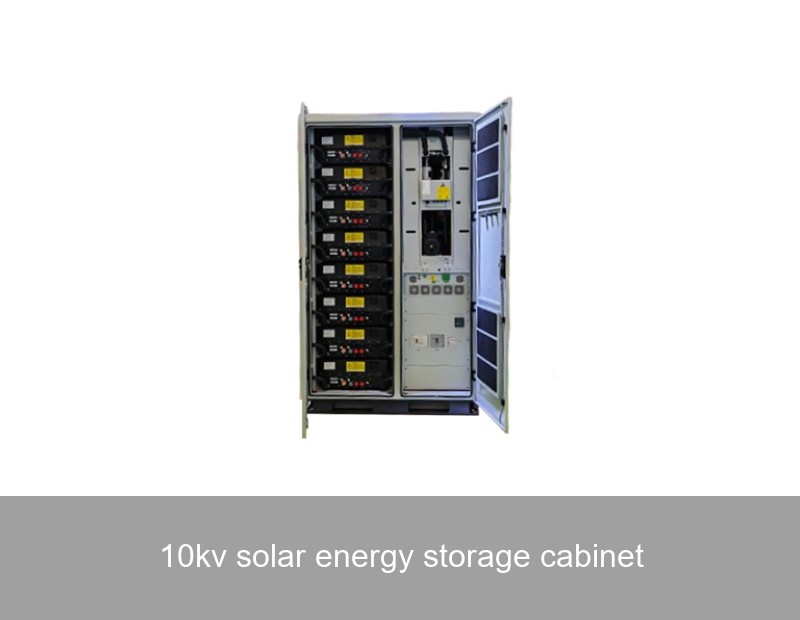
Have you ever looked at your commercial facility's electricity bill and wondered if there's a better way? For businesses and industrial operators across Europe and the US, the dream of true energy independence is becoming a tangible reality, and at the heart of this transformation is a powerful piece of technology: the 10kV solar energy storage cabinet. Unlike residential systems that operate at lower voltages, these high-voltage cabinets are engineered for scale, efficiency, and resilience. They act as the central nervous system for large-scale solar arrays, intelligently managing the harvest, storage, and dispatch of clean energy. For forward-thinking organizations, this isn't just about backup power; it's a strategic asset for managing energy costs, ensuring operational continuity, and meeting ambitious sustainability goals.
Why Does 10kV Voltage Matter for Commercial & Industrial Solar?
The shift to 10kV (10,000 volts) is a game-changer for medium to large-scale applications. Think of voltage like water pressure in a pipe. A higher pressure allows you to move more water with less loss over longer distances. Similarly, operating at 10kV allows for the efficient transmission of large amounts of solar and stored energy across a factory floor, a data center campus, or a microgrid with minimal power loss. This directly translates to higher system efficiency and lower operational costs. According to the National Renewable Energy Laboratory (NREL), system design and voltage selection are critical factors in achieving the levelized cost of storage (LCOS) targets for commercial success. A 10kV architecture often reduces the need for extensive step-up transformers and heavy, costly low-voltage cabling, simplifying installation and improving the overall economics of the project.

Image Source: Unsplash - A commercial-scale solar installation requiring robust, high-voltage storage solutions.
The Limitations of Scaling Low-Voltage Systems
Many are familiar with residential battery systems operating at 48V or 400V. Scaling these to megawatt-hour (MWh) capacities for a factory or warehouse creates significant challenges. You'd need an immense number of battery racks, paralleled inverters, and a complex web of thick cables and busbars. This increases points of failure, installation time, and space requirements. The 10kV solar energy storage cabinet consolidates this power into a streamlined, containerized or skid-mounted solution. Companies like Highjoule have pioneered this approach, integrating power conversion, battery management, and medium-voltage switching into a single, pre-tested unit. This "plug-and-play" philosophy drastically reduces on-site commissioning time from months to weeks, a critical factor in minimizing project risk and downtime for businesses.
Key Components of a Modern 10kV Energy Storage System
So, what's inside these powerful cabinets? It's a symphony of advanced engineering, where each component must be meticulously designed to handle the demands of medium voltage.
- High-Voltage Battery Packs: These are not simply larger versions of car batteries. They utilize advanced lithium-ion chemistry (like LiFePO4 for enhanced safety and longevity) arranged in series and parallel strings to achieve the required 10kV DC bus voltage, all managed by a sophisticated Battery Management System (BMS).
- Bidirectional Power Conversion System (PCS): This is the brain of the operation. It's a high-efficiency inverter/rectifier that seamlessly converts DC from the batteries to AC for the facility grid, and vice-versa for charging. At 10kV, the PCS uses advanced power electronics like silicon carbide (SiC) semiconductors for minimal switching losses.
- Integrated Energy Management System (EMS): This software layer is what makes the system "smart." It forecasts energy production and consumption, responds to utility price signals for arbitrage, manages peak shaving, and ensures the system operates within its optimal parameters. Highjoule's proprietary EMS, for instance, uses AI-driven algorithms to maximize return on investment for every kilowatt-hour stored.
- Safety & Grid Interconnection: This includes medium-voltage switchgear, isolation transformers, and comprehensive protection relays. These components ensure safe operation, isolation for maintenance, and strict compliance with grid codes like UL 1741SB in the US or VDE-AR-N 4105 in Germany.
| Feature | Low-Voltage (480V) System | 10kV Cabinet System (e.g., Highjoule HVC-10) |
|---|---|---|
| Approximate Cable Weight | ~8,000 kg | ~1,500 kg |
| Footprint | High (multiple cabinets, spread out) | Compact, single cabinet or container |
| System Efficiency (AC-AC) | ~88-90% | ~94-96% |
| Typical Commissioning Time | 10-12 weeks | 4-6 weeks |
| Grid Interconnection Complexity | High (requires large step-up transformer) | Low (direct MV connection) |
A Real-World Case Study: Powering a German Manufacturing Plant
Let's move from theory to practice. A prominent automotive parts manufacturer in Bavaria, Germany, faced two major challenges: volatile energy prices cutting into profit margins and a corporate mandate to reduce carbon emissions by 40% within five years. Their 5 MW rooftop solar array was a great start, but overproduction at midday was being sold to the grid at low feed-in tariffs, while they had to buy expensive power during morning and evening peaks.
In 2023, they deployed a Highjoule 10kV solar energy storage cabinet system with a capacity of 2.8 MWh. The system was configured for two primary functions: peak shaving and solar self-consumption optimization.
The Results After One Year of Operation:
- Energy Cost Savings: By avoiding peak grid charges and maximizing the use of their own solar power, the plant reduced its annual electricity costs by €312,000.
- Increased Solar Self-Consumption: The rate of direct solar consumption on-site rose from 35% to over 82%, dramatically improving the ROI of their PV investment.
- Grid Services Revenue: The plant enrolled the system in the German primary control reserve market via Highjoule's grid-service-ready platform, generating an additional €28,000 in annual revenue.
- Seamless Integration: The pre-integrated 10kV cabinet was connected directly to the factory's medium-voltage distribution panel, with full commissioning achieved in just 5 weeks, avoiding prolonged production disruption.

Image Source: Unsplash - Modern industrial facilities rely on intelligent energy management for competitiveness.
Future Trends: Where is 10kV and Beyond Taking Us?
The evolution of the 10kv solar energy storage cabinet is tightly linked to broader energy trends. We are moving towards true grid-forming capabilities. This means that instead of just following the grid's frequency (grid-following), these advanced systems can create a stable voltage and frequency waveform from scratch. This is the cornerstone of building resilient microgrids that can "island" from the main grid during an outage and keep critical operations running indefinitely on solar and storage. Furthermore, the integration of solar forecasting and AI is making these systems predictive rather than reactive. Imagine your storage system knowing a storm is coming, pre-charging fully from the solar array, and strategically dispatching power throughout the outage.
Choosing the Right Technology Partner
Implementing a high-voltage storage solution is a significant capital decision. The key is to partner with a provider that offers more than just hardware. Look for deep system integration expertise, proven grid compliance in your target market, and a robust software platform for ongoing optimization. Highjoule, with nearly two decades of experience since 2005, exemplifies this approach. Our HVC-Series 10kV cabinets are not standalone products but part of a comprehensive Highjoule Power Platform. This includes the hardware, the AI-driven EMS, and 24/7 monitoring services, ensuring your investment delivers promised financial and operational benefits year after year. We focus on making advanced energy storage simple, reliable, and profitable for our commercial and industrial partners worldwide.
Ready to Assess Your Site's Potential?
The journey to energy resilience and cost control begins with a clear understanding of your facility's unique load profile, solar generation, and local utility rates. What would a 10-30% reduction in your annual energy spend do for your operational budget? How would your business strategy change if you could guarantee power for your most critical processes, regardless of what happens on the wider grid?
 Inquiry
 Online Chat