


Finding the Energy Storage Cabinet Best Battery for Your Power Needs
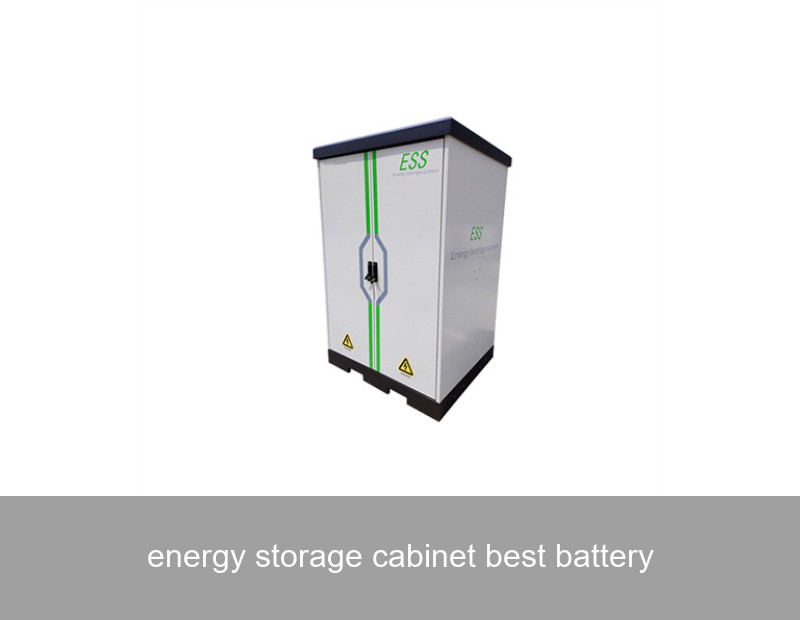
You've likely heard the buzz about renewable energy and the critical role of storage. But when you peel back the layers, the heart of a modern, reliable energy storage system often comes down to one crucial component: the energy storage cabinet best battery configuration. It's not just a metal box with batteries inside; it's an integrated, intelligent power hub designed to optimize energy flow, ensure safety, and deliver a strong return on investment. Whether you're a facility manager looking to cut energy costs, a business owner seeking energy independence, or a community developer planning a microgrid, understanding what makes a top-tier battery storage cabinet is the first step toward a resilient energy future.
What is a Battery Energy Storage System (BESS) Cabinet?
Think of a BESS cabinet as the "brain and brawn" of your energy storage setup. It's a pre-engineered, containerized unit that houses the core elements: the battery modules (like lithium-ion phosphate or LFP, which are renowned for safety and longevity), a sophisticated Battery Management System (BMS), power conversion systems (PCS), thermal management, and safety controls. The best cabinets integrate these components seamlessly, ensuring they work in perfect harmony. This integrated approach is far superior to piecing together disparate parts, as it guarantees compatibility, simplifies installation, and enhances overall system reliability and safety—a non-negotiable priority.

Image Source: Unsplash - Professional energy storage installation
Key Features of the Best Battery Energy Storage Cabinet
So, what separates a good cabinet from a truly great one? Let's break it down using a logical ladder, from basic requirements to advanced intelligence.
1. Safety and Certification: The Non-Negotiable Foundation
Any discussion must start here. The best battery technology today is arguably Lithium Iron Phosphate (LFP). It offers excellent thermal and chemical stability, significantly reducing fire risk compared to other chemistries. The cabinet itself must be built to stringent international standards (like UL 9540, IEC 62619). Look for features like:
- Advanced Thermal Runaway Prevention: Multi-stage sensors and passive/active cooling systems.
- Comprehensive Protection: IP54 or higher ingress protection, robust fire suppression systems, and gas venting.
- Cell-to-System Safety: A BMS that monitors every cell for voltage, temperature, and current, capable of isolating faults.
2. Performance and Efficiency: The Core Metrics
This is where your investment pays off. High performance isn't just about raw capacity (kWh); it's about how much of that stored energy you can actually use, and for how long.
| Metric | Why It Matters | What to Look For |
|---|---|---|
| Round-Trip Efficiency (RTE) | Percentage of energy put in that you get back. Higher RTE means less waste and lower cost per cycle. | Systems exceeding 90-95% AC-to-AC RTE. |
| Depth of Discharge (DoD) & Cycle Life | How much of the battery's capacity can be used daily without degrading it. Defines system lifespan. | LFP batteries allowing >90% DoD for 6,000+ cycles. |
| Power Density | How much power (kW) the cabinet can deliver relative to its footprint. Crucial for space-constrained sites. | Compact, modular designs that scale power and energy independently. |
3. Intelligence and Software: The "Smart" Differentiator
A cabinet with a "dumb" battery is just a cost. The energy storage cabinet best battery systems are driven by intelligent software. An advanced Energy Management System (EMS) can:
- Perform peak shaving by discharging during expensive utility rate periods.
- Enable solar self-consumption optimization, storing excess solar for use at night.
- Provide grid services like frequency regulation (in markets that allow it).
- Offer remote monitoring, diagnostics, and predictive maintenance via cloud platforms.
A Real-World Case Study: Powering a German Manufacturing Plant
Let's move from theory to practice. A mid-sized automotive parts manufacturer in Bavaria, Germany, faced two major challenges: volatile energy prices and a corporate mandate to reduce its carbon footprint. Their existing 500 kW rooftop solar array often produced excess energy at midday that was sold to the grid at low feed-in tariffs, while they bought power back at high rates during morning and evening peaks.
The Solution: They installed a 372 kWh / 300 kW containerized energy storage cabinet system, integrating it with their solar PV and building management system. The cabinet's intelligent EMS was programmed with their specific utility tariff structure and production schedule.
The Data-Driven Results (after 12 months):
- Energy Cost Savings: Achieved a 68% reduction in demand charges and optimized time-of-use arbitrage, leading to €92,000 in annual energy savings.
- Solar Self-Consumption: Increased the direct use of their solar generation from 35% to over 80%.
- ROI & Sustainability: Projected payback period of under 5 years, while reducing their grid electricity dependence by 40% and cutting annual CO2 emissions by an estimated 185 metric tons.
This case illustrates that the right cabinet isn't just hardware; it's a financial and sustainability tool. For more on grid-interactive storage economics, see this report from the National Renewable Energy Laboratory (NREL).

Image Source: Unsplash - Commercial solar and storage integration
The Highjoule Advantage: Intelligent Storage Solutions
At Highjoule, with nearly two decades of experience since 2005, we engineer our energy storage cabinet best battery systems with these exact principles in mind. Our solutions are designed for the diverse needs of commercial, industrial, and utility-scale applications across Europe and North America.
Our flagship product line, the H-Series Modular Storage Cabinet, embodies this philosophy:
- Unmatched Safety: Built around UL-certified LFP battery cells, with a proprietary multi-layer safety architecture we call "Sentinel Shield BMS."
- Designed for Performance: Offering industry-leading >96% round-trip efficiency and a modular design that allows you to scale from 100 kWh to multi-MWh projects seamlessly.
- Powered by HI-OS: The true differentiator is the Highjoule Intelligent Operating System. This AI-driven platform doesn't just store energy; it learns your load profiles, weather patterns, and tariff schedules to autonomously optimize every kilowatt-hour for maximum economic value. You can monitor and control everything through a simple, intuitive dashboard.
We don't just sell cabinets; we provide end-to-end power solutions—from initial consultancy and system design to installation, grid connection support, and long-term service agreements. Our systems are key enablers for microgrids, providing backup power and stability for communities, campuses, and critical infrastructure. Learn about the technical foundations of BESS from the experts at U.S. Department of Energy.
Choosing the Right Partner for Your Energy Future
Selecting the energy storage cabinet best battery system is a significant decision. It's about more than specs on a datasheet; it's about choosing a technology partner who understands your goals—be it financial resilience, energy security, or sustainability.
Ask potential providers: How does your software unlock value? Can you provide detailed lifecycle cost analysis? What is your track record with projects of my scale and in my region? What does the long-term service and support look like?
At Highjoule, we welcome these questions. We believe in building partnerships that last as long as our systems do. The energy landscape is shifting rapidly. With the right storage solution, you're not just adapting to change; you're actively shaping a more efficient and independent energy future for your operation.
What specific energy challenge—peak demand charges, renewable integration, backup power needs—is most pressing for your business, and how could a truly intelligent storage cabinet transform that challenge into an opportunity?
 Inquiry
 Online Chat