


Your Complete Guide to a Reliable 10kVA Off-Grid Solar System
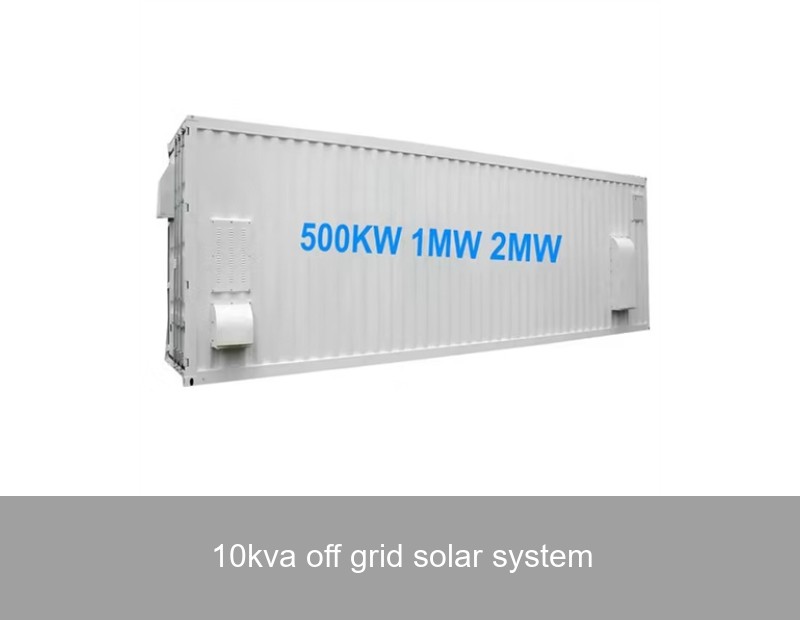
Imagine a power outage that doesn't mean silence and darkness. For homes and businesses beyond the reach of utility lines, or for those seeking true energy independence, this isn't just a dream—it's a necessity. This is where the robust 10kVA off-grid solar system comes into play. A 10kVA (kilovolt-ampere) system is a substantial power solution capable of running essential appliances, tools, and even small-scale commercial operations entirely on solar energy, without any connection to the main grid. Whether you're a homeowner on a remote property, managing an agricultural site, or operating a critical off-grid facility, understanding how to design and maintain such a system is key to achieving reliable, sustainable power. In this guide, we'll break down the components, benefits, and real-world applications of a 10kVA off-grid solar system, and show you how modern technology from providers like Highjoule is making energy independence more accessible and intelligent than ever.
Table of Contents
- What is a 10kVA Off-Grid Solar System?
- Key Components and How They Work Together
- Sizing Your Power: What Can a 10kVA System Run?
- A Real-World Case Study: Off-Grid Farming in Spain
- The Highjoule Advantage: Smart, Integrated Off-Grid Solutions
- Future Trends in Off-Grid Solar Technology
What is a 10kVA Off-Grid Solar System?
Let's start with the basics. "10kVA" refers to the apparent power rating of the system's inverter. In simpler terms, it tells you the total electrical load the system can handle at any one moment. For a typical off-grid system with a power factor of 0.8, a 10kVA inverter can deliver around 8kW of real power. This is a substantial capacity, designed not for just a few lights, but for powering a full household, a workshop, or a remote business. The "off-grid" part is crucial: these systems operate in island mode. They have no fallback to the public electricity grid. All energy must be generated on-site via solar panels, stored in a battery bank, and managed intelligently to ensure power is available 24/7, regardless of the weather. This independence is both the biggest advantage and the primary design challenge.
Key Components and How They Work Together
A reliable 10kVA off-grid system is more than just panels and a battery. It's a sophisticated ecosystem where each part plays a critical role.
- Solar Panels (PV Array): The primary energy harvesters. For a 10kVA system, you typically need a sizable array, often between 10kW to 15kW in capacity, to ensure enough energy is collected during the day to both power loads and fully charge the battery bank.
- Off-Grid Inverter/Charger: This is the brain and the heart. It converts the DC electricity from the solar panels and batteries into clean AC power for your appliances. Crucially, it also manages battery charging from both solar and any backup source (like a generator).
- Battery Energy Storage System (BESS): The cornerstone of off-grid living. This is your energy reservoir for nights and cloudy days. For a 10kVA system, a large-capacity lithium-ion battery bank, often in the range of 20kWh to 40kWh or more, is standard.
- Charge Controller (MPPT): This device optimizes the energy harvest from the solar panels, ensuring maximum efficiency when charging the batteries.
- Backup Generator (Optional but Recommended): A diesel or propane generator acts as a critical backup during prolonged periods of low solar irradiance, ensuring uninterrupted power supply.
- System Monitoring & Management: Modern systems include smart monitors that provide real-time data on energy production, consumption, and battery state of charge, often accessible via a smartphone app.
This is where specialized expertise matters. Companies like Highjoule don't just sell components; they engineer integrated systems. Highjoule's HPS Series of hybrid power stations, for example, combine high-efficiency inverters, modular lithium-ion batteries (like their HyperCore series), and advanced energy management software into a single, pre-optimized solution. This integrated approach drastically simplifies design, installation, and reliability, ensuring all components communicate flawlessly.
Sizing Your Power: What Can a 10kVA System Run?
Understanding your load is critical. A properly sized 10kVA off-grid solar system is a powerhouse. Here’s a practical breakdown of what it can typically support:
| Appliance/Equipment | Estimated Power (Watts) | Runtime Notes |
|---|---|---|
| Refrigerator | 150-400 | Runs continuously, cycles on/off. |
| LED Lighting (Whole Home) | 200-500 | Evening and night use. |
| Water Pump | 500-1500 | Intermittent use. |
| Laptop & TV | 100-300 | Several hours daily. |
| Kitchen Appliances (Microwave, Kettle) | 1000-3000 | Short, high-power bursts. |
| Power Tools (Circular Saw) | 1500-2000 | Intermittent, high surge. |
| Small HVAC Unit (Mini-Split) | 1000-2500 | Seasonal, extended use. |
Key Insight: The inverter's 10kVA (≈8000W) rating handles simultaneous loads. The battery bank's capacity (e.g., 30kWh) determines how long you can run these loads without sun. You can comfortably run a mix of the above, but managing high-wattage appliances and understanding surge currents (like when a motor starts) is vital. Highjoule's inverters are designed with high surge capacities, often 200% or more of their rated power, to handle these demanding starts without skipping a beat.
A Real-World Case Study: Off-Grid Farming in Andalusia, Spain
Let's move from theory to practice. Consider a medium-sized organic farm in the sunny but remote region of Andalusia, Spain. The farm needed reliable power for a cold storage unit for produce, irrigation pumps, poultry barn lighting/ventilation, and the farmhouse itself. Grid connection was prohibitively expensive.
The Challenge: Provide 24/7 reliable power for critical agricultural operations, with a focus on refrigeration, which cannot fail without spoiling produce.
The Solution: A tailored 10kVA off-grid system was installed:
- PV Array: 14.4 kW of solar panels.
- Storage: A 28 kWh lithium-ion battery bank (using modular Highjoule HyperCore batteries for easy expansion).
- Inverter & Control: A Highjoule HPS-10k hybrid inverter/charger with integrated MPPT and generator start functionality.
- Backup: An existing diesel generator was integrated as an automatic backup.
- Energy Independence: The system covers 92% of the farm's annual energy needs directly from solar, a figure verified by the first year's monitoring data.
- Fuel Savings: Generator runtime was reduced by over 85%, slashing diesel costs and maintenance.
- Critical Reliability: The cold storage temperature has remained perfectly stable, even during a rare week of stormy weather, thanks to the intelligent battery management and seamless generator kick-in.
- ROI: The farmer projects a full return on investment in under 7 years, based on saved fuel and avoided grid connection fees.

Image Source: Unsplash (Representative image of solar in agriculture)
This case highlights that a well-designed 10kVA system isn't just about comfort; it's a robust business continuity tool. For more on the growth of solar in agriculture, see this report from the International Renewable Energy Agency (IRENA).
The Highjoule Advantage: Smart, Integrated Off-Grid Solutions
As a global leader in advanced energy storage since 2005, Highjoule understands that off-grid reliability hinges on seamless integration and intelligent control. Our approach to a 10kVA off-grid solar system goes beyond component supply.
- Pre-Engineered Systems: Our HPS Series power stations are pre-configured for common off-grid scenarios, reducing design complexity and installation time. This means faster deployment and proven reliability.
- Modular, Scalable Storage: Our HyperCore lithium battery systems are modular. You can start with a configuration that meets your current budget and energy needs, and easily add more battery modules later as your demand grows.
- Advanced Energy Management System (EMS): This is our secret sauce. The Highjoule EMS uses smart algorithms to prioritize solar consumption, optimize battery cycling for longevity, and automatically manage backup sources. It learns your usage patterns to maximize efficiency.
- Global Support & Monitoring: With a presence in Europe and North America, Highjoule provides professional support. Our cloud-based monitoring platform gives you and our technicians real-time visibility into system health from anywhere in the world.
For businesses and homeowners seeking a true "set it and forget it" off-grid experience, this integrated, smart technology is a game-changer. It turns a complex array of hardware into a simple, dependable utility.

Image Source: Unsplash (Representative image of a modern home battery system)
Future Trends in Off-Grid Solar Technology
The technology behind off-grid systems is evolving rapidly, making them even more capable and user-friendly.
- AI-Powered Energy Forecasting: Future systems will integrate weather forecasts and usage AI to predict energy generation and consumption, pre-charging batteries optimally before a cloudy day.
- Vehicle-to-Home (V2H) Integration: Your electric vehicle's large battery could act as a supplementary backup for your home during an extended off-grid scenario. Standards for this are developing quickly, particularly in the US and EU.
- Advanced Battery Chemistries: While lithium-ion dominates, solid-state and other chemistries promise even higher energy density, safety, and longer lifecycles, potentially reducing the physical footprint of storage. Research in this area is ongoing, as noted by institutions like the National Renewable Energy Laboratory (NREL).
- Peer-to-Peer Off-Grid Microgrids: Neighboring off-grid properties might share excess energy via direct DC lines, creating resilient community power networks.
Companies at the forefront, like Highjoule, are actively investing in R&D to incorporate these trends into future product lines, ensuring customers' investments are future-proof.
Ready to Design Your Energy Independent Future?
Designing and implementing a robust 10kVA off-grid solar system is a significant project, but the reward—complete energy freedom and resilience—is unparalleled. It requires careful planning, quality components, and most importantly, expertise in making all the pieces work together harmoniously. Whether your project is a remote homestead in the American West, a sustainable lodge in the European Alps, or an industrial site anywhere off the map, the right technology partner is crucial.
What's the first critical load you would need to secure to make your off-grid vision a reality?
 Inquiry
 Online Chat