


1 kVA Off-Grid Solar Energy Storage Cabinet: Your Complete Guide to Energy Independence
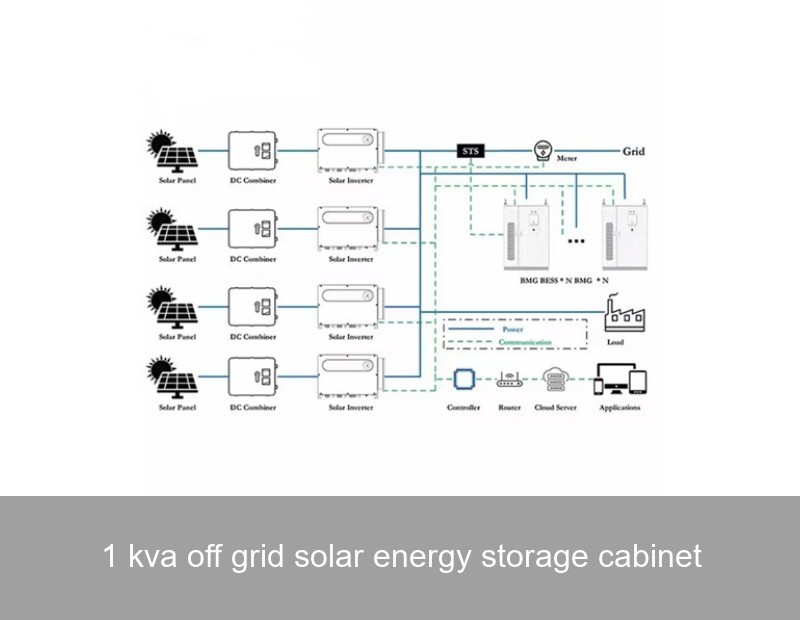
Have you ever imagined a world where your power supply is truly your own? No more worrying about grid outages, volatile energy prices, or the environmental impact of your electricity. For homeowners, remote businesses, and critical infrastructure, this isn't just a dream—it's a growing necessity. The solution lies in a powerful, self-contained unit: the 1 kVA off-grid solar energy storage cabinet. This integrated system is the cornerstone of modern energy independence, combining solar generation, intelligent battery storage, and reliable power conversion into a single, manageable cabinet. In this guide, we'll demystify this technology, explore its real-world impact, and show you how companies like Highjoule are pioneering smart, sustainable power solutions for a resilient future.
Table of Contents
- What is a 1 kVA Off-Grid Solar Energy Storage Cabinet?
- Why Off-Grid Energy Storage is More Relevant Than Ever
- Key Components Inside the Cabinet
- A Real-World Case Study: Securing a Mountain Retreat
- Choosing the Right System for Your Needs
- The Highjoule Approach: Intelligent Storage for Demanding Applications
What is a 1 kVA Off-Grid Solar Energy Storage Cabinet?
Let's break down the name. 1 kVA (kilovolt-ampere) refers to the system's power output capacity—essentially, how much load it can run simultaneously. Think of it as the size of the "pipe" delivering electricity. A 1 kVA system can comfortably power essential loads like lighting, refrigeration, communication devices, and small appliances. Off-grid means it operates independently from the main utility grid. Solar Energy Storage indicates it's designed to store energy generated from solar panels. Finally, Cabinet signifies that all critical components are housed in a single, robust enclosure for safety, ease of installation, and maintenance.
In essence, this cabinet is your personal, automated power plant. It harvests free energy from the sun, stores it efficiently in high-cycle batteries, and converts it into clean AC power for your devices, 24/7, regardless of what's happening on the public grid.
Why Off-Grid Energy Storage is More Relevant Than Ever
The trend towards decentralization is reshaping our energy landscape. From extreme weather events causing prolonged blackouts in California and Europe to rising electricity costs globally, the vulnerabilities of a centralized grid are becoming apparent. According to the U.S. Energy Information Administration (EIA), the average U.S. customer experienced just over eight hours of power interruptions in 2020, with major events being a primary driver. For businesses, even minutes of downtime can mean significant financial loss.
This is where the 1 kVA off-grid solar cabinet shines. It's no longer just for remote cabins. It's becoming a vital solution for:
- Residential Backup Power: Keeping lights, Wi-Fi, and refrigerators running during outages.
- Remote Industrial Sites: Powering monitoring equipment, telecommunications, or small-scale operations far from grid connections.
- Agricultural Applications: Running electric fencing, water pumps, and barn systems.
- Microgrids for Communities: Serving as a building block for community-led energy projects.

Image Source: Unsplash - Representative image of an off-grid solar setup.
Key Components Inside the Cabinet
Understanding what's inside helps you appreciate the engineering behind reliable power. A high-quality 1 kVA off-grid cabinet typically integrates:
| Component | Function | Why It Matters |
|---|---|---|
| Lithium-Ion Battery Bank | Stores electrical energy from solar panels. | Provides high energy density, long cycle life (often 6000+ cycles), and requires minimal maintenance compared to lead-acid. |
| Hybrid Solar Inverter/Charger | Converts DC from solar/battery to AC for appliances; charges batteries from solar. | The brain of the system. Manages energy flow, ensures pure sine wave output (safe for sensitive electronics), and maximizes efficiency. |
| Charge Controller (MPPT) | Optimizes the voltage from solar panels to charge batteries most efficiently. | An MPPT controller can increase energy harvest from solar panels by up to 30% compared to older technologies. |
| System Controller & Monitoring | Provides user interface, system settings, and remote monitoring capabilities. | Allows you to track energy production, consumption, and battery state-of-charge from your smartphone, enabling proactive management. |
| Safety & Protection Devices | Includes circuit breakers, fuses, surge protection, and thermal management. | Ensures the system operates safely under all conditions, protecting both the equipment and your property. |
A Real-World Case Study: Securing a Mountain Retreat in the Austrian Alps
Let's look at a concrete example. A family-owned alpine guest lodge in Tyrol, Austria, faced a dual challenge: frequent winter grid instability due to heavy snow and a desire to reduce its environmental footprint. Their critical loads—including the reception network, emergency lighting, water circulation pumps, and the kitchen's walk-in cooler—required a reliable 24/7 power source of approximately 900VA.
The Solution: A customized 1 kVA off-grid solar energy storage cabinet was installed as the core of a new microgrid. The system was paired with 2.4 kW of rooftop solar panels. The cabinet's intelligent inverter was programmed to prioritize solar power, using the battery bank for nighttime and cloudy periods, with a diesel generator configured as a rarely-used backup for extended low-sun conditions.
The Data & Results (After 12 Months):
- Energy Availability: Achieved 99.8% uptime for critical loads, despite over 15 recorded grid outages in the region.
- Fuel Savings: Reduced diesel generator runtime by over 90%, cutting fuel costs and noise pollution.
- Solar Self-Consumption: The system achieved a 94% solar self-sufficiency rate for the designated loads during summer months.
- ROI: Projected payback period of 6-7 years, considering avoided food spoilage losses, fuel savings, and rising grid electricity costs.
This case highlights how a correctly sized and intelligently managed 1 kVA off-grid cabinet isn't just about backup; it's about creating a cost-effective, resilient, and sustainable energy asset.
Choosing the Right System for Your Needs
Selecting a system is more than just matching kVA. You need to consider your energy profile. Start by listing all essential appliances, their wattage, and estimated daily run hours. This gives you your daily energy consumption in watt-hours (Wh). A 1 kVA system with a 5 kWh battery, for instance, can deliver 1 kW of power and, if fully drained, could theoretically run a 500-watt load for 10 hours. However, to preserve battery health, depth of discharge is key—so real-world usable capacity is often 80-90% of the total.
Here are critical questions to ask any provider:
- What is the cycle life of the battery at a specified Depth of Discharge (DoD)?
- Does the inverter provide a true sine wave output?
- What remote monitoring and control software is included?
- Is the cabinet rated for my local environmental conditions (temperature, humidity, altitude)?
- What is the warranty and service support model?
The Highjoule Approach: Intelligent Storage for Demanding Applications
At Highjoule, with nearly two decades of experience since 2005, we understand that reliability is non-negotiable. Our off-grid solutions, including our HES-Series All-in-One Energy Storage Cabinets, are engineered for the demands of commercial, industrial, and residential off-grid applications. We go beyond simply housing components together.
Our cabinets feature UL-certified lithium iron phosphate (LiFePO4) batteries renowned for their safety and longevity. Our proprietary energy management system (EMS) doesn't just react—it learns from your consumption patterns and weather forecasts to optimize battery usage, extending its life and maximizing solar self-consumption. For a 1 kVA application, our systems are scalable, allowing you to increase battery capacity easily if your needs grow.
Whether it's for a critical telecom site in Scotland, a vineyard microgrid in California, or a family home seeking independence, Highjoule designs systems that are smart, efficient, and built to last. We provide comprehensive support from design and commissioning to remote lifecycle management.

Image Source: Unsplash - Representative image of energy system monitoring.
Looking Forward: The Future of Energy is Decentralized
The 1 kVA off-grid solar energy storage cabinet represents a fundamental shift. It puts power—both literally and figuratively—back into the hands of users. As battery technology continues to advance and costs decline, these systems will become an even more accessible pillar of a resilient and renewable energy ecosystem.
What's the first critical load you would secure with your own reliable, off-grid power source?
 Inquiry
 Online Chat