


Understanding the 12 MW Solar Energy Storage Cabinet Price: A Comprehensive Guide
So, you're planning a major solar-plus-storage project and you've encountered the term "12 MW solar energy storage cabinet price." It's a significant figure, representing a substantial investment in clean, reliable power. But what exactly goes into that price tag? Is it just about the cabinets themselves, or is there a whole ecosystem of technology and intelligence behind it? As a global leader in advanced energy storage since 2005, Highjoule is here to demystify the costs and components of utility-scale storage. Let's break down the factors that influence the price of a 12 MW system and explore how smart design translates into long-term value and energy independence.
Table of Contents
- What is a 12 MW Solar Energy Storage Cabinet?
- Key Factors Influencing the 12 MW Storage Cabinet Price
- Looking Beyond the Cabinet: The System Integration Premium
- Real-World Impact: A 12 MW Scale Case Study
- The Highjoule Approach: Delivering Value Beyond the Price Tag
- Making the Right Investment Decision
What is a 12 MW Solar Energy Storage Cabinet?
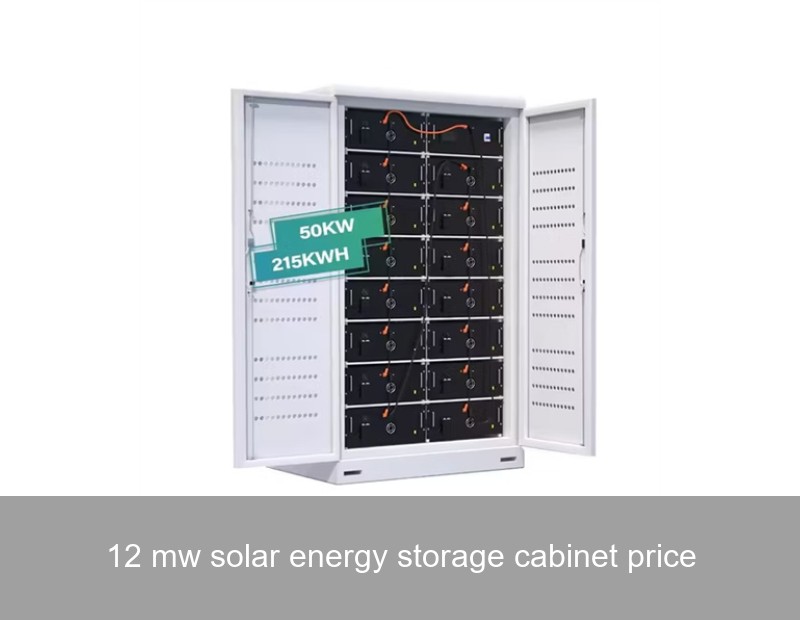
First, let's clarify the terminology. A "12 MW solar energy storage cabinet" typically refers to a containerized Battery Energy Storage System (BESS) with a power rating of 12 megawatts (MW). The "cabinet" is often a large, walk-in container housing thousands of individual battery cells, sophisticated power conversion systems (PCS), climate control, and safety mechanisms. The 12 MW figure denotes the power capacity—how much electricity it can deliver at once. However, the critical companion metric is energy capacity, measured in megawatt-hours (MWh) (e.g., a 12 MW / 24 MWh system can deliver 12 MW for 2 hours). The price is influenced by both the power (MW) and energy (MWh) ratings.

These systems are the backbone of modern renewable integration. They don't just store excess solar energy; they provide grid services like frequency regulation, peak shaving, and backup power, turning a solar farm into a reliable, dispatchable power plant.
Key Factors Influencing the 12 MW Storage Cabinet Price
The quoted price for a 12 MW cabinet is rarely a simple number. It's a composite of several high-value components. Here’s what you’re really investing in:
1. Battery Cell Technology and Chemistry
The heart of the system. Lithium-ion phosphate (LFP) is now the dominant chemistry for grid-scale storage due to its safety, longevity, and cost-effectiveness. Prices can vary based on cell density, brand, and cycle life specifications. A system rated for 6,000 cycles will differ in price from one rated for 8,000 cycles.
2. Power Conversion System (PCS) & Balance of Plant (BOP)
These are the muscles and nerves. The PCS (inverters) converts DC battery power to AC grid power. Its efficiency and grid-forming capabilities are crucial. The BOP includes transformers, switchgear, cooling systems, and fire suppression—all essential for safe, continuous operation.
3. Energy Management System (EMS) & Software
This is the brain. A sophisticated EMS, like Highjoule's Neuron IQ™ Platform, optimizes every charge and discharge cycle for maximum revenue or savings. It considers weather forecasts, electricity tariffs, and grid demands. This software intelligence is a significant part of the system's long-term value, though its cost is often embedded in the overall solution.
4. System Integration, Engineering, and Compliance
This is where expertise matters. Properly integrating all components, ensuring thermal management, and meeting stringent local codes (like UL 9540 in the US or IEC standards in Europe) require deep engineering prowess. This cost ensures safety, reliability, and bankability.
| Cost Component | Percentage of Total Cost | Notes |
|---|---|---|
| Battery Cells & Modules | 50-60% | Varies with chemistry, cycle life, and supply chain. |
| Power Conversion & BOP | 20-25% | Includes inverters, transformers, and safety systems. |
| System Integration & Software | 15-20% | Engineering, EMS, controls, and commissioning. |
| Soft Costs & Contingency | 5-10% | Shipping, installation labor, and project management. |
Note: Prices are dynamic. For example, the U.S. Energy Information Administration (EIA) tracks falling battery pack costs, which directly impact system prices (EIA Annual Energy Outlook).
Looking Beyond the Cabinet: The System Integration Premium
Choosing a system based solely on the lowest "cabinet price" can be a costly mistake. The true cost is measured in Levelized Cost of Storage (LCOS)—the total cost of owning and operating the system over its lifetime, divided by its total energy output. A cheaper cabinet with inferior integration may have higher thermal stress, leading to faster degradation, more downtime, and lower efficiency. The "integration premium" you pay with an expert provider like Highjoule buys you:
- Enhanced Safety: Multi-layered protection from the cell to the container level.
- Superior Lifespan: Advanced thermal management and cycling algorithms to maximize battery life.
- Higher ROI: Intelligent software that stacks revenue streams (arbitrage, grid services, capacity payments).
- Future-Proofing: Modular design that allows for easier capacity expansion or technology updates.
Real-World Impact: A 12 MW Scale Case Study
Let's look at a real example to see how these factors come together. In 2023, a large industrial food processing plant in Northern Germany faced volatile energy prices and strict carbon reduction targets. They partnered with Highjoule to deploy a 12 MW / 28 MWh battery storage system alongside their existing rooftop solar.

The Challenge: Reduce peak demand charges, increase solar self-consumption from 35% to over 70%, and provide backup power for critical refrigeration lines.
The Highjoule Solution: A turnkey system featuring our H-Ion CUBE™ industrial storage cabinets with LFP chemistry, integrated with our Neuron IQ™ Platform. The software dynamically optimizes for three goals: charging from excess solar, discharging during peak price hours, and keeping a reserve for backup.
The Results (First 12 Months):
- Peak Demand Charges Reduced by 40%: Saving over €180,000 annually.
- Solar Self-Consumption Raised to 78%: Drastically cutting grid imports.
- ROI Period: Projected to be under 5 years, thanks to combined savings and participation in the German primary control reserve market (regelleistung.net).
This case shows that the "price" of the cabinet is just the entry ticket. The real financial discussion is about the value stream it unlocks.
The Highjoule Approach: Delivering Value Beyond the Price Tag
At Highjoule, we engineer systems for total lifecycle performance. For a 12 MW project, we don't just supply cabinets; we deliver a guaranteed outcome. Our product suite for this scale includes:
- H-Ion GRID™ Megapack Solutions: Pre-engineered, containerized 3-6 MW blocks that can be combined for 12 MW+ projects. They come with built-in safety, cooling, and grid compliance.
- Neuron IQ™ Platform: Our proprietary AI-driven EMS that acts as the project's financial optimizer, constantly adapting to market signals and physical system health.
- Long-Term Performance Assurance: We offer comprehensive service agreements that guarantee system availability, capacity retention, and provide remote monitoring from our global operations centers.
Our focus is on reducing your LCOS, not just the upfront capital expense. By ensuring higher efficiency (our systems boast >94% round-trip efficiency), longer life, and smarter operation, the total cost over 20 years becomes significantly more attractive.
Making the Right Investment Decision
When you request a quote for a 12 MW solar energy storage cabinet, you're starting a critical conversation about your energy future. The right questions to ask your provider aren't just about price per MW, but about:
- Projected LCOS over 10 and 20 years.
- Guaranteed cycle life and degradation rate.
- EMS capabilities and track record in revenue stacking.
- Compliance with local grid codes and safety standards.
- Total cost of ownership, including maintenance and software updates.
The energy landscape is complex, but your path to a resilient, profitable investment doesn't have to be. With nearly two decades of experience powering commercial, industrial, and microgrid projects worldwide, Highjoule is built to be your partner in this transition.
What specific energy challenge—whether it's demand charge management, renewable integration, or backup power resilience—is driving your interest in a 12 MW storage solution today?
 Inquiry
 Online Chat