


Decoding the 120 Ah Tubular Battery Price: Value, Performance, and Long-Term Savings
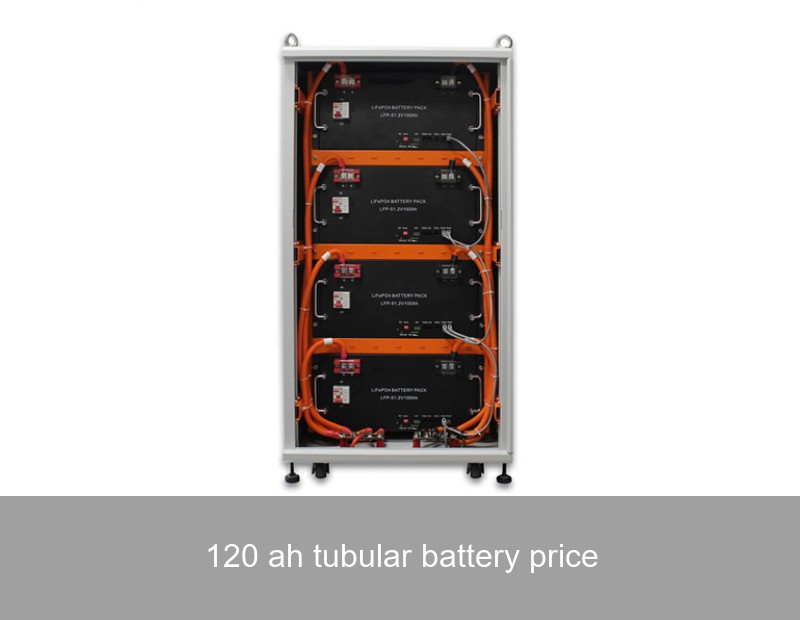
If you're researching energy storage for your home, business, or off-grid project, you've likely encountered the "120 Ah tubular battery" as a highly recommended solution. And naturally, one of your first questions is about the 120 Ah tubular battery price. It's a fair starting point, but here's something crucial to understand: focusing solely on the initial sticker price can be misleading. The true cost of a battery is spread over its entire lifespan, measured in reliable power, cycle life, and peace of mind. In this article, we'll peel back the layers of the 120Ah tubular battery price, helping you see it not just as a cost, but as an investment in durable, sustainable power.

Image Source: Unsplash - Representative image of professional battery installation
Understanding the 120 Ah Tubular Battery Price
The quoted price for a 120Ah tubular battery varies significantly across regions like Europe and the US, typically ranging from $200 to $400 or more per unit. This range isn't arbitrary; it's a direct reflection of build quality, technology, and intended application. Unlike flat plate batteries, tubular batteries feature unique, robust positive plates where the active material is held in polyester tubes. This design is fundamentally more durable and resistant to shedding, which is the primary reason for their longer lifespan. So, when you see a higher 120 Ah tubular battery price compared to a standard battery, you're essentially paying upfront for years of additional service. It’s the difference between buying a cheap pair of shoes you replace every season and investing in a well-made pair that lasts for years.
What Makes Up the Price? Key Components & Factors
Let's break down what you're actually investing in. Several core factors influence the final cost:
- Raw Materials & Construction: The quality and quantity of lead, lead alloys, and high-density oxides used directly impact performance and cost. Superior tubular plates, thick separators, and reinforced containers add to material costs but ensure reliability.
- Depth of Discharge (DoD) & Cycle Life: This is the heart of the value proposition. A quality 120Ah tubular battery can often be discharged up to 80% DoD regularly and deliver 1200-1500+ cycles. A cheaper battery might only offer 500 cycles at 50% DoD. More cycles and deeper usable energy mean a lower cost per cycle over time.
- Application-Specific Design: Is it for solar energy storage, UPS backup, or deep-cycle renewable applications? Batteries engineered for the daily charge/discharge cycles of solar, like those Highjoule provides, have specific design optimizations that justify their price point.
- Brand, Warranty & Intelligence: A reputable brand like Highjoule doesn't just sell a box; it sells proven technology, extensive R&D, and a robust warranty (often 5+ years). Furthermore, modern systems integrate smart Battery Management Systems (BMS) that optimize performance and protect your investment, a critical feature often absent in bare-bones options.
| Feature | Standard Flat Plate Battery | Quality Tubular Battery (e.g., Highjoule) |
|---|---|---|
| Typical Cycle Life (at 80% DoD) | 300 - 600 cycles | 1200 - 1500+ cycles |
| Design Robustness | Prone to plate shedding, corrosion | Tubular plates resist shedding; longer life |
| Maintenance Needs | Higher watering frequency | Lower maintenance, often sealed/low-maintenance |
| Total Cost of Ownership (10-year view) | Higher (may need 2-3 replacements) | Lower (single, long-lasting investment) |
Tubular vs. Alternatives: A Value Comparison
When evaluating the 120 Ah tubular battery price, context is everything. Compared to lithium-ion, the upfront cost of tubular lead-carbon or advanced lead-acid is lower, and they offer excellent performance in stationary, high-cycle applications without complex thermal management. Compared to cheaper flat plate batteries, the higher initial cost is amortized over a vastly extended lifespan. For instance, a single 120Ah tubular battery lasting 5-7 years in daily solar use could outlive two or three sets of inferior batteries, saving you money, hassle, and downtime in the long run.
Real-World Value: A Case Study from Germany
Let's look at real data. A medium-sized agricultural cooperative in Bavaria, Germany, needed a reliable storage solution for their 25kW rooftop solar array to power cold storage and equipment. Their initial quote included a low-cost flat plate battery bank.
After a consultation with Highjoule's energy experts, they opted for a custom-configured Highjoule HJT-Series Tubular Battery Bank with integrated smart monitoring. The initial investment was approximately 40% higher.
Fast forward four years. The projected lifespan of the flat plate system would have required a full replacement, adding another €8,500+ to their costs. The Highjoule tubular system, however, is performing at 92% of its original capacity and is projected to last another 4-5 years based on cycle data. The cooperative's total cost of ownership is already lower, and they've avoided operational disruption. This case underscores that the true 120 Ah tubular battery price is best evaluated over a 10-year horizon, not just day one. For more on calculating energy storage ROI, the U.S. Department of Energy provides excellent resources.

Image Source: Unsplash - Example of solar and storage in an agricultural setting
The Highjoule Approach: Smart Value Beyond the Price Tag
At Highjoule, we engineer solutions where the battery is a core component of a smarter energy ecosystem. Our HJT-Series Tubular Batteries are designed specifically for renewable integration, offering exceptional cycle life and reliability. But we go further by pairing them with our Energy Management System (EMS). This isn't just a battery; it's a intelligent power hub that learns your consumption patterns, prioritizes solar self-consumption, and can seamlessly integrate with grid services in some markets.
When you consider a Highjoule system, the 120 Ah tubular battery price is part of a package that delivers:
- Predictable Performance: Advanced BMS ensures optimal charging, prevents damage, and provides real-time health data.
- Scalability: Our modular design allows you to start with what you need and expand your storage capacity as your needs grow.
- Expert Support & Warranty: Global technical support and a strong warranty protect your investment for the long term.
This holistic approach transforms a commodity purchase into a strategic energy asset. Understanding broader market trends is key; the International Energy Agency (IEA) regularly publishes on the critical role of storage in the energy transition.
How to Make a Smart Decision for Your Energy Needs
So, how should you approach the purchasing decision? Don't just shop for a 120 Ah tubular battery price. Instead, evaluate your needs:
- Define Your Application: Is it for daily solar cycling, critical backup, or an off-grid microgrid?
- Calculate Your Daily Energy Needs (in kWh): This will determine how many 120Ah batteries (at your system voltage) you actually need.
- Ask About Cycle Life & Warranty: Demand specific data at a given Depth of Discharge.
- Consider the System: Will the battery work seamlessly with your inverter and energy management? A compatible, intelligent system like Highjoule's prevents costly compatibility issues.
Ultimately, the most expensive battery is the one that fails prematurely. Investing in a quality tubular technology from a trusted provider is a safeguard against that risk.

Image Source: Unsplash - Modern energy system monitoring display
Ready to move beyond just the price tag and explore how a robust, intelligent 120Ah tubular battery system can be calibrated to your specific energy independence goals? What's the first question about your energy usage pattern you'd want to solve with a smarter storage solution?
 Inquiry
 Online Chat