


The 12V Lithium Energy Storage Cabinet: Your Compact Power Hub for Modern Applications
When you think of energy storage, massive grid-scale batteries might come to mind. But what about the smaller, yet critical, power needs that keep our daily operations running smoothly? Enter the 12V lithium energy storage cabinet – a compact, intelligent, and increasingly vital solution for a world seeking resilient, efficient, and clean power. Unlike traditional lead-acid setups, these modern cabinets pack a serious punch in a safe, managed enclosure, perfect for applications where space, weight, and reliability are non-negotiable. In this article, we'll explore why this technology is revolutionizing backup and off-grid power, and how companies like Highjoule are leading the charge with smart, integrated solutions.
What is a 12V Lithium Energy Storage Cabinet?
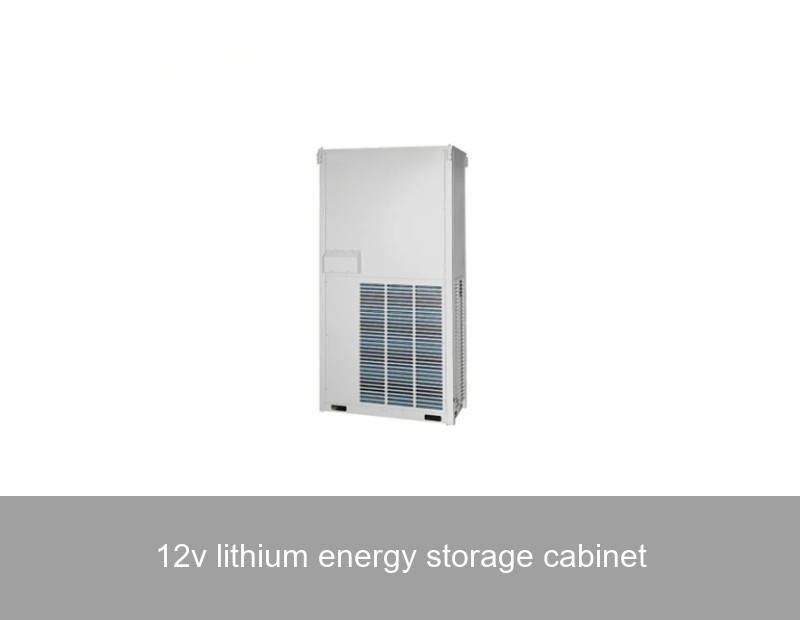
At its core, a 12V lithium energy storage cabinet is a self-contained unit that houses lithium-ion battery cells (typically LiFePO4 for safety and longevity), a sophisticated Battery Management System (BMS), thermal controls, and safety mechanisms within a secure, often rack-mountable enclosure. It's designed as a "plug-and-play" power block, moving beyond the DIY assembly of individual batteries. Think of it as a complete power appliance: it doesn't just store energy; it manages, protects, and optimizes its own performance, communicating with your solar charge controller, inverter, or monitoring system seamlessly.

Credit: A modern, enclosed energy storage unit. Image by Possessed Photography via Unsplash.
The Phenomenon: A Persistent Power Problem
Across Europe and the U.S., businesses and communities face a common challenge: the need for utterly reliable, low-voltage DC power in remote or sensitive locations. Telecom towers in rural areas, microgrid controllers for community solar projects, backup systems for critical IoT sensors, and emergency lighting in off-grid cabins – all these scenarios share a reliance on stable 12V or 24V DC systems. Traditionally, this need was met by banks of lead-acid batteries. The phenomenon? These batteries are bulky, require frequent maintenance, have a short lifespan (3-5 years), and suffer from depth-of-discharge limitations, often leaving users with unexpected downtime and high replacement costs.
The Data: Why Lithium-Ion Wins for 12V Systems
The shift to lithium-ion, particularly Lithium Iron Phosphate (LFP), is driven by hard data. Let's break down the advantages:
| Feature | Traditional Lead-Acid | 12V Lithium (LiFePO4) Cabinet |
|---|---|---|
| Cycle Life (to 80% capacity) | 500 - 1,200 cycles | 3,000 - 6,000+ cycles |
| Depth of Discharge (DoD) | ~50% recommended | >90% usable |
| Energy Density | Low (25-50 Wh/kg) | High (80-150 Wh/kg) |
| Maintenance | Regular watering, cleaning | Virtually maintenance-free |
| Efficiency (Round-trip) | ~70-85% | >95% |
This data, supported by research from institutions like the National Renewable Energy Laboratory (NREL), translates to real-world benefits: a lithium cabinet can last 2-4 times longer, provide nearly double the usable energy in the same space, and significantly reduce energy losses. For a business, this means lower total cost of ownership and superior reliability.
Case Study: Powering Off-Grid Communication in Rural Germany
Let's look at a real-world application in the European market. A telecommunications provider in Bavaria, Germany, needed to power a remote radio access network (RAN) site to expand coverage in a forested region. Grid connection was prohibitively expensive. Their old lead-acid system required bi-monthly maintenance visits, struggled in winter temperatures, and needed replacement every four years.
The Solution: They deployed a containerized microgrid featuring a solar array, a diesel generator for backup, and a central 12V lithium energy storage cabinet system (configured in series for 48V operation). The cabinet, equipped with an integrated BMS and remote monitoring, became the heart of the system.
The Results (Data after 24 months):
- Fuel Savings: Generator runtime reduced by over 70%, cutting diesel consumption and CO2 emissions dramatically.
- Reliability: System availability reached 99.99%, with zero maintenance-related outages.
- OPEX Reduction: Site visits were reduced from 6 per year to 1 annual inspection, slashing operational costs.
- Performance: Even during a prolonged cloudy period, the lithium cabinet provided consistent power due to its high DoD, preventing signal drops.
This case exemplifies how the right storage technology directly enables operational efficiency and sustainability goals.
Highjoule: The Innovator in Intelligent 12V Storage
At Highjoule, we've been engineering advanced energy storage solutions since 2005. We understand that a 12V lithium energy storage cabinet isn't just about the cells; it's about the intelligence that surrounds them. Our VoltCore® Compact Series is designed specifically for commercial, industrial, and critical infrastructure applications requiring robust low-voltage DC power.
What sets a Highjoule cabinet apart?
- Proactive Safety: Our multi-layer BMS monitors cell-level voltage, temperature, and current, with built-in smoke detection and fire suppression options.
- Smart Connectivity: Integrated IoT modules enable real-time monitoring via our Highjoule Energy Cloud platform. You can check state-of-charge, performance, and receive predictive maintenance alerts from anywhere.
- Modular & Scalable: Start with what you need and add cabinets in parallel as your power requirements grow, without complex reconfiguration.
- Wide Temperature Tolerance: Engineered to perform reliably from -20°C to 50°C (-4°F to 122°F), crucial for outdoor or uncontrolled environments in both Europe and North America.
Our cabinets are the preferred choice for integrators building microgrids, securing telecom networks, or creating uninterruptible power for automated systems, because we deliver not just a battery, but a guaranteed performance outcome.

Credit: Professional monitoring of critical power systems. Image by Taylor Vick via Unsplash.
Key Considerations for Your 12V Lithium Cabinet
Before investing, ask these questions:
- Application Profile: Is it for continuous cycling (solar) or standby backup? This dictates cycle life requirements.
- Environment: Will it be installed in a conditioned server room or an unheated shed? Confirm the operational temperature range.
- Integration: Does the BMS communicate with your existing inverters and controllers (e.g., via CAN bus, Modbus)? Compatibility is key.
- Certifications: Look for essential safety marks like UL 1973, IEC 62619, or UN38.3 for transport, especially for the U.S. and EU markets.
- Total Cost of Ownership (TCO): Calculate costs over 10+ years, factoring in lifespan, efficiency, and maintenance. Lithium almost always wins.
Future Trends & The Bigger Picture
The 12V lithium energy storage cabinet is a microcosm of the larger energy transition. As noted by the International Energy Agency (IEA), decentralized, flexible storage is a cornerstone of a resilient, renewable-powered grid. We see these cabinets evolving into autonomous "energy nodes" that can participate in virtual power plants (VPPs), dynamically interact with the grid, and provide even more granular services like frequency regulation.
For businesses, this means your on-site power system could transition from a cost center to a revenue-generating asset. The humble 12V system is becoming a smart grid citizen.
Is your current backup or off-grid power system holding you back with its limitations, or is it ready to become an intelligent, efficient, and sustainable asset for the next decade? What's the one critical load you would secure first with a reliable 12V lithium energy storage cabinet?
 Inquiry
 Online Chat