


Unlocking Energy Independence: A Deep Dive into LVTopsun Lithium Battery Technology
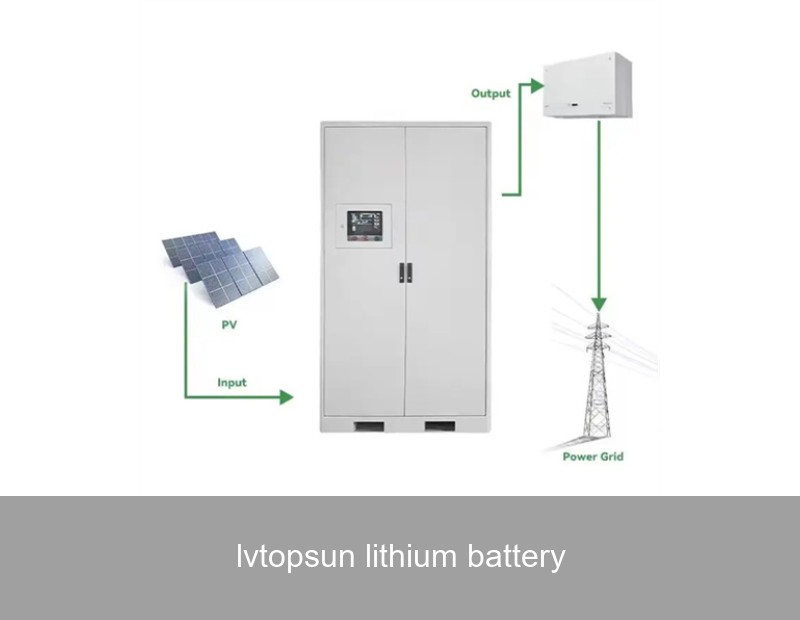
You've likely heard the buzz: solar panels are more affordable than ever, electricity prices are volatile, and the dream of energy self-sufficiency is within reach. But there's a crucial piece of the puzzle that often gets less attention—the battery. This is where advanced energy storage, specifically LVTopsun lithium battery systems, steps into the spotlight. For homeowners and businesses across Europe and the US, understanding this technology isn't just about buying a battery; it's about investing in a smarter, more resilient, and sustainable energy future. Let's demystify what makes these systems the cornerstone of modern power management.
Why Lithium-Ion Dominates Modern Energy Storage
Remember the heavy, boxy lead-acid batteries of the past? The energy storage landscape has undergone a quiet revolution. Lithium-ion technology, like that used in LVTopsun lithium battery units, has become the undisputed leader, and for compelling reasons. The shift isn't just about trend; it's driven by fundamental performance characteristics that align perfectly with the demands of renewable energy integration.
Let's break down the key advantages with a simple comparison:
| Feature | Traditional Lead-Acid | Modern Lithium-Ion (e.g., LVTopsun) |
|---|---|---|
| Energy Density | Low (bulky, heavy) | High (compact, lightweight) |
| Depth of Discharge (DoD) | ~50% (use half to preserve life) | 90%+ (use most of stored energy) |
| Cycle Life | 500-1,000 cycles | 6,000+ cycles |
| Efficiency | 70-85% | 95-98% | Maintenance | High (regular watering, equalization) | Virtually None |
The data speaks volumes. A lithium battery's high cycle life and deep discharge capability mean you can use it more, for longer, without worrying about damaging it. This translates directly into a better return on investment. The near-perfect efficiency means more of the solar energy you capture actually powers your home or business, with minimal loss in the storage process. According to the U.S. Department of Energy, continuous improvements in materials and manufacturing have driven down lithium-ion battery costs by over 90% in the last decade, making them the economically smart choice for stationary storage.
Beyond the Battery: The System is Key
Here’s a critical insight: a high-performance LVTopsun lithium battery is only as good as the ecosystem it operates within. Think of it as a champion athlete—they need a world-class coach, nutritionist, and strategy to win. In energy storage, the battery cell is the athlete; the Battery Management System (BMS), inverter, and system software are the support team.
This is where the expertise of a provider like Highjoule becomes paramount. Since 2005, Highjoule has focused not just on supplying batteries, but on engineering intelligent, integrated storage solutions. Our systems are built around core principles:
- Safety First: Multi-layered BMS protection monitors voltage, temperature, and current at the cell level to prevent thermal runaway and ensure decades of safe operation.
- Intelligent Control: Our proprietary energy management software acts as the brain, learning your consumption patterns, weather forecasts, and utility rate structures to autonomously optimize when to store, use, or even sell back energy.
- Scalability & Flexibility: Whether for a large-scale industrial application, a commercial facility, or a residential home, our modular LVTopsun lithium battery systems can be configured and expanded to meet evolving energy needs.

Image Source: Unsplash - A modern home energy system integrating solar and storage.
For instance, our Highjoule Hive commercial storage solution pairs seamlessly with LVTopsun battery banks to provide businesses with peak shaving (reducing demand charges), backup power, and carbon footprint reduction—all managed from a single, intuitive dashboard.
Real-World Case Study: Powering a German Dairy Farm Towards Self-Sufficiency
Let's move from theory to practice. Consider the challenge faced by a mid-sized dairy farm in Bavaria, Germany. Their operations—from milking machines to cooling—were energy-intensive and exposed to rising electricity costs. They had a sizable rooftop solar array, but over 40% of its daytime generation was being exported to the grid at a low feed-in tariff, while they bought expensive power in the evening.
The Goal: Maximize self-consumption of solar energy, ensure uninterrupted power for critical refrigeration, and stabilize energy costs.
The Solution: Highjoule deployed a 120 kWh integrated energy storage system centered on LVTopsun lithium battery modules, coupled with a bi-directional inverter and our smart grid-interactive controller.
The Data-Driven Outcome (12 months post-installation):
- Self-Consumption Rate: Increased from 58% to 92%.
- Grid Energy Purchases: Reduced by 76%.
- ROI Timeline: Projected payback period of 5.2 years based on energy savings and avoided demand charges.
- Resilience: The system automatically provides 18 hours of full backup power for critical loads during grid outages, protecting thousands of liters of milk.
This case, documented in a Fraunhofer ISE study on energy costs, exemplifies the tangible benefits. It wasn't just about adding a battery; it was about implementing a smart energy asset that actively manages flow for economic and operational gain.
Choosing the Right System for Your Needs
So, how do you translate this knowledge into action for your own home or business? The "best" system is the one tailored to your specific energy profile and goals. Ask yourself these key questions:
- What is your primary objective? (Bill savings, backup power, sustainability, all of the above?)
- What is your average daily energy consumption? (Check your utility bill in kWh.)
- Do you have or plan to have solar PV?
- What are your utility's rate structures? (Time-of-use rates, demand charges, net metering policy?)
A reputable provider like Highjoule will start with this audit. Our design process involves analyzing past utility bills, modeling solar production, and understanding local regulations to propose a system—featuring reliable LVTopsun lithium battery technology—that delivers optimal value. We handle the complex integration, permitting, and commissioning, providing a single point of responsibility.

Image Source: Unsplash - A technician overseeing a commercial-scale battery storage installation.
The Future of Energy Storage: More Than Just Backup
The evolution of the LVTopsun lithium battery and its peers is steering us towards a more dynamic grid. We're moving from storage as a passive backup device to storage as an active grid participant. Imagine thousands of distributed home and business systems forming a "virtual power plant," collectively providing stability services to the regional grid, as piloted in places like California and parts of the EU.
Furthermore, innovations in battery chemistry, like Lithium Iron Phosphate (LFP)—a common chemistry in many modern systems due to its exceptional safety and long life—continue to push the boundaries of performance and sustainability. The International Energy Agency (IEA) highlights the rapid innovation in battery tech as a key enabler for the clean energy transition.
As you contemplate taking control of your energy future, what role do you see a smart, adaptive storage system playing in not just protecting your premises, but also in actively reducing your costs and contributing to a more resilient community grid?
 Inquiry
 Online Chat