


Unlocking Grid Stability and Energy Independence: The Power of the 1MW Solis Energy Storage Cabinet
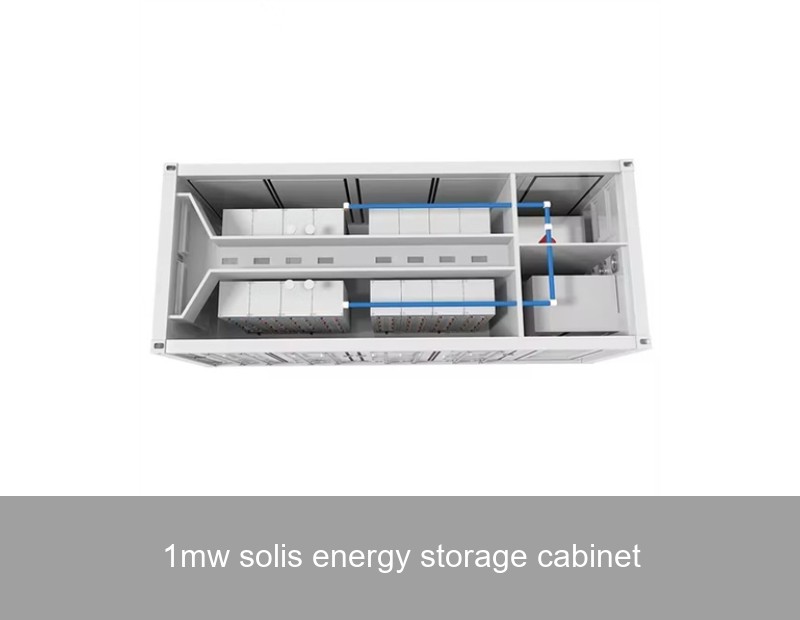
Imagine a world where a commercial facility isn't just a consumer of grid power, but an active, intelligent manager of its own energy ecosystem. This is no longer a futuristic vision. Across Europe and the United States, businesses and industrial operators are grappling with volatile energy prices, increasing grid instability, and ambitious sustainability goals. The solution emerging as a cornerstone of this new energy paradigm is the 1MW Solis energy storage cabinet—a robust, scalable system designed to provide megawatt-scale power and resilience. But what makes this specific class of storage so transformative? Let's explore how this technology is reshaping energy management for large-scale applications.
The Challenge: Beyond Simple Backup Power
For commercial and industrial (C&I) entities, energy is a major operational cost and a critical risk factor. The modern challenge isn't just about having backup for a rare outage. It's a trifecta of pressures:
- Price Volatility: Energy markets, especially in Europe, have experienced significant price spikes. A factory's profitability can be severely impacted by consuming power during peak tariff periods.
- Grid Reliability: Aging infrastructure and the intermittent nature of renewable sources like solar and wind can lead to frequency fluctuations and grid congestion, threatening sensitive industrial processes.
- Sustainability Mandates: Corporate ESG (Environmental, Social, and Governance) commitments and regulatory pressures demand a clear path to decarbonization.
Traditional diesel generators are a costly, polluting, and passive solution. They only address one piece of the puzzle—outages. The market needs a smart, multi-functional asset. This is where containerized, megawatt-scale battery energy storage systems (BESS) enter the scene.
The Solution: What is a 1MW Solis Energy Storage Cabinet?
At its core, a 1MW Solis energy storage cabinet is a pre-engineered, integrated unit typically housing lithium-ion battery racks, a power conversion system (PCS), thermal management, and a sophisticated energy management system (EMS). The "1MW" rating refers to its power output capability—it can deliver one megawatt of electricity instantaneously, suitable for supporting large loads. The "cabinet" or containerized format allows for easy transportation, installation, and scalability.

Think of it not as a simple battery, but as a grid-interactive power plant at your facility. Its primary functions are:
- Peak Shaving: Discharging during expensive peak hours to reduce demand charges from the utility.
- Energy Arbitrage: Charging when electricity is cheap (e.g., at night or during high renewable output) and using it or selling it back when prices are high.
- Renewable Integration: Storing excess solar or wind generation for use when the sun isn't shining or the wind isn't blowing, maximizing self-consumption.
- Grid Services: Providing frequency regulation and voltage support to help stabilize the wider grid, potentially creating a new revenue stream.
- Backup Power: Offering seamless, clean transition to backup power during grid outages, ensuring business continuity.
The Data Speaks: Why Scale Matters for C&I
The impact of a 1MW system is quantifiable. According to a 2023 report by the National Renewable Energy Laboratory (NREL), commercial and industrial battery storage can reduce peak demand charges by 10-30%, leading to significant annual savings. For a facility with a monthly demand charge of $15/kW, shaving 1MW (1000kW) of peak demand translates to $15,000 in savings per month, or $180,000 annually, from that single function alone. Furthermore, the U.S. Energy Information Administration (EIA) notes that battery storage capacity has been growing at an exponential rate, highlighting its rapid adoption as a critical grid asset.
A Real-World Case: Manufacturing in Bavaria
Let's make this concrete with a European example. A mid-sized automotive parts manufacturer in Bavaria, Germany, faced an annual electricity bill exceeding €2 million, with nearly 40% attributed to peak demand charges and time-of-use tariffs. Their on-site 2.5MW solar PV system often produced more power than they could use during midday, leading to curtailed energy.
Their solution was the installation of a 1.2MW/2.4MWh battery storage system, featuring cabinet technology similar to the 1MW Solis energy storage cabinet concept. Here are the results after one full year of operation:
| Metric | Before Installation | After Installation | Change |
|---|---|---|---|
| Peak Grid Demand | 1.8 MW | 1.0 MW | -44% |
| Solar Self-Consumption | 68% | 96% | +28% |
| Annual Energy Cost | €2.1M | €1.55M | ~€550,000 saved |
| Grid Services Revenue | €0 | €45,000 | New income stream |
The system paid for itself in under 5 years. Beyond the numbers, it provided the manufacturer with predictable energy costs, enhanced their green credentials, and protected sensitive CNC machinery from grid sags.
Highjoule's Role: Engineering Intelligence into Megawatt Storage
This is where Highjoule's expertise becomes critical. Since 2005, we have moved beyond simply providing battery cabinets. We deliver intelligent, system-level solutions. A 1MW Solis energy storage cabinet is a powerful component, but its true potential is unlocked by the brain that controls it.
Highjoule's Adaptive Grid OS™ energy management platform turns a static storage asset into a dynamic, revenue-optimizing machine. For our clients in the US and Europe, this means:
- AI-Driven Optimization: Our algorithms analyze weather forecasts, energy price curves, and production schedules to autonomously decide the most profitable use for the stored energy every second of the day—whether it's for self-consumption, peak shaving, or grid balancing.
- Seamless Integration: Our systems are designed to be agnostic, integrating seamlessly with existing solar PV arrays, wind turbines, and building management systems, creating a unified energy ecosystem.
- Proactive Safety & Longevity: Highjoule's proprietary battery management system (BMS) ensures each cell within our cabinet solutions operates within its ideal parameters, extending system life to beyond 15 years and ensuring the highest safety standards.

For a large logistics warehouse in California or a pharmaceutical plant in the Netherlands, a Highjoule system isn't just a purchase; it's a partnership for long-term energy resilience and financial performance.
Looking Ahead: The Evolving Grid Partner
The future of energy is decentralized and digital. The 1MW Solis energy storage cabinet represents a fundamental building block of this future—a flexible, clean, and intelligent asset. As virtual power plants (VPPs) become more prevalent, these distributed storage units will be aggregated to act as a single, large power plant, providing critical capacity to the grid without building new fossil-fuel peaker plants.
The question for forward-thinking business leaders is no longer "Can we afford to invest in energy storage?" but rather "What is the cost of inaction, both financially and operationally, as energy markets continue to evolve?"
Is your organization ready to analyze how a megawatt-scale storage solution could transform your energy profile, insulate you from market volatility, and accelerate your sustainability journey? The first step is a conversation about your unique load patterns, goals, and site potential.
 Inquiry
 Online Chat