


Battery BESS Lithium Ion: The Engine of the Modern Energy Revolution
a solar farm produces a surge of clean energy at midday, but local demand peaks in the evening. Or, a manufacturer faces steep utility charges every time their machinery kicks on. These are the modern energy puzzles, and the solution increasingly lies in a powerful, intelligent technology: the Battery Energy Storage System (BESS) with lithium-ion technology. This isn't science fiction; it's the practical backbone enabling a resilient, efficient, and sustainable grid. As a global leader since 2005, Highjoule has been at the forefront, designing and deploying intelligent lithium-ion BESS solutions that turn these energy challenges into opportunities for commercial, industrial, and utility partners.
What is a BESS & Why Lithium-Ion Dominates
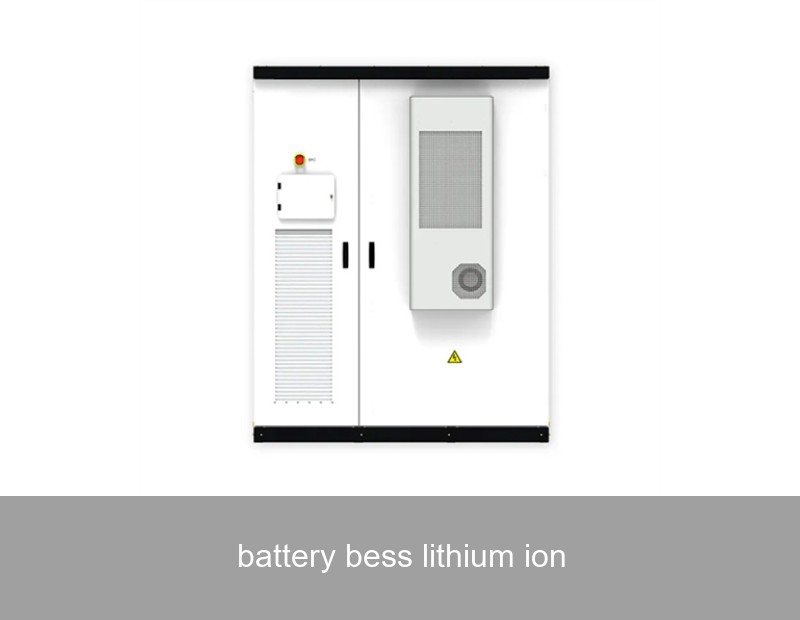
A Battery Energy Storage System (BESS) is far more than a collection of batteries. It's an integrated system comprising lithium-ion battery modules, a sophisticated power conversion system (PCS), battery management software (BMS), and thermal management controls. Think of it as the brain and brawn of energy storage—capable of storing electricity from the grid or renewable sources and dispatching it precisely when and where it's needed.
Among various chemistries, lithium-ion has emerged as the dominant force for grid-scale and commercial battery BESS applications. But why?
- High Energy Density: They pack a significant amount of energy into a relatively small, lightweight footprint, crucial for space-constrained sites.
- Proven Efficiency & Long Cycle Life: Modern Li-ion systems offer round-trip efficiencies exceeding 90% and can withstand thousands of deep charge/discharge cycles, making them a sound long-term investment.
- Rapid Response: They can go from idle to full power in milliseconds, providing essential grid services that traditional power plants simply cannot match.
- Falling Costs: Driven by scale and innovation, the levelized cost of storage for lithium-ion BESS has plummeted, accelerating adoption. According to BloombergNEF, the global energy storage market is set to grow exponentially this decade[1].
At Highjoule, we leverage advanced, UL-certified lithium-ion battery cells within our modular H-Series BESS platforms. This modular design allows for scalable configurations, from a few hundred kWh for a commercial facility to multi-MWh installations for utility microgrid applications, ensuring every project gets a perfectly sized solution.

Image Source: Unsplash - A utility-scale BESS installation, similar to Highjoule's containerized solutions.
How a Lithium-Ion Battery BESS Works: More Than Just a Big Battery
Let's break down the magic. When your solar panels produce excess power, instead of letting it go to waste, the BESS directs that electricity to charge its battery banks. Later, when the sun sets or energy prices spike, the system inverts the process, converting stored DC power back to AC for your facility.
The true intelligence lies in the software. Highjoule's Energy Management System (EMS) acts as the conductor, making autonomous decisions based on:
- Real-time electricity prices (for energy arbitrage)
- On-site power generation and consumption patterns
- Grid signals for frequency regulation
- Backup power requirements
| BESS Component | Primary Function | Highjoule's Approach |
|---|---|---|
| Battery Rack (Li-ion) | Stores electrical energy chemically | Utilizes tier-1, thermally managed cells with active monitoring for safety & longevity. |
| Power Conversion System (PCS) | Converts AC to DC (charging) and DC to AC (discharging) | High-efficiency, bi-directional inverters ensure minimal energy loss during conversion. |
| Battery Management System (BMS) | Monitors cell voltage, temperature, and state of charge | Proprietary algorithms prevent overcharge/over-discharge, balancing cells for optimal life. |
| Energy Management System (EMS) | The "brain" that controls when to charge/discharge | AI-driven platform that maximizes financial return or operational resilience based on user goals. |
Key Benefits of Deploying a Lithium-Ion BESS
Investing in a lithium-ion battery BESS delivers a compelling multi-layered return on investment.
Financial Savings & Revenue Generation
- Peak Shaving: Reduce demand charges by using stored energy during short periods of high power draw.
- Energy Arbitrage: Buy and store electricity when prices are low, use it when prices are high.
- Grid Services: In some markets, systems can earn revenue by providing frequency regulation or capacity to the grid.
Operational Resilience & Sustainability
- Backup Power: Provide seamless, instantaneous power during grid outages, critical for data centers, hospitals, and manufacturing.
- Renewable Integration: Smooth the intermittent output of solar and wind, enabling a higher penetration of clean energy. The U.S. Department of Energy highlights storage as key to a decarbonized grid[2].
- Reduced Carbon Footprint: Maximize self-consumption of on-site renewables, directly cutting Scope 2 emissions.
From Theory to Grid: A Real-World Case Study
Let's move beyond theory. In 2022, Highjoule partnered with a mid-sized fruit packing cooperative in California. The challenge: extreme "peak demand" charges during their cooling and packing cycles were eroding profits, and grid reliability concerns threatened product spoilage.
The Highjoule Solution: We deployed a 1.2 MWh H-Series lithium-ion BESS, integrated with their existing rooftop solar array and controlled by our intelligent EMS.
The Results (12-month period):
- Demand Charge Reduction: 32% decrease in peak power draw from the grid.
- Energy Cost Savings: Over $85,000 saved through arbitrage and peak shaving.
- Resilience: The system provided 4 hours of full backup power during a planned utility outage, preventing tens of thousands in potential loss.
- Sustainability: Increased solar self-consumption from 68% to over 92%.
This case exemplifies how a tailored battery BESS lithium ion system solves real economic and operational problems simultaneously.

Image Source: Unsplash - Commercial and industrial facilities with solar are ideal candidates for BESS integration.
Choosing the Right BESS for Your Needs
Not all lithium-ion battery storage systems are created equal. When evaluating a provider, consider:
- Total Cost of Ownership (TCO): Look beyond upfront price to include efficiency, degradation rates, and warranty terms.
- Technology & Safety: Ensure robust cell chemistry, thermal runaway prevention, and industry certifications (UL, IEC).
- Software Intelligence: The EMS is where value is optimized. Can it adapt to changing tariffs and usage patterns?
- Partner Expertise: Does the provider offer end-to-end service from design and financing to long-term maintenance?
Highjoule stands out by offering this full lifecycle partnership. Our Power-as-a-Service model, for instance, allows customers to benefit from a cutting-edge BESS with no upfront capital, paying only for the energy services it delivers.
The Future of Lithium-Ion BESS Technology
The innovation curve is steep. We're advancing towards solid-state batteries, which promise even greater safety and energy density. Furthermore, AI and machine learning are making BESS fleets smarter, enabling virtual power plants (VPPs) that aggregate distributed resources to act as a single, grid-stabilizing force. Highjoule's R&D is actively engaged in these areas, ensuring our clients are always at the leading edge of storage technology.
The journey to energy independence and grid stability is complex, but the tool is proven. Whether your goal is to lock in energy costs, achieve net-zero targets, or simply keep the lights on no matter what, the question is no longer if battery storage is viable, but how to implement it strategically. What specific energy challenge—be it demand charges, renewable curtailment, or reliability fears—is costing your business the most, and are you ready to explore how a smart lithium-ion BESS can turn that challenge into a competitive advantage?
 Inquiry
 Online Chat