


The Complete Guide to a 2 kW Off-Grid Solar System: Your Path to Energy Independence
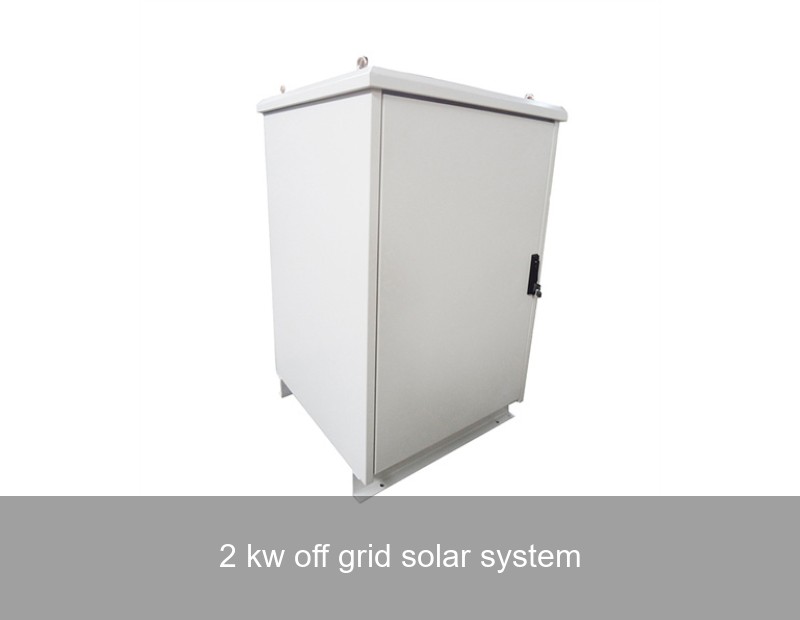
Imagine a quiet, self-sufficient power source humming away on your property, completely independent of the utility grid. This isn't a futuristic dream; it's the practical reality delivered by a 2 kW off-grid solar system. For homeowners, cabin owners, and remote businesses across Europe and the US, this scalable solution is becoming the gold standard for reliable, clean energy independence. But what can it truly power, and how does it work in the real world? Let's demystify this powerful package and explore how modern technology, like the systems from Highjoule, makes off-grid living not just possible, but profoundly efficient and smart.
The Off-Grid Power Phenomenon: From Niche to Necessity
The desire to disconnect isn't just philosophical; it's often driven by hard economics and practical needs. Whether it's a remote mountain cabin in the Swiss Alps, a ranch in Texas far from power lines, or a resilience-focused home in California's wildfire country, the grid isn't always an option—or a desired one. Rising electricity costs and grid instability are pushing more people to consider taking full control of their power.
Here's where the data gets interesting. According to the International Energy Agency (IEA), global solar PV capacity is set to triple by 2027, with distributed systems like off-grid playing a crucial role. A 2 kW off-grid solar system sits perfectly in the sweet spot for many applications. It's substantial enough to handle essential daily loads for a small household or cabin efficiently, yet it remains manageable in terms of cost and physical footprint. This system size represents a conscious choice for sustainable, off-the-grid living without over-engineering or under-powering your space.
Breaking Down the Components: The Anatomy of Reliability
A robust 2 kW off-grid solar system is far more than just panels on a roof. It's an integrated ecosystem where each component must perform flawlessly. Let's walk through the essential parts:
- Solar Panels (The Generators): Typically, a 2 kW system comprises 5-6 high-efficiency panels (e.g., 400W each). Their job is to convert sunlight into direct current (DC) electricity.
- Charge Controller (The Traffic Cop): This vital device regulates the power flowing from the panels to the batteries, preventing overcharging and ensuring optimal battery health.
- Battery Bank (The Heart of the System): This is your energy reservoir. For a 2 kW system, you need a battery bank with sufficient capacity (measured in kilowatt-hours, kWh) to store energy for nights and cloudy days. Modern lithium-ion batteries, like Highjoule's HyperCore ESS, offer superior depth of discharge, longer lifespan, and compact size compared to traditional lead-acid.
- Inverter (The Translator): Since most appliances use alternating current (AC), the inverter's job is to convert the stored DC power from the batteries into usable AC power. A high-quality pure sine wave inverter is crucial for running sensitive electronics smoothly.

Credit: A modern, integrated off-grid setup. Highjoule's systems are designed for such clean, professional installations.
What Can You Actually Power? A Realistic Load Table
Understanding your "load" is critical. Here's a realistic snapshot of what a well-managed 2 kW off-grid system can support daily:
| Appliance | Power (Watts, approx.) | Daily Use (Hours) | Daily Energy (Wh) |
|---|---|---|---|
| LED Lighting | 30 | 5 | 150 |
| Laptop | 60 | 4 | 240 |
| 12 cu. ft. Energy Star Fridge | 150 | 8 (cycling) | 1200 |
| Water Pump | 400 | 1 | 400 |
| TV (LED) | 80 | 3 | 240 |
| Microwave | 800 | 0.25 | 200 |
| Total Daily Estimate | ~2,430 Wh (2.43 kWh) | ||
This table shows that with mindful energy use, a 2 kW system can comfortably cover essentials. The key is pairing it with a sufficiently sized battery bank (e.g., 5-10 kWh of usable storage) to bridge energy gaps.
A Real-World Case: The Alpine Cabin Transformation
Let's move from theory to a concrete example. In 2022, a family in the Austrian Alps sought to make their weekend cabin a year-round retreat. The challenge: no grid connection, harsh winters with less sun, and a need for reliable power for heating pumps, lighting, and basic appliances.
The solution was a tailored 2 kW off-grid solar system with a focus on winter resilience. It featured:
- 6 x 350W bifacial solar panels to capture light reflected from snow.
- A high-voltage MPPT charge controller for better low-light efficiency.
- A Highjoule HyperCore 10.2 kWh lithium battery bank to provide multiple days of autonomy.
- A 3 kW pure sine wave inverter with a built-in generator starter for extended cloudy periods.
The results were transformative. Data from the system's integrated monitoring (a key feature of Highjoule's EnergyOS platform) showed an average daily winter generation of 4-5 kWh, enough to cover their critical loads. Their propane consumption for backup heating dropped by 70%, and their annual energy costs became predictable at zero—aside from minimal system maintenance. This case underscores that success isn't just about the panels; it's about intelligent storage, smart management, and component synergy.
The Highjoule Solution: Intelligent Power for Independent Living
As a global leader in advanced energy storage since 2005, Highjoule understands that an off-grid system is a commitment. Our approach goes beyond selling components; we provide integrated, intelligent power solutions. For a 2 kW off-grid solar system, our value lies in the brain and the brawn.
The brawn is our HyperCore Residential Energy Storage System. Its lithium iron phosphate (LiFePO4) chemistry is inherently safe, offers a lifespan of over 6000 cycles, and operates efficiently in a wide temperature range—perfect for a Montana winter or a Spanish summer. It seamlessly integrates with leading solar inverters.
The brain is our proprietary EnergyOS software platform. For an off-grid user, this means real-time visibility into your energy generation, consumption, and battery state-of-charge from your smartphone. More importantly, its AI-driven energy management learns your patterns and optimally allocates power, ensuring your batteries last through the night and prioritizing critical loads if needed. This intelligence turns a simple power system into a resilient and adaptive energy asset.

Credit: Modern lithium battery systems, like Highjoule's HyperCore, offer compact, safe, and intelligent storage.
Is a 2 kW Off-Grid System Right for You? Key Considerations
Before embarking on your off-grid journey, ask yourself these critical questions:
- Location & Solar Resource: What is your average daily sun hours? Tools like PVGIS from the European Commission or NREL's PVWatts in the US are invaluable for accurate production estimates.
- Energy Audit: Have you meticulously listed every appliance, its wattage, and usage hours (like our table above)? This is the non-negotiable first step.
- Backup Planning: How will you handle consecutive cloudy days? Will you include a backup generator (which a smart system like Highjoule's can auto-start), or oversize your battery bank?
- Professional Installation: Off-grid systems are complex. Partnering with a certified installer who can design, permit, and commission the system is essential for safety and performance.
Remember, a 2 kW off-grid solar system is a statement of independence. It requires a shift in energy consciousness—thinking in terms of conservation and efficient use. But with today's technology, that shift is rewarded with unparalleled reliability and freedom from utility bills and outages.
Looking Ahead: The Future is Integrated and Smart
The next evolution for off-grid systems is deeper integration and smarter control. Imagine your system not only powering your lights but also intelligently managing an electric vehicle charger during peak sun, or integrating with smart home systems to pre-heat water when the batteries are full. Companies like Highjoule are at the forefront of this integration, ensuring that your off-grid system is not a standalone relic but a connected, future-ready home energy hub.
So, is your property ready for the quiet confidence of self-generated power? What would energy independence empower you to do or build, free from the constraints of the grid?
 Inquiry
 Online Chat