


Your Complete Guide to the Solar Energy Storage Cabinet Kit for Home
Have you ever watched your solar panels generate a surplus of clean energy on a sunny afternoon, only to see it flow back to the grid, knowing you'll have to buy it back at a higher price in the evening? This common frustration is the very reason the solar energy storage cabinet kit for home has become a game-changer. It's the missing piece that transforms your solar array from a daytime helper into a 24/7 personal power plant. Let's explore how this technology works, why it's more relevant now than ever, and how choosing the right system can maximize your energy independence and savings.
Table of Contents
What Exactly is a Solar Energy Storage Cabinet Kit for Home?
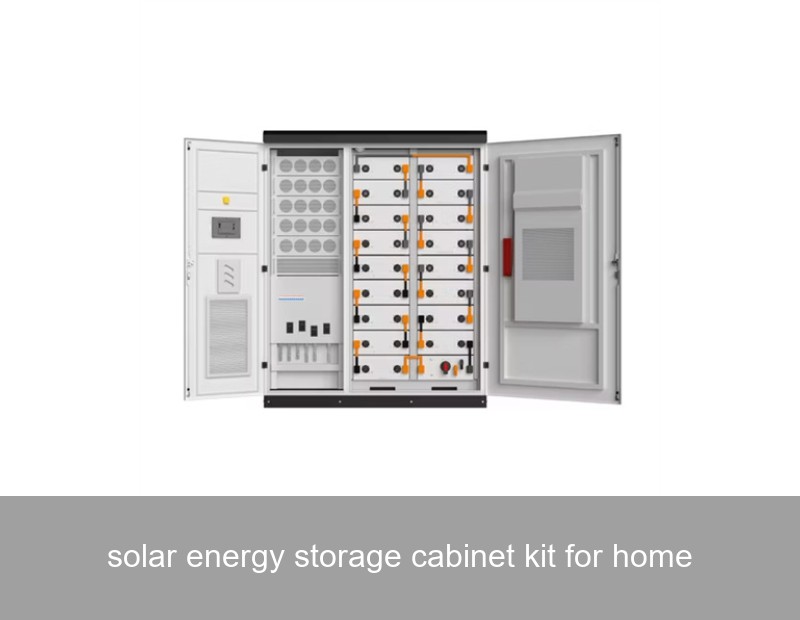
Think of a solar energy storage cabinet kit for home as your home's personal energy bank. It's an integrated system, typically housed in a sleek, durable cabinet, that stores the excess electricity your solar panels produce. Instead of sending it to the utility grid, you store it for use when the sun isn't shining—at night, during cloudy weather, or during peak rate periods when grid electricity is most expensive.
A complete kit goes beyond just a battery. It includes the battery modules themselves, a built-in battery management system (BMS) for safety and longevity, a hybrid inverter (or a separate inverter/charger), thermal management systems, and safety disconnects—all pre-configured and tested within a single, compact enclosure. This "all-in-one" approach, championed by leading providers like Highjoule, simplifies installation, enhances safety, and ensures all components communicate seamlessly for optimal performance. Highjoule's ResiPower Cabinet Series, for instance, is designed specifically for this purpose, offering scalable storage from 10 kWh to 30 kWh in a unified, weather-resistant cabinet that integrates perfectly with new or existing solar installations.
Why Home Energy Storage is Booming: Data & Drivers
The surge in demand for home battery kits isn't accidental. It's a direct response to several powerful market and environmental forces.
- Rising Energy Costs & Volatile Tariffs: In Europe and the U.S., electricity prices have seen significant volatility and upward trends. Time-of-Use (TOU) rates, where electricity costs more during evening peak hours, make storing cheap solar energy for later use a financially savvy move.
- Increased Grid Resilience Concerns: From heatwaves in California to winter storms in Texas, grid outages are a growing concern. A storage kit provides essential backup power, keeping critical loads like refrigeration, lighting, and medical devices running.
- Policy Support and Incentives: Government policies are a major catalyst. The U.S. Residential Clean Energy Credit (formerly the Investment Tax Credit) now covers 30% of the cost of a qualifying battery storage system, even if it's not paired with new solar panels. Similar incentives exist across many European countries.
- Advancing Technology, Declining Costs: Lithium-ion battery pack prices have fallen dramatically over the past decade, making storage more accessible. Simultaneously, energy density and cycle life have improved, meaning you get more power and longer system life for your investment.

Image Source: Unsplash (Representative image of a home energy storage installation)
Key Components of a High-Quality Kit
Not all storage kits are created equal. Understanding the core components helps you discern quality and value.
| Component | Function | What to Look For |
|---|---|---|
| Battery Cells & Chemistry | The core energy storage medium. | Lithium Iron Phosphate (LFP/LiFePO4) is now the preferred choice for homes due to its superior safety, long cycle life (6,000+ cycles), and stability, compared to older NMC chemistries. |
| Battery Management System (BMS) | The "brain" that monitors and protects the battery. | A robust BMS ensures each cell operates within safe voltage, temperature, and current ranges, preventing damage and maximizing lifespan. Look for systems with cell-level monitoring. |
| Hybrid Inverter/Charger | Manages power flow between solar, battery, grid, and home. | Must be high-efficiency (>97%) and capable of seamless islanding (creating a microgrid during a blackout). Compatibility with your solar panels is crucial. |
| Enclosure & Thermal Management | Houses and protects all components. | A robust, UL-certified cabinet with integrated cooling/heating (like Highjoule's active liquid cooling in its ResiPower Pro series) ensures optimal performance in all climates and enhances safety. |
| Energy Management Software | Intelligently controls energy based on habits and tariffs. | User-friendly app that allows for mode setting (e.g., maximize self-consumption, backup priority, cost-saving based on TOU rates). |
The Real Impact: A Case Study from Sacramento, California
Data tells a compelling story, but real-world results are undeniable. Consider the Johnson family in Sacramento, CA. They installed a 8 kW solar array in 2020 but were frustrated by high evening TOU rates from their utility. In early 2023, they added a Highjoule ResiPower 15 cabinet kit (15 kWh usable capacity).
- Situation: Pre-storage, their monthly electricity bill averaged $45 despite having solar, due to nightly grid draw during peak hours ($0.45/kWh).
- Solution: The Highjoule system was configured in "Cost-Saving Mode," automatically charging from solar and discharging during the 4-9 pm peak window.
- Results (12-month average):
- Monthly electricity bill: $3 (grid connection fee only).
- Self-consumption rate of solar power increased from ~40% to over 85%.
- The system provided uninterrupted backup during two planned public safety power shutoffs (PSPS) totaling 18 hours.
"The system paid for itself faster than we calculated, especially with the federal tax credit," noted Mr. Johnson. "The peace of mind during fire-season outages is priceless." This case mirrors findings from the National Renewable Energy Laboratory (NREL), which highlights how pairing storage with solar can dramatically increase the value of rooftop PV for homeowners.
How Highjoule's Solutions Are Designed for This Reality
Highjoule engineers its solar energy storage cabinet kits with these exact scenarios in mind. The ResiPower series features modular LFP battery packs, allowing homeowners to start with a base configuration and expand capacity as needs grow. Their proprietary EnergyOS platform intelligently learns household consumption patterns and integrates real-time weather forecasts and utility rate schedules to optimize every kilowatt-hour. This isn't just storage; it's intelligent energy asset management for the home.

Image Source: Unsplash (Representative image of a modern home battery cabinet)
Choosing the Right System: What to Look For
Selecting a solar energy storage cabinet kit for home is a significant decision. Here’s a practical checklist:
- Safety First: Insist on UL 9540 (system) and UL 9540A (cell) certifications. LFP chemistry is the benchmark for residential safety.
- Scalability: Can you easily add more battery modules later if your needs change (e.g., buying an EV)?
- Warranty & Lifespan: Look for a clear warranty covering both capacity (e.g., 70% remaining after 10 years) and cycle life. A 10-year warranty is standard for quality products.
- Grid Services & Future-Proofing: In some regions, systems can participate in virtual power plant (VPP) programs to earn revenue. Ask if the hardware and software are capable.
- Professional Installation & Support: Work with a certified installer who can assess your home's electrical system, ensure proper permitting, and provide ongoing support. Highjoule operates a network of certified partners across the U.S. and Europe to guarantee this.
The Intelligent Future of Home Energy
The evolution of the solar energy storage cabinet kit for home is moving towards greater intelligence and grid interaction. We're seeing the rise of systems that don't just react but predict—using AI to forecast household usage and solar production. Furthermore, as electric vehicle adoption soars, the next logical step is bidirectional charging, where your EV battery becomes an additional asset for home backup or grid support. The integrated home energy system, managing solar, storage, EV, and smart appliances, is the undeniable future.
So, as you consider taking control of your energy costs and resilience, the question isn't just about buying a battery. It's about choosing an integrated energy platform that can adapt and optimize for the next 15+ years. What energy challenges is your home facing today that a smart, future-ready storage solution could solve?
 Inquiry
 Online Chat