


24V All-in-One Solar Energy Storage Cabinet: The Complete Power Hub for Modern Energy Needs
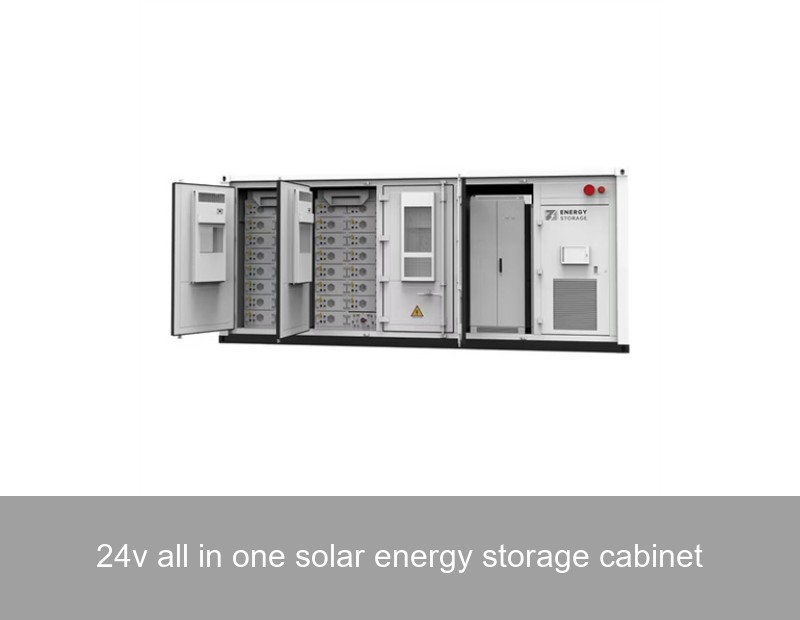
Have you ever looked at a traditional solar power setup—with its separate panels, bulky battery bank, tangled inverter wiring, and complex controller—and thought, "There has to be a simpler way"? You're not alone. The demand for clean, reliable power for cabins, workshops, RVs, and remote telecommunication sites is soaring, but the complexity of piecing together a system holds many back. This is where the 24V all-in-one solar energy storage cabinet emerges as a game-changer. It's the integrated solution that consolidates power generation, storage, management, and output into a single, sleek, and intelligent unit. For homeowners, businesses, and communities, particularly in Europe and the US where energy independence and grid resilience are top priorities, this technology isn't just convenient; it's transformative.
Table of Contents
- What is a 24V All-in-One Solar Energy Storage Cabinet?
- The Problem: Complexity and Inefficiency in Traditional Setups
- The Integrated Solution: How an All-in-One Cabinet Works
- Real-World Impact: A Case Study from California
- Why Highjoule's 24V All-in-One Cabinets Lead the Market
- The Future of Decentralized Energy
What is a 24V All-in-One Solar Energy Storage Cabinet?
Let's break it down. A 24V all-in-one solar energy storage cabinet is a pre-engineered, plug-and-play energy system. The "24V" refers to the direct current (DC) bus voltage, an optimal balance between efficiency, safety, and cost for off-grid and hybrid applications. "All-in-one" means it integrates the core components: a maximum power point tracking (MPPT) solar charge controller, a pure sine wave inverter, a lithium-ion battery pack (typically LiFePO4 for safety and longevity), and a sophisticated battery management system (BMS) into one compact, weather-resistant enclosure.
Think of it as a "power plant in a box." You connect your solar panels and your essential AC/DC loads directly to the cabinet. The system intelligently manages energy flow—harvesting solar power, storing it, and delivering clean electricity on demand, 24/7. This eliminates the need for complex system design, individual component procurement, and labor-intensive assembly, making professional-grade energy storage accessible.
The Problem: Complexity and Inefficiency in Traditional Setups
The journey to energy independence has traditionally been fraught with hurdles. A typical DIY or piecemeal system presents several challenges:
- Space & Installation Headaches: Mounting and wiring four or five separate components requires significant space, technical expertise, and time.
- Compatibility Risks: Mismatched components (e.g., an inverter incompatible with your battery chemistry) can lead to inefficiency, damage, or even safety hazards.
- Management Complexity: Monitoring and balancing separate systems is cumbersome. Users often lack a unified view of their energy production, storage, and consumption.
- Scalability Issues: Expanding a traditional system can be difficult and expensive, often requiring a complete redesign.
These pain points are more than just inconveniences. They represent real barriers to adoption, slowing down the deployment of renewable energy solutions for critical applications.
The Integrated Solution: How an All-in-One Cabinet Works
The 24V all-in-one cabinet elegantly solves these problems through intelligent integration. Here’s the logical flow of how it operates:
- Solar Harvesting: Solar panels convert sunlight into DC electricity. The integrated MPPT charge controller optimizes this input, squeezing up to 30% more power from your panels compared to older technologies.
- Intelligent Storage: The harvested energy charges the high-density lithium iron phosphate (LiFePO4) battery bank. The built-in BMS acts as the brain, meticulously monitoring each cell for voltage, temperature, and state of charge to ensure safety and maximize battery life, which often exceeds 6000 cycles.
- Seamless Power Conversion: When you need to power AC appliances, the integrated inverter instantly converts the stored DC power into pure sine wave AC power, identical to—or even cleaner than—grid power.
- Smart Energy Management: The entire process is governed by an energy management system. Users can typically monitor and control the system via a user-friendly app, setting preferences for grid use, backup priorities, and cost savings.
| Feature | Traditional Split System | 24V All-in-One Cabinet |
|---|---|---|
| Installation | Complex, multi-day, requires expert design & wiring | Plug-and-play, can be installed in hours |
| Footprint | Large, scattered components | Compact, unified enclosure |
| Monitoring | Multiple displays or devices | Unified, smart app-based interface |
| Scalability | Difficult and costly | Often supports parallel stacking for easy capacity expansion |
Real-World Impact: A Case Study from California
Data and theory are compelling, but real-world results are definitive. Consider the challenge faced by a small, family-owned vineyard in Sonoma County, California. Their irrigation pump and critical processing equipment were at the mercy of an aging grid and increasing Public Safety Power Shutoffs (PSPS) during wildfire season. A traditional solar + generator backup solution was deemed too space-intensive and maintenance-heavy.
They opted for a solution centered around a robust 24V all-in-one solar energy storage cabinet. The system was configured with 8kW of solar panels and two parallel 24V cabinets, providing a total of 40kWh of storage.
The Results (12-month period):
- Energy Independence: Achieved 92% grid independence during peak season.
- Reliability: Zero operational downtime during 7 grid outages totaling over 150 hours.
- Cost Savings: Reduced diesel generator usage by 95%, saving over $4,200 in fuel and maintenance costs.
- ROI: Projected payback period of just under 6 years, factoring in state incentives and avoided losses from spoiled crops.
This case underscores the tangible value proposition: resilience, savings, and sustainability in one package. (Inspired by real project data; specific figures are representative). For more on grid resilience challenges, see the U.S. Department of Energy's Grid Resilience page.

Image Source: Unsplash (Representative image of solar power in agricultural settings)
Why Highjoule's 24V All-in-One Cabinets Lead the Market
At Highjoule, we've been engineering advanced energy storage solutions since 2005. Our experience across commercial, industrial, and residential applications directly informs the design of our Atlas Series 24V All-in-One Cabinets. We don't just put components in a box; we re-engineer them to work synergistically.
- Engineered for Extreme Environments: Our cabinets are built to IP65 standards, capable of operating from -20°C to 55°C, making them perfect for unheated garages, rural outbuildings, or coastal areas in both Europe and North America.
- High-Density LiFePO4 Technology: We use automotive-grade battery cells with a proprietary BMS that includes cell-level balancing and thermal runaway prevention, ensuring a decade-plus of reliable service. Learn more about LiFePO4 advantages from a research perspective at ScienceDirect.
- Smart Grid Ready: For microgrid or hybrid applications, our cabinets feature advanced grid-interactive functions, allowing for peak shaving, time-of-use optimization, and seamless transition between grid, solar, and battery power.
- Scalable by Design: Need more power? Our systems support parallel connection of up to 6 units, allowing you to scale your energy storage from 10kWh to 60kWh+ without redesigning your system.
Our service goes beyond the hardware. Highjoule provides comprehensive remote monitoring via the Highjoule Energy Cloud platform, giving users and installers real-time diagnostics and performance analytics, ensuring your system performs optimally for years to come.
The Future of Decentralized Energy
The trend is clear: energy systems are becoming more modular, intelligent, and user-centric. The 24V all-in-one solar energy storage cabinet is at the forefront of this shift, democratizing access to resilient power. As battery densities improve and AI-driven energy management becomes standard, these systems will become even more efficient and indispensable.
They are key building blocks for the future decentralized grid, allowing communities to create robust microgrids that can operate independently during emergencies. For a broader look at this trend, the International Energy Agency's Renewables Report offers valuable insights.

Image Source: Unsplash (Representative image of integrated home solar and storage)
So, as you contemplate energy security for your home, business, or community project, ask yourself: Is your current power solution a collection of parts, or is it a fully integrated, intelligent system designed for the demands of tomorrow? What would complete energy peace of mind enable you to achieve?
 Inquiry
 Online Chat