


24V All-in-One Solar ESS: Your Simplified Gateway to Energy Independence
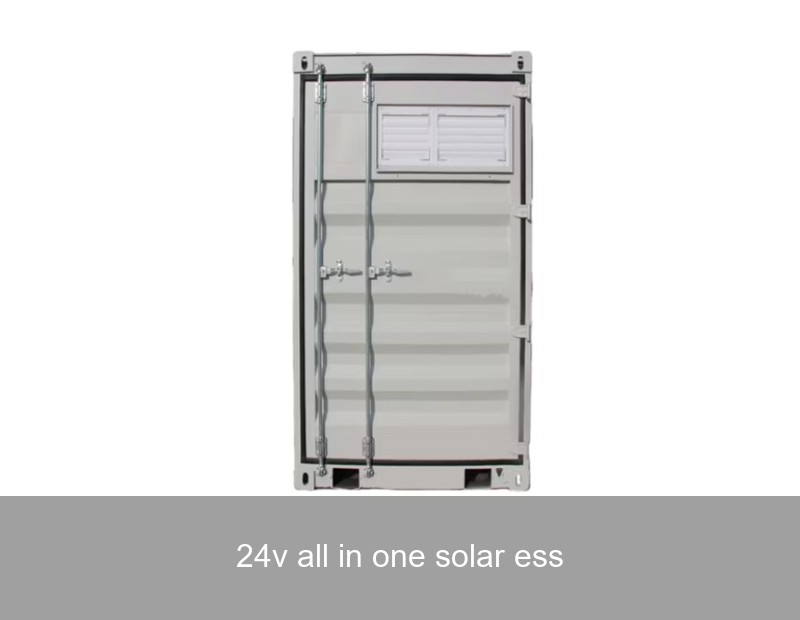
Let's be honest: navigating the world of solar energy storage can feel overwhelming. Between inverters, charge controllers, battery management systems, and the maze of wiring, many homeowners and small business owners are left wondering if energy independence is worth the technical headache. What if there was a simpler, more integrated solution? Enter the 24V all-in-one solar ESS (Energy Storage System). This compact powerhouse is revolutionizing how we think about small to mid-scale solar power, especially for off-grid cabins, workshops, RVs, and critical backup power. By combining all essential components into a single, user-friendly unit, it demystifies solar storage and makes sustainable energy accessible. As a leader in advanced energy storage, Highjoule has been at the forefront of designing intelligent, integrated systems that deliver reliability without compromise.
The Problem It Solves: Taming Complexity and Containing Cost
The traditional path to a solar-plus-storage setup involves a component-based approach. You source a solar charge controller, a separate inverter, a battery bank, and a monitoring system—each from potentially different manufacturers. This creates a web of compatibility concerns, requires significant installation space and expertise, and often leads to higher upfront "soft costs" like design and labor. For a 24V system, commonly used for its optimal balance of efficiency and safety for mid-range power needs (typically 3kW to 5kW), this complexity is a major barrier.
This is where the all-in-one design shines. Imagine unboxing a single appliance that handles everything: converting solar DC power to usable AC power, managing battery charging and discharging, and protecting all connected devices. The simplification is not just physical; it's financial and operational. According to the National Renewable Energy Laboratory (NREL), balance-of-system costs and installation labor remain significant portions of total solar storage expenses. Integrated systems directly address this pain point.
Inside the Box: Key Components and Tangible Benefits
So, what exactly makes a 24V all-in-one solar ESS tick? Let's break down its integrated core:
- Hybrid Inverter/Charger: The brain of the operation. It converts DC from solar panels or batteries to AC for your appliances and can convert AC from the grid or a generator to DC to charge the batteries.
- MPPT Solar Charge Controller: Maximizes the energy harvest from your solar panels by constantly tracking the optimal operating voltage and current.
- Battery Management System (BMS): The guardian of your battery bank. It monitors cell voltage, temperature, and state of charge to ensure safety, longevity, and performance.
- Grid & Generator Transfer Switch: Seamlessly switches between power sources (solar/battery, grid, generator) within milliseconds to keep your loads running without interruption.
- User Interface & Monitoring: A simple display and, often, a Wi-Fi/Bluetooth app for real-time monitoring and control from your smartphone.
The benefits of this integration are compelling:
| Aspect | Traditional Component System | 24V All-in-One Solar ESS |
|---|---|---|
| Installation | Complex, time-consuming, requires expert design. | Plug-and-play simplified, faster, reduces labor costs. |
| Footprint | Large, requires mounting multiple units. | Compact, wall-mountable single unit. |
| Compatibility | Risk of mismatched components. | Pre-engineered harmony for optimal performance. |
| Scalability | Can be complex to expand. | Often designed for easy parallel expansion. |
| Monitoring & Control | Multiple interfaces possible. | Unified, intuitive platform. |

Image: A modern, integrated energy storage system simplifies installation and saves space. (Photo by American Public Power Association on Unsplash)
A Real-World Case Study: Off-Grid Mountain Cabin, Colorado, USA
Let's move from theory to practice. Consider the case of a family-owned off-grid cabin in the Rocky Mountains. Their old propane generator system was noisy, expensive to run, and unreliable during heavy snowfalls. Their goal was silent, automatic, and renewable power for essentials: lighting, a refrigerator, a water pump, a small kitchenette, and occasional power tools.
They installed a 24V all-in-one solar ESS paired with 2.4 kW of solar panels and a 10 kWh lithium iron phosphate (LiFePO4) battery bank. Here's the outcome after one year, based on monitored data:
- Energy Independence: Generator usage dropped by over 90%, now used only for occasional battery top-ups during extended winter storms.
- Cost Savings: Eliminated annual propane fuel costs of approximately $800. The system's ROI is projected within 6-8 years.
- Reliability: The system provided uninterrupted power during multiple grid outages in the nearby town and a severe 3-day snowstorm where road access was cut off.
- User Experience: The family reported the system required "virtually no maintenance or thought," with the mobile app allowing them to check battery status remotely before weekend trips.
This case exemplifies the perfect application of a 24V all-in-one system: a manageable power need where simplicity, reliability, and low maintenance are paramount.
The Highjoule Solution: Engineered for Simplicity and Peak Performance
At Highjoule, we understand that "simple" should never mean "less capable." Our HelioCore 24i All-in-One Energy System is engineered based on nearly two decades of field experience in diverse climates from Scandinavian winters to Mediterranean summers. It embodies the core promise of a 24V all-in-one solar ESS while incorporating our proprietary smart technology.
The HelioCore 24i features a high-efficiency hybrid inverter with a peak surge capacity for motor starts, an ultra-fast MPPT charge controller that captures more energy in low-light conditions, and an advanced adaptive BMS that communicates directly with Highjoule's certified battery racks. This deep integration extends battery life by optimizing charge cycles based on usage patterns and weather forecasts—a feature often absent in standard all-in-one units.
For our customers in Europe and the U.S., this translates to a system that not only installs quickly but also performs intelligently for years. We provide comprehensive support, from system design assistance using our online configurator to a network of certified installers, ensuring your journey to energy independence is smooth from start to finish.

Image: Off-grid and backup power applications are ideal for 24V all-in-one systems. (Photo by Zbynek Burival on Unsplash)
Is a 24V All-in-One System Right for You? Key Considerations
While powerful, a 24V all-in-one solar ESS has an ideal application window. Ask yourself these questions:
- What is your typical and peak power load? These systems are ideal for continuous loads up to 3-5 kW, perfect for most small homes, cabins, or critical circuit backup.
- What is your energy storage goal? Is it for daily self-consumption, overnight backup, or full off-grid living? This determines your needed battery capacity, which can be expanded with compatible battery modules like those in the Highjoule ecosystem.
- What are your future plans? Some systems, including the HelioCore 24i, allow you to link multiple units in parallel. This future-proofs your investment if your energy needs grow.
For larger residential or commercial needs (e.g., whole-home backup, industrial loads), a 48V system or a three-phase commercial solution would be more appropriate. The U.S. Department of Energy provides excellent resources for understanding your home's energy profile.
Your Energy, Simplified
The 24V all-in-one solar ESS represents a significant leap towards democratizing energy storage. It removes the technical barriers, allowing you to focus on the outcome: clean, reliable, and controllable power. Whether you're looking to weather a storm, power a remote project, or simply reduce your reliance on the volatile grid, this integrated technology offers a compelling path forward.
What's the first appliance or system you would want to secure with your own independent power supply?
 Inquiry
 Online Chat