


25 kVA Energy Storage Cabinet: The Cornerstone of Modern Power Resilience
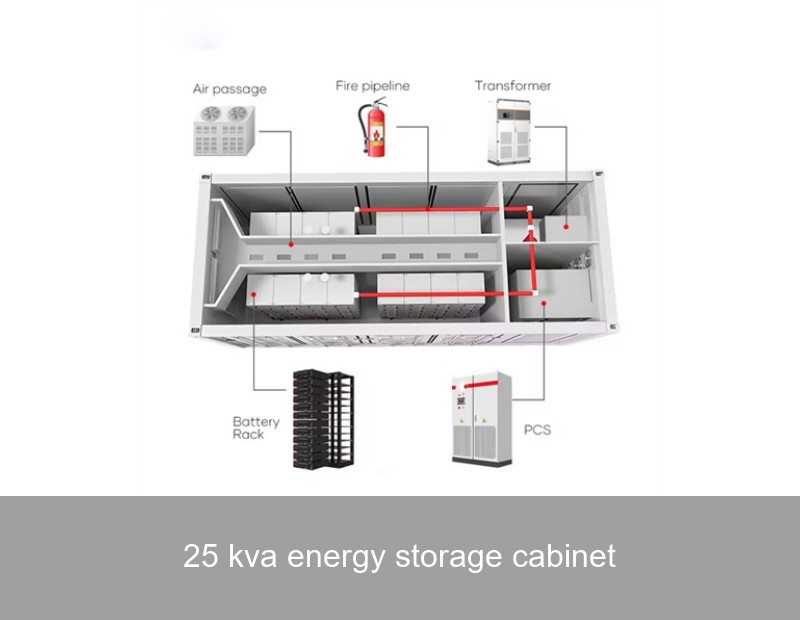
Have you ever wondered what keeps a factory running during a grid outage, or how a supermarket keeps its freezers humming when the lights go out? Increasingly, the answer lies in a robust, cabinet-sized solution: the 25 kVA energy storage cabinet. This unit represents a sweet spot in the energy storage world—powerful enough for significant commercial and industrial applications, yet modular and manageable. As businesses across Europe and the U.S. grapple with rising energy costs, grid instability, and sustainability goals, understanding this technology is no longer a niche concern; it's a strategic imperative. Let's explore why the 25 kVA cabinet is becoming a cornerstone of modern energy management.
Table of Contents
- The Phenomenon: Why Energy Storage is Now Non-Negotiable
- The Data: Quantifying the Need for 25 kVA Solutions
- A Real-World Case: Stabilizing a German Manufacturing Plant
- The Highjoule Solution: Intelligent 25 kVA Energy Storage Cabinets
- Key Components of a High-Performance Storage Cabinet
- Where Does a 25 kVA Cabinet Make the Most Impact?
- Looking Ahead: The Evolving Role of Modular Storage
The Phenomenon: Why Energy Storage is Now Non-Negotiable
The energy landscape is shifting beneath our feet. Two dominant forces are at play: the volatility of traditional grids and the variable nature of renewable energy sources like solar and wind. In the U.S., major weather events are causing more frequent and prolonged power outages. In Europe, the energy crisis highlighted the risks of over-reliance on imported fuels. Simultaneously, businesses are installing solar panels at record rates, but this sun-derived power isn't always available when energy demand peaks. This creates a critical gap—a mismatch between when energy is generated and when it's needed most. The 25 kVA energy storage cabinet sits squarely in this gap, acting as a buffer, a backup, and a financial tool all in one.
The Data: Quantifying the Need for 25 kVA Solutions
Let's talk numbers. A 25 kVA (kilo-volt-ampere) system translates to 25,000 volt-amperes. In practical terms, for a typical commercial facility, this represents a substantial amount of power. To put it in perspective, a 25 kVA system can provide backup power for critical loads like servers, refrigeration, lighting circuits, and key industrial machinery for several hours, depending on the battery capacity (often in the range of 50-100 kWh). According to the U.S. Department of Energy, commercial electricity rates have seen significant fluctuations, and leveraging storage for "peak shaving"—reducing draw from the grid during expensive peak periods—can lead to demand charge savings of 10-30%. In Germany, industrial electricity prices, while recently volatile, create a strong economic case for self-consumption of solar energy via storage.

Image Source: Unsplash - Representative image of a commercial facility utilizing renewable energy.
A Real-World Case: Stabilizing a German Manufacturing Plant
Consider "MusterFabrik GmbH," a mid-sized automotive parts supplier in Bavaria. They had a 200 kW rooftop solar array but were still exporting over 40% of their generation to the grid at low feed-in tariffs, while simultaneously drawing expensive power from the grid in the evening for their night shift. Their production line was also sensitive to brief grid sags, causing costly machine resets.
Their solution? The installation of a modular system centered on two Highjoule H-Cube 25 kVA energy storage cabinets. Each cabinet, with a 92 kWh battery capacity, was integrated with their existing solar inverters. The results over one year were compelling:
- Self-Consumption Increase: Solar energy used on-site rose from 58% to over 85%.
- Demand Charge Reduction: By discharging the cabinets during the evening peak, they reduced their peak grid draw by 22%, saving thousands of euros annually.
- Power Quality: The system's advanced inverter provided seamless transition during two brief grid disturbances, preventing production halts.
- ROI: The projected payback period, with available incentives, was under 6 years.
This case exemplifies the triple win of a well-sized 25 kVA system: economic savings, increased sustainability, and operational resilience.
The Highjoule Solution: Intelligent 25 kVA Energy Storage Cabinets
As a global leader founded in 2005, Highjoule designs storage solutions for precisely these challenges. Our H-Cube series of energy storage cabinets is engineered for intelligence, efficiency, and longevity. A Highjoule 25 kVA cabinet is far more than just a box of batteries. It's an integrated power management system. Built around high-cycle-life LiFePO4 (LFP) battery cells, the cabinet features our proprietary Adaptive Grid Interface (AGI) inverter technology. This allows the unit to do more than just store and release energy; it can actively stabilize local voltage and frequency, support the grid during stress, and optimize charge/discharge cycles down to the second based on real-time electricity prices and consumption patterns.
Key Components of a High-Performance Storage Cabinet
What's inside makes the difference. Here’s what sets a Highjoule cabinet apart:
| Component | Highjoule Specification | Benefit to You |
|---|---|---|
| Battery Cell | Grade-A LiFePO4 (LFP) | Superior safety, long life (6,000+ cycles), stable performance even with daily deep cycling. |
| Power Conversion System (PCS) | Integrated 25 kVA Bi-directional Inverter | High efficiency (>98%), seamless grid-forming capability for backup, and advanced grid support functions. |
| Thermal Management | Liquid Cooling with AI-driven control | Maintains optimal cell temperature, extending lifespan by up to 20% compared to air-cooled systems, and operates quietly. |
| Energy Management System (EMS) | Highjoule Neuron™ AI Platform | Cloud-connected intelligence that learns your load patterns, forecasts weather, and optimizes for cost or carbon savings automatically. |

Image Source: Unsplash - Representative image of a technician servicing advanced electrical equipment.
Where Does a 25 kVA Cabinet Make the Most Impact?
The versatility of the 25 kVA scale is remarkable. It's the workhorse size for numerous applications:
- Commercial Retail & Hospitality: Supermarkets, restaurants, and hotels use them for peak shaving, backup for refrigeration/POS systems, and to maximize rooftop solar investment.
- Small & Medium Industrial: Machine shops, plastic manufacturers, and food processors rely on them for power quality, uninterrupted processes, and managing demand charges which form a large part of their utility bills.
- Critical Infrastructure: Cell tower sites, rural clinics, and water pumping stations use them as a primary or backup power source, often paired with diesel generators to reduce fuel use.
- Microgrids & Community Projects: Multiple 25 kVA cabinets can be stacked in parallel to form larger systems, powering small communities, agricultural cooperatives, or remote research stations, often integrated with solar and wind. The National Renewable Energy Lab (NREL) highlights the role of modular storage in microgrid resilience.
Looking Ahead: The Evolving Role of Modular Storage
The future of energy is decentralized and digital. A 25 kVA energy storage cabinet is a fundamental building block of this future. With advancements in vehicle-to-grid (V2G) technology and new grid service markets opening, these cabinets could soon interact with fleets of electric vehicles or generate revenue by providing fast-response services to grid operators. The key is choosing a system, like Highjoule's, built on an open, software-upgradable platform. This ensures your investment today remains relevant and valuable for decades.
Highjoule's global service network provides ongoing monitoring, maintenance, and performance optimization, ensuring your storage assets deliver their promised value year after year. We don't just sell cabinets; we deliver sustainable power resilience.
Ready to See the Specifics?
Could a 25 kVA energy storage cabinet be the key to unlocking your site's energy independence and cost control? What does your current energy bill look like during peak hours, and how would your operations be affected by a two-hour power interruption?
 Inquiry
 Online Chat