


Decoding the 2kg Energy Storage Cabinet Price: What Are You Really Paying For?
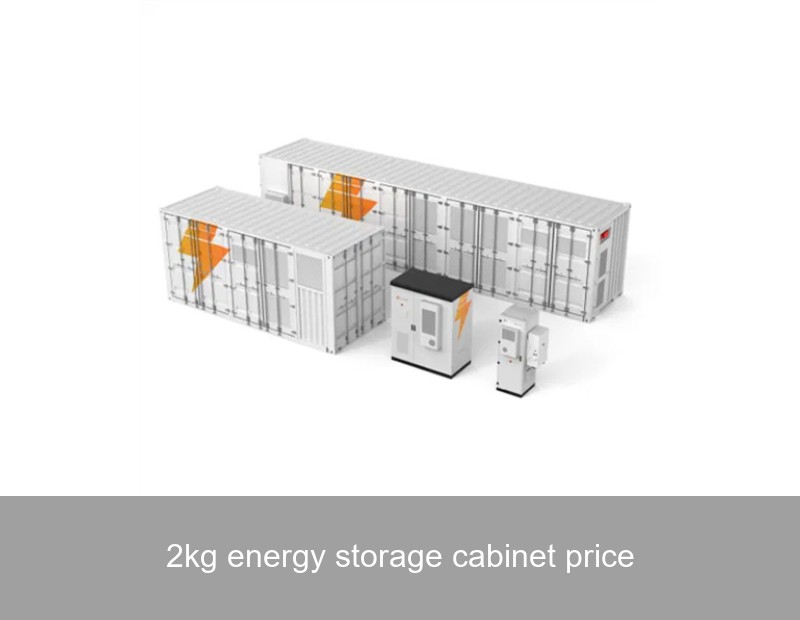
If you're searching for a "2kg energy storage cabinet price," we get it. You're looking for a simple number to budget for your solar project, home backup, or business energy independence. But here's the thing: focusing solely on the weight or a single cabinet's price is like buying a car based only on the cost of its doors. The real value—and the real cost—of an energy storage system lies in a complex interplay of technology, performance, safety, and long-term intelligence. As a global leader since 2005, Highjoule is here to guide you through what that price truly represents and how to invest in a solution that pays dividends for decades, not just a cabinet that sits in your garage.
Key Factors That Determine Energy Storage System Price
Let's break down the components that transform a simple metal cabinet into a smart, grid-interactive power asset. The price per kilogram or per cabinet is a superficial metric; these are the elements that define your system's real worth.
1. Battery Technology & Chemistry: The Heart of the System
The core of any storage system is its battery cells. While Lithium Iron Phosphate (LFP) has become the industry standard for safety and longevity, not all LFP is created equal. Cell grade, manufacturing consistency, and proprietary engineering significantly impact cycle life and degradation. A cheaper cabinet might use lower-grade cells, leading to a faster capacity fade. Highjoule's H-Cube commercial series and H-Res home storage systems utilize automotive-grade LFP cells with a sophisticated Battery Management System (BMS) that ensures each cell operates within its optimal window, pushing cycle life beyond 6,000 cycles while maintaining over 80% capacity. This long-term performance directly offsets the higher initial price.
2. Capacity, Power, and Scalability
You don't buy storage by the kilogram; you buy it by the kilowatt-hour (kWh) and kilowatt (kW).
- Energy Capacity (kWh): How much electricity you can store. This is your "fuel tank."
- Power Rating (kW): How much electricity you can use at once. This determines if you can run multiple heavy appliances simultaneously.
A "2kg cabinet" tells you nothing about these critical specs. Highjoule systems are modular. Starting with a base unit, you can seamlessly stack additional battery modules to increase capacity, much like adding books to a shelf. This future-proofs your investment against growing energy needs.
3. Intelligence, Safety & Grid Services
This is where premium systems truly separate themselves. The inverter and energy management software are the "brain." A low-cost cabinet may just store and discharge energy. A Highjoule system, powered by our Neuron OS, learns your consumption patterns, integrates with weather forecasts, and can automatically optimize for time-of-use rates—charging when grid electricity is cheap (or from excess solar) and discharging when it's expensive. For businesses, participation in grid demand response programs can generate actual revenue. Furthermore, safety features like active thermal management, IP65-rated enclosures, and UL9540A-certified fire safety are non-negotiable investments, not optional extras.

Image Source: Unsplash - A modern, integrated home energy storage installation.
4. Installation, Warranty & Operational Costs
The upfront "cabinet price" rarely includes professional system design, permitting, electrical work, and commissioning. Highjoule works with a certified network of installers across Europe and the US to ensure seamless integration. More importantly, a robust 10+ year warranty and accessible service network protect your investment long-term. The Levelized Cost of Storage (LCOS)—a metric that accounts for total cost over the system's lifetime divided by energy delivered—is the truer measure of value. A higher-quality system with a lower LCOS often proves cheaper over 15 years than a bargain-bin alternative.
Case Study: Beyond the Price Tag - A German Bakery's Investment
Let's move from theory to practice. Consider Bäckerei Schmidt, a family-run bakery in Bavaria with high early-morning energy demands for ovens and refrigeration. Their initial search was also cost-focused. However, after analyzing their load profile, they opted for a Highjoule H-Cube 50 system (50 kWh capacity, 25 kW power).
| Metric | Result |
|---|---|
| Upfront Investment | €28,500 (fully installed) |
| Solar Self-Consumption Increase | From 35% to over 80% |
| Grid Demand Charges Reduced | By approximately 40% |
| Estimated Payback Period | 6.5 years |
| Additional Benefit | Critical backup during a 12-hour grid outage, preventing €15,000 in spoiled goods. |
The bakery didn't buy a "cabinet." They bought energy resilience, predictable operational costs, and business continuity. The system's intelligence allows it to "peak shave," automatically discharging to prevent short, high-power draws that trigger costly demand charges—a feature a basic unit wouldn't offer.
Highjoule's Approach: Delivering Value Beyond the Cabinet
At Highjoule, we engineer solutions, not just hardware. Our product range is designed to meet specific needs across segments:
- For Homes (H-Res Series): Sleek, quiet, and intuitive systems that pair with solar to maximize independence. The H-Res 10 model, for instance, offers a compact footprint with expandable capacity, managed via a user-friendly app that shows real-time savings.
- For Commerce & Industry (H-Cube Series): Rugged, scalable, and software-optimized for the most demanding applications. These systems are built for high cycle rates and can be configured for advanced grid services. Learn more about grid-interactive storage from the National Renewable Energy Laboratory (NREL).
- For Microgrids & Utilities: Containerized, utility-scale solutions that provide grid stability and enable higher renewable penetration.
Every Highjoule system is backed by our global service network and comprehensive performance monitoring. We provide transparent, detailed proposals that outline total installed cost, projected performance, and financial benefits—moving the conversation far beyond a simple per-kilogram or per-cabinet figure.

Image Source: Unsplash - Centralized monitoring of energy assets.
Making the Smart Choice for Your Energy Future
So, the next time you consider the "2kg energy storage cabinet price," ask yourself and your provider these deeper questions: What is the system's expected cycle life and degradation curve? How intelligent is its energy management software? Does it have the safety certifications required for my insurance? Can it scale with my future needs? What is the total installed cost and the projected Levelized Cost of Storage? The energy landscape is evolving rapidly, with policies like the EU's REPowerEU plan accelerating adoption.
Ready to calculate the true value of energy independence for your specific home or business? What is the single biggest energy cost challenge you're hoping a storage system could solve?
 Inquiry
 Online Chat