


Demystifying the 2kVA Inverter Solar Power System: Your Key to Energy Independence
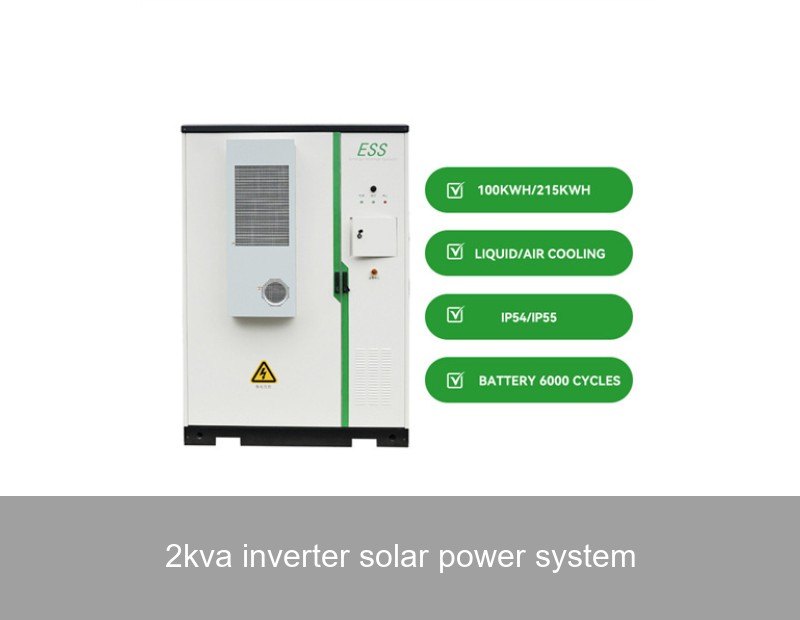
Have you ever watched your electricity bill climb and wondered, "What if I could just use the sun on my roof?" You're not alone. Across homes in Europe and the US, a quiet revolution is happening. Homeowners are moving beyond just solar panels and embracing a complete, intelligent power solution: the 2kVA inverter solar power system. This isn't just a piece of hardware; it's the intelligent heart of a modern home energy setup, managing solar generation, battery storage, and grid power to maximize savings and resilience. But what exactly makes it the sweet spot for so many households? Let's explore.
Table of Contents
- What is a 2kVA Inverter Solar Power System?
- Why 2kVA? The Perfect Balance for Modern Homes
- Core Components: More Than Just an Inverter
- A Real-World Case Study: The Johnson Family Home
- The Highjoule Advantage: Intelligent Energy Orchestration
- Making the Right Choice for Your Home
What is a 2kVA Inverter Solar Power System?
At its core, a 2kVA inverter solar power system is an integrated energy solution designed to convert, manage, and store solar electricity. The "2kVA" refers to the inverter's continuous power output rating—2,000 Volt-Amps (roughly equivalent to 1,600-1,800 Watts, depending on efficiency). This means it can simultaneously power a combination of household appliances whose total running wattage stays within that limit. Think of it as the conductor of your home's energy orchestra: it takes DC (Direct Current) power from solar panels, converts it into the AC (Alternating Current) your home uses, intelligently charges a battery bank for use at night or during outages, and seamlessly interacts with the utility grid.
Why 2kVA? The Perfect Balance for Modern Homes
So, why is 2kVA such a popular choice? The data points to a perfect fit for average energy needs. According to the U.S. Energy Information Administration, the average annual electricity consumption for a U.S. residential utility customer was about 10,500 kWh in 2023. Breaking this down, typical daily usage often falls within a range that a well-designed 2kVA system, paired with sufficient solar panels and battery storage, can significantly offset.
This size is powerful enough to handle the continuous base load of a modern home—refrigeration, lighting, electronics, and a ceiling fan—while having the surge capacity to start motors in appliances like refrigerators or pumps. For many families, it represents the optimal balance between upfront investment and long-term payoff, covering essential loads and providing critical backup power without oversizing the system.
Image Source: Unsplash - A modern home benefiting from solar power.
Core Components: More Than Just an Inverter
A successful system hinges on the synergy of its parts:
- The 2kVA Inverter-Charger: The brain of the operation. Modern units are hybrid inverters, meaning they combine the functions of a solar inverter, a battery charger, and a grid-tie inverter. High-quality inverters feature high conversion efficiency (often over 97%), pure sine wave output (for sensitive electronics), and sophisticated management software.
- Solar Panels: The fuel source. Typically, a 2kVA system is paired with 2-3 kWp (kilowatt-peak) of solar panels to ensure adequate generation during peak sun hours to both power the home and charge the battery.
- Battery Storage: The energy reservoir. This is what transforms a solar system from a daytime-saver to a 24/7 asset. Lithium-ion batteries, like Lithium Iron Phosphate (LiFePO4), are the standard for their longevity, safety, and depth of discharge.
- Energy Management System (EMS): The intelligence. This software decides, in real-time, whether to use solar power directly, store it, draw from the battery, or pull from the grid, based on cost, availability, and your preferences.
A Real-World Case Study: The Johnson Family Home
Let's make this tangible. Meet the Johnsons, a family of four living in a suburban home in Frankfurt, Germany. Faced with rising energy costs and a desire for greater energy security, they installed a 2kVA inverter solar power system in early 2023.
- System Configuration: A 2kVA hybrid inverter, 2.8 kWp of rooftop solar panels, and a 5.8 kWh LiFePO4 battery.
- The Goal: Reduce grid dependency, secure backup power, and lower their carbon footprint.
- The Results (After 12 Months):
Metric Result Annual Self-Consumption Rate Increased from 30% (solar only) to 85% (with battery) Grid Electricity Purchased Reduced by 78% Backup Power During Grid Outages Full essential load coverage for over 12 hours Estimated Payback Period 6-7 years (factoring in German energy prices & incentives)
"The peace of mind is priceless," Mrs. Johnson notes. "During a recent winter storm outage, while our neighbors were in the dark, our lights, Wi-Fi, and refrigerator stayed on. The system just switched over automatically." This case highlights the transformative impact of integrating storage with a correctly sized inverter system.
The Highjoule Advantage: Intelligent Energy Orchestration
As a global leader in advanced energy storage since 2005, Highjoule understands that a system is only as good as its intelligence and reliability. Our approach to a 2kVA inverter solar power system goes beyond just supplying components. We provide an orchestrated solution.
Our HPS-2000 Home Power Stack is engineered around a 2kVA hybrid inverter that is the epitome of efficiency and smart control. What sets it apart is Highjoule's proprietary Adaptive Grid Intelligence (AGI) software. This system doesn't just react; it learns. It analyzes your consumption patterns, local weather forecasts, and real-time electricity tariffs (crucial in dynamic markets across Europe and the US) to make the most economical decision every minute of the day.
For instance, on a sunny afternoon with low grid demand, it might choose to store excess solar energy instead of selling it at a low feed-in tariff, saving that energy for the expensive evening peak. Paired with our ultra-safe, long-cycle-life LiFePO4 batteries and seamless monitoring via the Highjoule Home app, the HPS-2000 delivers not just power, but predictable control and maximized return on investment. Whether for a residential villa, a small business, or as part of a community microgrid, Highjoule's systems are built for the long term.

Image Source: Unsplash - A clean, installed home battery and inverter unit.
Making the Right Choice for Your Home
Selecting a 2kVA system requires careful consideration:
- Audit Your Loads: List the essential appliances you want to power during an outage (refrigerator, lights, modem, etc.) and calculate their total running and starting watts.
- Understand Your Goals: Is it full backup, bill reduction, or both? This dictates your battery capacity.
- Quality Matters: Inverter efficiency, battery chemistry, and warranty terms are critical. Look for established providers with a track record.
- Professional Installation: System design, electrical safety, and grid compliance (like IEC standards in Europe or UL in the US) are non-negotiable. Always work with certified installers.
Ready to Take Control?
The journey to energy independence starts with a clear understanding of your home's unique energy fingerprint. A well-designed 2kVA inverter solar power system can be the cornerstone of that journey, offering resilience, savings, and a tangible step towards sustainability. But the technology is evolving rapidly. With innovations in vehicle-to-home (V2H) integration and AI-driven energy trading on the horizon, one must ask: How will your home not just consume energy, but actively manage it as an intelligent asset in the coming years?
 Inquiry
 Online Chat