


Powering the Future: How Advanced Battery Storage is Revolutionizing Telecommunication Systems
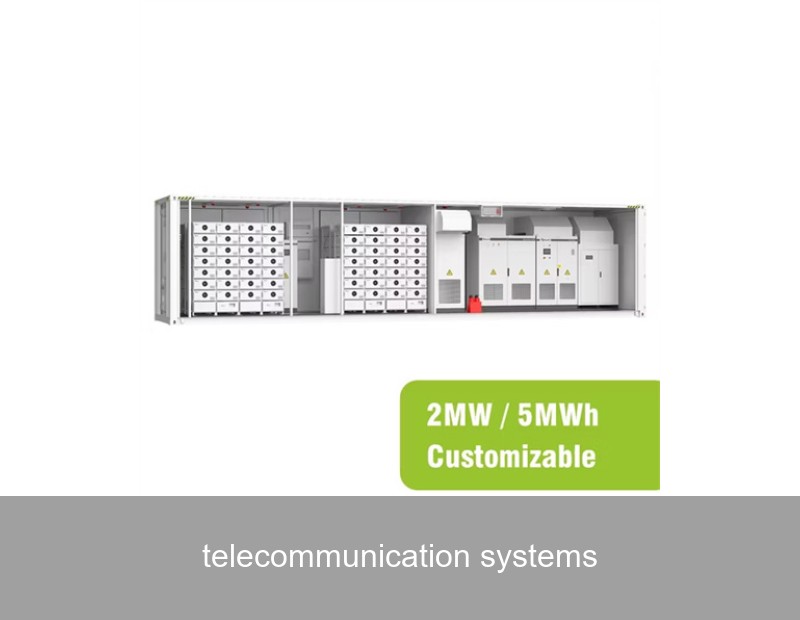
In our hyper-connected world, a dropped call or a slow data stream is more than an annoyance—it can mean lost business, missed emergencies, and fractured communication. At the heart of this digital lifeline are telecommunication systems, the vast, complex networks of towers, data centers, and switching stations that keep us online. But have you ever stopped to think about what keeps these systems themselves online? The answer is increasingly: advanced battery energy storage. As a product technology expert at Highjoule, I've seen firsthand how the shift from traditional backup power to intelligent, renewable-integrated storage is not just an upgrade; it's a complete reimagining of network resilience and sustainability.
Table of Contents
- The Silent Vulnerability: Power Demands of Modern Networks
- Beyond Lead-Acid: The Data-Driven Case for Lithium-Ion & BESS
- Case Study: A European Telco's Grid-Independence Journey
- The Highjoule Advantage: Intelligent Storage for Smarter Networks
- The Future: Telecommunication Systems as Virtual Power Plants?
The Silent Vulnerability: Power Demands of Modern Networks
Modern telecommunication systems are power-hungry beasts. With the rollout of 5G, the proliferation of edge data centers, and ever-increasing data traffic, energy consumption is soaring. A single 5G base station can consume up to three times more power than its 4G predecessor, according to industry analyses. This creates a critical challenge: ensuring absolute power reliability 24/7, often in remote or grid-unstable locations. Traditional backup methods—primarily diesel generators and valve-regulated lead-acid (VRLA) batteries—are showing their age. Generators are noisy, polluting, require fuel logistics, and can be slow to start. VRLA batteries degrade quickly, have a limited cycle life, and offer poor performance in temperature extremes. The phenomenon is clear: the old guard of backup power is struggling under the new demands of digital infrastructure.

Credit: Image by Possessed Photography on Unsplash. Modern telecom sites increasingly integrate solar with battery storage for resilience.
Beyond Lead-Aid: The Data-Driven Case for Lithium-Ion & BESS
The data supporting the transition to Battery Energy Storage Systems (BESS) is compelling. Let's break down the key advantages:
- Longevity & Total Cost of Ownership (TCO): A high-quality lithium-ion battery system, like those engineered by Highjoule, can last 10-15 years with thousands of deep-cycle capabilities, compared to 3-5 years for typical VRLA. This drastically reduces replacement frequency and long-term costs.
- Speed & Reliability: BESS provide instantaneous, seamless backup power—switching on in milliseconds to prevent any network dropout. There's no waiting for a generator to spin up.
- Energy Arbitrage & Cost Savings: In regions with time-of-use electricity pricing, smart BESS can charge when grid power is cheap and discharge during expensive peak hours, slashing operational expenditure (OpEx).
- Sustainability Integration: BESS are the perfect partner for onsite solar PV. They store excess solar energy for use at night or during outages, reducing diesel consumption and carbon footprint. This is crucial for telecom operators facing stringent ESG (Environmental, Social, and Governance) goals.
Consider this comparison table of backup solutions:
| Feature | Diesel Generator | VRLA Batteries | Advanced Lithium-Ion BESS (e.g., Highjoule) |
|---|---|---|---|
| Response Time | Seconds to Minutes | Milliseconds | Milliseconds |
| Operational Lifetime | ~10,000 hours (engine life) | 3-5 years | 10-15+ years |
| Cycling Capability | N/A | 200-500 cycles | 6,000+ cycles |
| OpEx (Fuel, Maintenance) | Very High | Moderate | Low |
| Carbon Emissions | Very High | Low (indirect grid) | Very Low (esp. with renewables) |
| Grid Services Potential | None | None | High (Frequency regulation, etc.) |
Case Study: A European Telco's Grid-Independence Journey
Let's look at a real-world application. A major telecommunications provider in Southern Europe, operating thousands of remote cell sites, faced escalating grid instability and diesel costs. Their goal was to enhance network uptime, reduce OpEx, and meet corporate carbon targets. They partnered with Highjoule for a phased modernization program.
The Solution: For 150 pilot sites, Highjoule deployed its containerized H-IQ CUBE systems. Each unit is an all-in-one solution integrating high-density lithium-ion phosphate (LFP) batteries, a hybrid inverter (compatible with both AC and DC coupling), advanced thermal management, and our proprietary H-IQ Energy Operating System. This system intelligently manages power flow between the grid, onsite solar arrays (added to 40% of the sites), and the critical telecom load.
The Results (after 24 months):
- 99.999% Uptime: Achieved at all pilot sites, even through multiple grid blackouts.
- Diesel Use Reduction: 94% decrease at sites with solar+BESS; 80% decrease at BESS-only sites through peak shaving.
- OpEx Savings: €280,000 annually across the pilot portfolio from reduced fuel and grid energy costs.
- Carbon Reduction: Over 500 tons of CO2 emissions avoided annually.
This case demonstrates that modernizing telecommunication systems with smart storage is a tangible, data-backed success. You can read more about the global trends in telecom energy in this report by the GSMA, the industry association for mobile operators.
The Highjoule Advantage: Intelligent Storage for Smarter Networks
At Highjoule, we don't just sell batteries; we deliver intelligent energy resilience. Our products are specifically engineered for the harsh, unattended environments typical of telecom infrastructure. Our H-IQ Energy OS is the brain of the system, enabling features critical for telecom operators:
- Predictive Grid Interaction: The system can forecast grid stability and energy prices, pre-charging the battery ahead of anticipated outages or peak tariff periods.
- Remote Monitoring & Diagnostics: Every unit is cloud-connected, providing real-time health data, state-of-charge, and performance analytics to a central Network Operations Center (NOC). This transforms maintenance from reactive to predictive.
- Modular & Scalable Design: Our systems scale from small cabinet solutions for a single macro tower to large containerized solutions for major data switching centers, ensuring a perfect fit for any node in the telecommunication system.
- Unparalleled Safety: Built with stable LFP chemistry, multi-layer battery management systems (BMS), and robust environmental protection (IP55 standard and above), our systems are designed for maximum safety and reliability.
For a deeper technical dive into battery safety standards, a great resource is the UL Solutions website, which sets critical safety benchmarks for the industry.

Credit: Highjoule. The interior of a modular BESS unit, showcasing organized battery racks and control systems for telecom backup.
The Future: Telecommunication Systems as Virtual Power Plants?
Here's where it gets truly exciting. The future of telecommunication systems isn't just about drawing power from the grid; it's about becoming a dynamic part of the energy ecosystem. Imagine a network of thousands of distributed battery storage systems across a country. Through our H-IQ OS, these aggregated assets could form a Virtual Power Plant (VPP).
During times of peak national grid demand, the telecom network could safely discharge a portion of its stored energy back to the grid for a few minutes or hours, providing critical grid stability services like frequency regulation. This would turn a cost center (backup power) into a new revenue stream for the telecom operator. It's a powerful vision of sector coupling, where our digital and energy infrastructures become synergistically linked. Research from institutions like the National Renewable Energy Laboratory (NREL) is actively exploring such grid-edge opportunities.
Ready to Transform Your Network's Power Resilience?
The evolution from passive backup to active, intelligent energy management is no longer a futuristic concept—it's an operational imperative for any forward-looking telecom operator. The question is no longer *if* you should upgrade your power infrastructure, but *how* and *with whom*. At Highjoule, we have the technology, the expertise, and the proven track record to guide this transition. What would the ability to guarantee "five-nines" uptime while cutting energy costs and carbon emissions do for your competitive edge and sustainability goals?
 Inquiry
 Online Chat