


Decoding the 2kVA Lithium Battery Price: Your Investment in Energy Independence
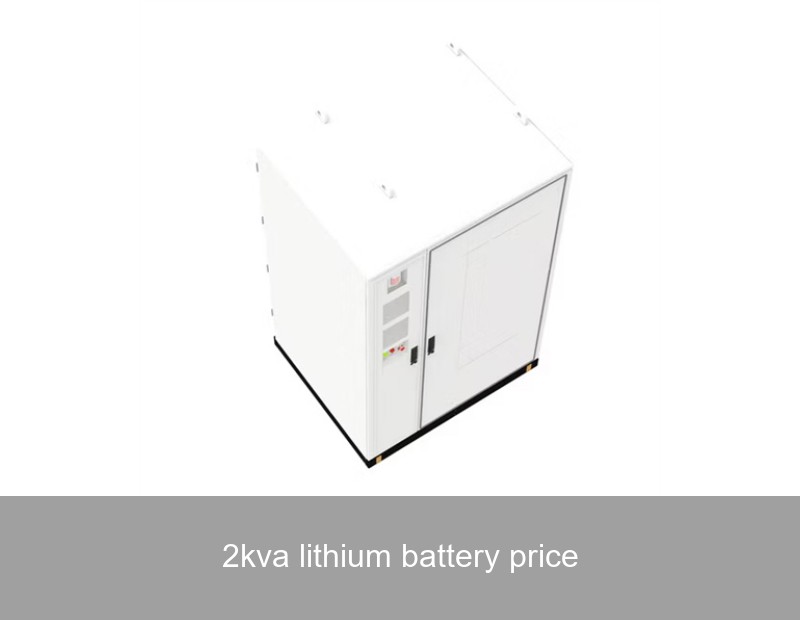
If you've started researching backup power or solar storage for your home or business, you've likely typed "2kVA lithium battery price" into a search engine. The results can be dizzying—a wide range of figures that seem to tell conflicting stories. One website quotes $1,200, another $3,500. So, what's the real cost? As a seasoned expert in the energy storage field, I'm here to tell you that focusing solely on that initial sticker price is like buying a car based only on the showroom tag. The true value—and the true cost—of a 2kVA lithium battery system is a story written in kilowatt-hours, cycle life, intelligence, and long-term reliability. Let's unpack what you're really investing in.
The Real Cost Breakdown: More Than Just a Sticker Price
A 2kVA (kilo-volt-ampere) rating primarily tells you the system's power output—how much it can deliver at once, roughly enough to run essential appliances, lights, and some critical equipment for a home or small business. But the battery's capacity (measured in kWh, kilowatt-hours) dictates how long it can sustain that output. This is the first major factor causing price variations.
Think of it this way: 2kVA is the size of the pipe, but the kWh capacity is the size of the water tank. Two systems can both have a 2kVA inverter but pair it with vastly different battery capacities. A system with a modest 2.4kWh battery will naturally have a lower upfront "price" than one with a robust 5.1kWh battery, but it will also provide much shorter backup duration.
Here are the core components that build the final 2kVA lithium battery price:
- Battery Cells & Chemistry: Not all lithium is equal. Lithium Iron Phosphate (LFP) cells, known for exceptional safety and longevity, are now the industry standard for stationary storage. They typically command a premium over older, less stable chemistries but pay off over a decade or more of use.
- Inverter/Charger Quality: The brain and heart of the system. A high-efficiency, pure sine wave inverter ensures your sensitive electronics run safely. Its ability to integrate seamlessly with solar panels and the grid is crucial.
- System Intelligence & Software: Can the system learn your usage patterns? Can it be managed remotely via an app? Does it enable time-of-use arbitrage (charging when grid power is cheap, using it when it's expensive)? This software layer adds significant value.
- Installation & Ancillaries: Wiring, mounting, electrical upgrades, and professional installation are critical, safe, and often regulated costs that must be factored in.
- Warranty & Support: A 10-year warranty on a product meant to last 10+ years is far more valuable than a 2-year warranty. Robust local support is priceless.

Image Source: Unsplash (Professional installation is a critical part of the total system value).
Market Price Ranges: A Snapshot
| System Type | Typical Capacity Range | Approximate Price Range (USD, equipment only) | Key Considerations |
|---|---|---|---|
| Basic 2kVA All-in-One | 2.0 - 3.0 kWh | $1,500 - $2,500 | Often limited features, shorter warranty, may not be easily expandable. |
| Premium 2kVA Modular System | 3.0 - 5.0 kWh | $2,800 - $4,500 | LFP chemistry, smart features, modular for expansion, 10+ year warranty. |
| 2kVA with Solar Integration | 4.0 - 6.0 kWh | $4,000 - $7,000+ | Includes hybrid inverter, full system design, and often installation. |
Data Insight: According to the U.S. Department of Energy's Solar Energy Technologies Office, the benchmarked cost for residential lithium-ion battery storage fell by over 60% between 2015 and 2020. However, recent supply chain dynamics have caused fluctuations, making system quality and origin more important than ever.
From Quote to Kilowatt: A German Bakery's Energy Transformation
Let's move from theory to a real-world example. In 2023, a family-run bakery in Bavaria, Germany, faced a dual challenge: frequent short grid outages were disrupting their refrigeration and ovens, and rising energy prices were squeezing their margins. Their initial search for a "2kva lithium battery price" led them to quotes from €2,200 to €5,000.
They chose to partner with Highjoule's local integrator for a solution centered on our HJP Home+ 2.5kW Hybrid System. The system featured a 2.5kVA hybrid inverter and a modular 5.1kWh LFP battery, expandable in the future. The total installed price was at the higher end of their initial quotes.
- Reliability: Zero production downtime due to 14 recorded grid outages, saving an estimated €8,500 in potential lost goods and sales.
- Savings: By using the battery to avoid peak grid tariffs (a practice called peak shaving) and storing excess solar from their existing PV panels, they reduced their grid electricity bill by 33%.
- ROI: Their calculated payback period, factoring in German energy prices and a federal storage subsidy, is projected to be under 7 years. With a system warranty of 12 years, this translates to years of nearly free backup power and bill savings.
For this bakery, the meaningful metric wasn't the lowest 2kVA lithium battery price; it was the cost per secured kilowatt-hour over the system's lifetime. The premium paid upfront bought them intelligence, resilience, and long-term economics that a cheaper, less capable unit simply could not deliver.
The Highjoule Advantage: Engineering Value Beyond the Price Tag
At Highjoule, with nearly two decades of experience, we engineer systems where the price reflects lifelong performance, not just a box of components. When you evaluate a Highjoule 2kVA-class solution, like our HJP Home+ series or our scalable Commercial ESS units, you're investing in a cohesive ecosystem.
Our systems are built around Lithium Iron Phosphate (LFP) chemistry, renowned for its thermal stability and cycle life—often exceeding 6,000 cycles while retaining 80% of original capacity. This directly translates to a lower cost of ownership over 15+ years. Furthermore, our proprietary energy management system (EMS) turns a simple battery into an intelligent asset. It can automatically optimize for self-consumption of solar power, participate in demand response programs (where available), and provide you with granular insights into your energy flow through an intuitive mobile app.

Image Source: Unsplash (Smart energy management apps provide crucial control and insight).
For commercial and industrial clients, our solutions go further. We design containerized and modular megawatt-scale storage that can provide black start capability, stabilize microgrids, and dramatically reduce demand charges—a major line item on utility bills. Our global service network ensures that your investment is supported locally, whether you're in Texas or Turin.
Making Your Investment Decision: The Right Questions to Ask
So, before you fixate on a single number from a search for "2kVA lithium battery price," I encourage you to step back and ask these questions:
- What is my primary goal? Is it emergency backup for essential loads, maximizing solar self-consumption, or reducing peak demand charges for my business?
- What is the total installed cost and what does it include? Always request detailed quotes that break down equipment, installation, and any necessary grid connection fees.
- What is the battery's chemistry and warranty? Insist on LFP and look for a warranty that guarantees both a duration (years) and throughput (cycle life or retained capacity).
- How intelligent and future-proof is the system? Can software updates add features? Can I add more battery modules later if my needs grow?
By now, you understand that the journey to energy resilience and savings is more nuanced than comparing online price tags. The market is evolving rapidly, with innovations in software and grid services adding new layers of value. What energy challenge in your home or business is most pressing today, and how could a smart, resilient power solution not just solve it, but create new opportunities for efficiency and savings?
 Inquiry
 Online Chat