


Household Energy Storage Cabinet: The Heart of Your Modern, Resilient Home
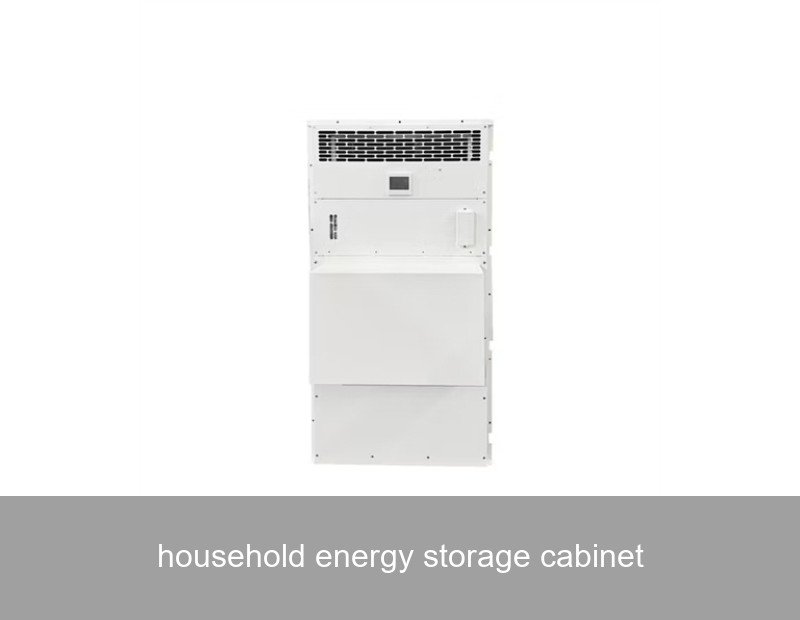
Imagine this: a storm knocks out the grid in your neighborhood. While others are left in the dark, your home's lights stay on, the refrigerator hums quietly, and your family's routine remains uninterrupted. This isn't magic; it's the power of a modern household energy storage cabinet. More than just a battery, this intelligent system is becoming the central nervous system for energy management in homes across Europe and the US, turning solar power into a 24/7 resource and providing unparalleled energy independence. Let's explore why this technology is no longer a luxury, but a smart investment for a sustainable and secure future.
Table of Contents
- The Phenomenon: From Solar Panels to a True Energy Ecosystem
- The Data: Why Homeowners Are Making the Shift
- A Real-World Case Study: The Smith Family's Resilience
- The Insight: It's About Control, Not Just Storage
- The Highjoule Solution: Intelligent Storage for Demanding Homes
- Choosing Your Household Energy Storage Cabinet
- What Does the Future Home Look Like?
The Phenomenon: From Solar Panels to a True Energy Ecosystem
For years, the narrative was simple: install solar panels, reduce your electricity bill, and feel good about green energy. And while that's true, it missed a critical flaw. Solar panels produce energy only when the sun shines, often peaking midday when homes are empty. Excess energy was sold back to the grid for pennies, while homeowners bought it back at night for dollars. This imbalance left a huge value on the table.
Enter the integrated household energy storage cabinet. This system closes the loop. It's a sleek, all-in-one unit that stores the surplus solar energy your panels generate during the day, holding it securely for you to use in the evening, at night, or during a power outage. It transforms a one-way solar system into a sophisticated, self-sufficient energy ecosystem right in your garage or utility room.

Think of it as your personal energy savings account. You "deposit" clean energy when it's abundant and "withdraw" it when you need it most, breaking free from the utility company's pricing cycles.
The Data: Why Homeowners Are Making the Shift
The drivers are compelling and backed by hard numbers. Let's break them down:
| Driver | Supporting Data & Trend | Impact on Homeowner |
|---|---|---|
| Rising Electricity Costs | In the EU, household electricity prices increased by over 30% on average from 2021 to 2023 (Eurostat). In the US, rates have risen steadily at about 2-3% annually, with sharper spikes in regions like California. | Directly reduces monthly bills by maximizing self-consumption of solar power, shielding from rate hikes. |
| Grid Instability | The U.S. Energy Information Administration (EIA) reports that the average U.S. customer experienced just over 8 hours of power interruptions in 2020, with major events driving the number much higher (EIA Source). | Provides automatic backup power, keeping essential circuits online during outages. |
| Demand for Sustainability | Consumer surveys consistently show a 70%+ preference for homes with renewable energy and storage features. | Dramatically increases the home's use of self-generated clean energy, reducing carbon footprint. |
| Financial Incentives | The US Investment Tax Credit (ITC) now covers 30% of the cost of a storage system, even without new solar. Many European countries offer grants and low-interest loans. | Improves return on investment (ROI), shortening payback periods significantly. |
A Real-World Case Study: The Smith Family's Resilience
Let's look at a concrete example from Northern California, a region familiar with both high electricity rates and Public Safety Power Shutoffs (PSPS).
The Challenge: The Smith family had a 7kW solar array but still faced high bills due to time-of-use rates and purchased power at night. More critically, wildfire threats led to 4-5 prolonged grid outages per year, disrupting work-from-home and daily life.
The Solution: In early 2023, they installed a 13.5 kWh household energy storage cabinet alongside their existing solar. The system was configured to provide whole-home backup for essential loads.
The Data-Driven Outcome (12-month period):
- Energy Bill Reduction: Their annual electricity cost dropped from ~$2,400 to ~$300—an 87.5% reduction.
- Self-Consumption Rate: The percentage of their solar energy used directly in the home jumped from 35% to 92%.
- Resilience: The system seamlessly powered their home through 5 grid outages, the longest lasting 36 hours, without interruption. "The first time the lights flickered and stayed on while our neighbors' went dark was a profound moment," said Mr. Smith. "The system paid for itself in peace of mind alone."
This case highlights the triple value proposition: financial savings, energy independence, and resilience.
The Insight: It's About Control, Not Just Storage
The key insight for modern homeowners is this: a superior household energy storage cabinet is defined not by its raw kilowatt-hour capacity alone, but by its intelligence. The real value lies in software and integration.
- Smart Energy Management: Can it learn your usage patterns and weather forecasts to optimize charge/discharge cycles?
- Grid Services Integration: In some markets, can it participate in utility programs that pay you for grid support?
- Seamless Integration: Does it work flawlessly with your existing or new solar inverter? Is the installation sleek and professional?
- Safety & Longevity: Is it built with proven, stable battery chemistry (like Lithium Iron Phosphate - LFP) and robust thermal management?
This is where choosing a provider with deep expertise matters immensely.
The Highjoule Solution: Intelligent Storage for Demanding Homes
At Highjoule, with nearly two decades of experience in advanced energy storage, we've engineered our HES Series Household Energy Storage Cabinet to be the intelligent core of the modern home. We understand that every home's energy profile is unique.
Our HES Series is not a one-size-fits-all product. It's a modular, scalable system designed for flexibility and growth. Starting from a compact 10kWh unit, you can expand capacity as your needs evolve. But the magic is inside our EnergyOS software platform.

- Adaptive AI Logic: EnergyOS analyzes your consumption, solar production, and utility rate schedules to automatically choose the most economical times to charge and discharge, maximizing your savings.
- Unbreakable Power: In the event of a grid failure, our system switches to backup mode in less than 20 milliseconds—so fast that your computers and appliances won't even notice.
- Built on LFP Chemistry: We exclusively use Lithium Iron Phosphate batteries, renowned for their safety, long cycle life (over 6,000 cycles), and stability, giving you a system designed to last for decades.
- Global Monitoring: Monitor and control your home's energy flow from anywhere in the world via our intuitive Highjoule Connect app, giving you total transparency and control.
For homeowners, this translates to a worry-free, optimized energy asset that works tirelessly in the background to secure your comfort and finances.
Choosing Your Household Energy Storage Cabinet: Key Questions
As you consider your options, ask these critical questions:
- What is my primary goal? (Bill savings, backup power, or both?)
- What is my essential load? (What do I need to power during an outage? Refrigerator, lights, internet, medical equipment?)
- Is the system compatible and future-proof? Will it work with my current solar setup? Can I add more batteries later?
- What is the total cost of ownership? Consider warranty (Highjoule offers a 10-year comprehensive warranty), efficiency losses, and potential maintenance.
- Who is installing and supporting it? Choose an accredited installer with proven experience, backed by a manufacturer with a strong track record like Highjoule's global network of certified partners.
What Does the Future Home Look Like?
The home of the future is not just connected to the grid; it's an intelligent, self-optimizing microgrid. The household energy storage cabinet is the cornerstone of this vision. It will integrate with electric vehicle chargers, turning your EV into another storage asset. It will communicate with smart home devices to shift loads to the most efficient times. It may even form virtual power plants with neighbors' systems to support the broader community grid, as explored in pilot programs by research institutions like the National Renewable Energy Laboratory (NREL).
The transition is underway. The question is no longer if you need a storage system, but when and which one will best prepare your home for the energy landscape of the next 20 years.
Is your home ready to become a true power plant, or will it remain dependent on an increasingly unpredictable grid? What's the first appliance you would want to keep running when the power goes out?
 Inquiry
 Online Chat