


Demystifying the 2kW Solar System Price in Kenya: A Guide to Smart Energy Investment
If you're a homeowner or small business owner in Kenya researching a 2kW solar system price, you've likely encountered a dizzying range of quotes. One company might quote KES 300,000, another KES 500,000. This confusion isn't just about shillings and cents; it's about understanding what you're really paying for. Is it a basic setup, or a robust, intelligent energy solution that will power your life reliably for decades? As energy experts, we see this daily: the initial price tag is just the entry point to a much more important conversation about value, reliability, and intelligent design. Let's peel back the layers.
Understanding the "2kW Solar System Price in Kenya"
The phrase "2kW solar system price in Kenya" is a starting point, not a final answer. A 2kW system is a popular and practical size, capable of powering essential appliances for a typical household—lights, TV, refrigerator, and charging electronics. However, the final cost hinges on a critical question: What is your primary goal? Is it to offset daytime grid consumption, or to achieve true energy independence through the night and during blackouts? The answer fundamentally shapes the system's components and, consequently, the investment.

In the Kenyan and broader East African market, we observe a spectrum. On one end, there are basic, grid-tied-only systems with no backup. On the other, there are sophisticated hybrid systems with intelligent battery storage and energy management. The price difference reflects this chasm in capability and quality.
The Real Price Breakdown: More Than Just Panels
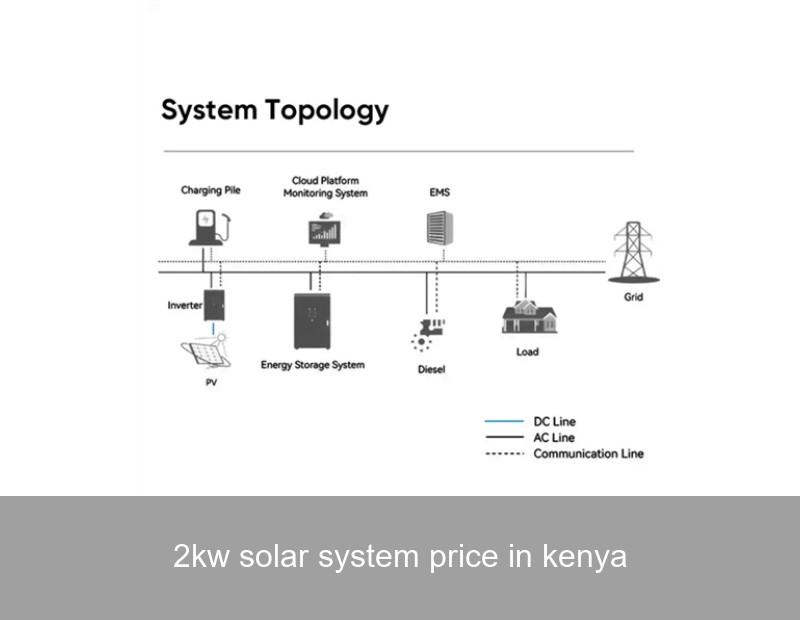
To understand any quote, you must see its components. A complete solar power solution is an ecosystem.
- Solar Panels (Photovoltaic Modules): Prices vary by efficiency and brand tier. High-efficiency panels produce more power in limited roof space, often justifying a higher upfront cost.
- Solar Inverter: The system's brain. A basic grid-tie inverter is less expensive than a hybrid inverter, which can integrate batteries, or an off-grid inverter. This is where much of the cost differentiation lies.
- Battery Storage (If included): This is the single most significant cost adder—and value adder. The type (Lithium-ion vs. Lead-acid), capacity (kWh), and cycle life determine the price. Modern Lithium Iron Phosphate (LFP) batteries, like those used by Highjoule, offer longer lifespan and safety, impacting long-term cost-effectiveness.
- Balance of System (BOS): Mounting structures, wiring, circuit breakers, and monitoring systems. Quality here ensures safety and durability against environmental factors.
- Installation & Professional Services: Expertise matters. Proper design, compliant electrical work, and commissioning are non-negotiable for a system that lasts.
A quote lacking a detailed breakdown is a red flag. Transparency is the first sign of a reputable provider.
A Real-World Case Study: The Mombasa Guesthouse
Consider "Bahari View," a 6-room guesthouse in Mombasa. Their challenge was unreliable grid power affecting guest experience and operational costs. They received three quotes for a "2kW solar system":
- Quote A (KES 320,000): Grid-tie only. Would reduce daytime utility bills but offered zero backup during frequent outages.
- Quote B (KES 450,000): Included a basic hybrid inverter and low-cycle lead-acid batteries, providing 2-3 hours of evening backup.
- Quote C (KES 580,000): Featured a high-efficiency module array, a smart hybrid inverter, and a 5.1kWh Highjoule LFP battery system with a 10-year warranty.
Bahari View opted for Quote C. The data after one year is telling: Their monthly energy costs dropped by 85%, and they've had zero operational downtime due to power outages. The intelligent system prioritizes solar for critical loads and seamlessly switches during grid failure. The owner, Ms. Akinyi, noted: "The higher initial investment was recovered in under 4 years through savings and increased guest satisfaction. The peace of mind is priceless." This case underscores that the right system, priced for value, delivers tangible economic and operational returns.
The Game Changer: Adding Intelligent Battery Storage
Integrating storage transforms solar from a bill-reduction tool to a resilience asset. For regions experiencing grid instability, this isn't a luxury; it's a necessity for business continuity and quality of life. The technology has evolved rapidly. While discussing 2kW solar system price in Kenya, the conversation must include modern LFP battery technology. It offers superior cycle life (often 6000+ cycles), enhanced safety (no thermal runaway risk), and requires no maintenance compared to traditional options. The U.S. Department of Energy highlights that pairing solar with storage maximizes self-consumption and provides backup power.

Highjoule's Smart Solutions for Reliable Power
At Highjoule, with nearly two decades of global experience, we approach the 2kW solar system price from an engineering and value perspective. We don't just sell components; we provide integrated, intelligent power solutions designed for longevity and performance. For the Kenyan market and similar climates, our systems are built to withstand harsh environmental conditions while delivering optimal efficiency.
Our product suite relevant for residential and small commercial applications includes:
- Highjoule HES Series Hybrid Energy Systems: All-in-one units that combine a high-efficiency hybrid inverter with integrated battery management. They are scalable, allowing you to start with a 2kW solar setup and easily expand battery capacity as needs grow.
- Highjoule LFP Battery Racks: Modular, wall-mounted lithium storage solutions with industry-leading cycle life and a comprehensive warranty. Their modularity means you can increase your energy reserve incrementally.
- Highjoule Energy Management System (EMS): The intelligent software layer that optimizes energy flow. It learns consumption patterns, prioritizes solar self-consumption, and can be configured for different backup scenarios, ensuring you get the most from every kilowatt-hour generated.
By focusing on system intelligence and component synergy, we ensure that the investment translates into decades of dependable, clean energy. Our solutions are designed to meet not just today's needs but to be future-ready.
Beyond Price: Calculating Long-Term Value & ROI
Let's move beyond upfront cost to total cost of ownership. A cheaper system with low-efficiency panels and a short-life battery may need replacing in 3-5 years, resetting your financial clock. A premium system with a 25-year panel warranty and a 10-year battery warranty offers predictable performance and cost over decades.
Consider this simplified table for a 2kW hybrid system with battery storage in Kenya:
| Cost Factor | Basic System | High-Quality, Intelligent System (e.g., Highjoule) |
|---|---|---|
| Initial Investment | KES 400,000 - 450,000 | KES 550,000 - 650,000 |
| Expected Battery Lifespan | 3-5 years (Lead-acid) | 10+ years (LFP) |
| Estimated Annual Savings | KES 40,000 | KES 50,000 (due to higher efficiency & smarter management) |
| Projected 10-Year Cost (incl. 1 battery replacement for basic) | KES 400,000 + ~KES 200,000 = KES 600,000+ | KES 600,000 (no major replacement) |
| 10-Year Net Position (Savings - Cost) | (KES 400,000) - KES 600,000 = -KES 200,000 | (KES 500,000) - KES 600,000 = -KES 100,000 (and moving into net positive) |
This illustrative comparison, based on IEA data on declining solar costs but increasing value of integration, shows how quality often wins over a 10-year horizon. The true "price" is the cost per reliable kilowatt-hour over the system's life.
Making Your Decision: Key Questions to Ask
As you evaluate quotes for your 2kW solar system in Kenya, empower yourself with these questions:
- Does this quote clearly itemize all hardware, software, and service costs?
- What are the efficiency ratings and warranties (product & performance) for the panels and inverter?
- If batteries are included, what is their chemistry, usable capacity, cycle life, and warranty terms?
- How does the system manage energy? Can I monitor production and consumption in real-time?
- Can the system be easily expanded if my energy needs grow?
- What is the installer's track record and can they provide references?
The energy landscape is shifting. With Kenya's superb solar resources, the right system is a powerful financial and practical asset. It's not merely an appliance purchase; it's an infrastructure investment in your property's resilience and value.
Given your unique daily load patterns and backup requirements, what would a truly tailored energy independence plan look like for your home or business?
 Inquiry
 Online Chat