


Large Scale Earth Battery: The Underground Revolution in Long-Duration Energy Storage
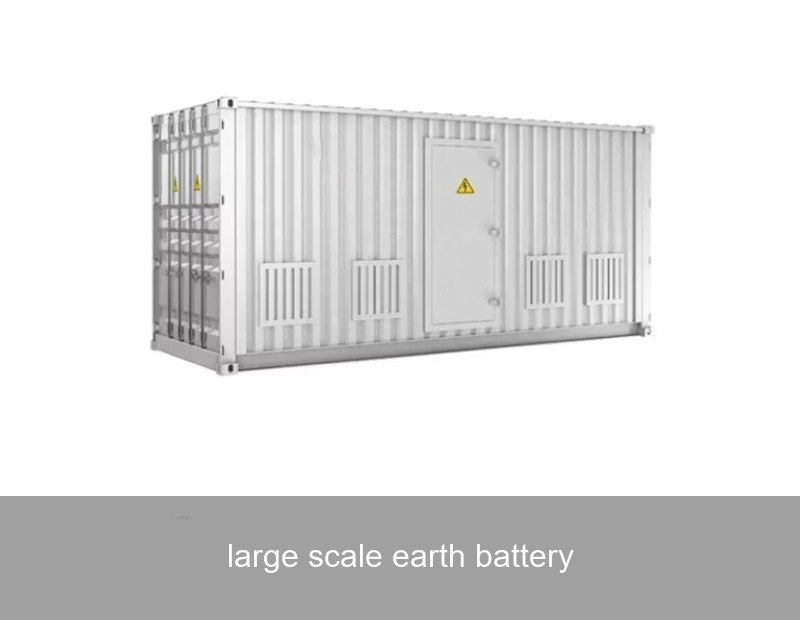
Imagine a battery not made of rare metals or complex chemistry, but of the earth itself. As the world pivots to renewables, a critical challenge emerges: the sun sets, and the wind calms. How do we power our cities and industries through those gaps? The answer might lie beneath our feet. A large scale earth battery, or underground thermal energy storage (UTES), is emerging as a game-changing solution for storing massive amounts of clean energy for days, weeks, or even months. It’s a simple yet profound concept—using the ground as a giant, natural thermal bank. For businesses, utilities, and communities, this isn't just innovation; it's the key to achieving true energy independence and grid resilience.
Table of Contents
What is a Large Scale Earth Battery?
At its core, a large scale earth battery is a system that stores thermal energy in underground geological formations. Think of it as seasonal banking for heat and cold. During summer, excess solar energy is used to heat water or a fluid, which is then pumped underground, warming a vast volume of soil or rock. In winter, that stored heat is retrieved to warm district heating networks or industrial processes. Conversely, winter's cold can be stored for summer cooling. It's a closed-loop, high-efficiency system that leverages the earth's excellent insulating properties.
Unlike lithium-ion batteries, which excel at short-duration storage (2-4 hours), earth batteries are designed for long-duration energy storage (LDES). They address the "seasonal mismatch" between renewable generation and energy demand, a problem that becomes more pronounced as we approach high renewable penetration grids in Europe and North America.
Why Large-Scale Earth Batteries Are Critical Now
The energy transition has reached an inflection point. Grid operators are grappling with a dual phenomenon: an overwhelming influx of intermittent solar and wind power, and a simultaneous surge in demand from electrification of transport and heat. The U.S. Department of Energy has identified LDES as a national priority, noting that cost-effective storage beyond 10 hours is essential for a decarbonized grid.
- The Intermittency Problem: In Germany, there were periods in 2023 where renewable output met nearly 100% of demand, only to drop below 25% days later. This volatility strains the grid.
- Lithium-Ion Limitations: While perfect for frequency regulation and short shifts, scaling lithium-ion for multi-day storage is often cost-prohibitive and resource-intensive.
- The Seasonal Gap: In the northern US and Europe, solar generation in winter can be less than 20% of summer output, creating a massive seasonal energy deficit.
This is where the large scale earth battery shines. It offers a scalable, durable, and often more sustainable alternative, with project lifespans exceeding 50 years and minimal use of critical minerals.
How It Works: The Technology Behind the Terrain
The engineering of an earth battery is elegantly straightforward. The most common type for large-scale applications is the Borehole Thermal Energy Storage (BTES) system.
| System Component | Function | Analogy |
|---|---|---|
| Borehole Field | An array of deep, vertical holes (50-200m) with U-pipe heat exchangers, forming the core "bank vault" for thermal energy. | The battery cells. |
| Heat Source & Heat Pump | Captures excess heat from solar thermal, industrial waste, or combined heat and power (CHP) plants, and upgrades the temperature as needed. | The battery charger. |
| Distribution Network | Pipes that carry heated/cooled fluid to and from the borehole field and connect to district heating/cooling or industrial sites. | The electrical wiring. |
| Central Control System | The intelligent brain that optimizes charging/discharging based on energy prices, demand forecasts, and grid signals. | The Battery Management System (BMS). |
Here's the process: When surplus renewable energy is available, it drives heat pumps to extract thermal energy from a source, which is then circulated through the borehole field, gradually raising the temperature of the surrounding geology. The earth acts as a near-perfect insulator, minimizing losses. When energy is needed, the flow is reversed, drawing the stored heat back to the surface.

Image Source: Wikimedia Commons, illustrating the BTES principle.
Highjoule's Role in Advanced Earth Battery Systems
While the earth provides the storage medium, the system's efficiency and intelligence come from advanced engineering. This is where Highjoule, with nearly two decades of experience in smart energy storage, adds critical value. We don't just see a hole in the ground; we see a complex electrochemical-thermal system that needs to be precisely managed.
For a large scale earth battery project, Highjoule provides the integrated control and power conversion platform. Our HiveMind EnergyOS™ acts as the central nervous system, seamlessly orchestrating between the thermal storage field, the various heat sources (like solar thermal arrays or industrial processes), and the end-user demand. It makes real-time decisions to maximize economic return and carbon displacement.
Furthermore, our expertise in battery energy storage systems (BESS) is complementary. A hybrid system featuring a Highjoule BESS for immediate, short-term grid services and an earth battery for long-term thermal storage represents the ultimate resilient energy solution for microgrids, industrial campuses, and utilities. We provide the complete, intelligent bridge between intermittent renewables and reliable, 24/7 clean power and heat.
Real-World Impact: A European Case Study
Let's move from theory to practice. The city of Vojens, Denmark, provides a stellar example of a large scale earth battery in action. The project, known as the "Vojens BTES," is integrated with the local district heating system and a large-scale solar thermal plant.
- Scale: 48,000 cubic meters of underground storage (equivalent to 19 Olympic swimming pools).
- Infrastructure: 50 boreholes, each 50 meters deep.
- Performance: It stores excess heat from the solar thermal field in summer. In winter, it supplies approximately 40% of the town's heating demand from stored solar energy.
- Emission Reduction: The system saves around 1,500 tons of CO2 annually, a significant step for a municipality.
Data from the IEA DHC Programme highlights this project as a benchmark for seasonal storage. The success hinges not just on the geology, but on the sophisticated control systems that optimize the charge/discharge cycles—precisely the kind of technology Highjoule specializes in for commercial and district-scale applications.

Image Source: Representative image of a solar thermal district heating plant. (Conceptual)
The Future Beneath the Surface
The potential is staggering. Research from institutions like the National Renewable Energy Laboratory (NREL) is exploring advanced geological storage. Imagine decommissioned natural gas caverns or deep aquifer systems being repurposed as giant continental-scale earth batteries, offering terawatt-hours of storage capacity.
For a factory manager in Texas, a hospital administrator in Germany, or a community planner in California, the question is no longer *if* long-duration storage is needed, but *which technology* offers the most reliable and economical path forward. The large scale earth battery, with its blend of ancient geology and modern smart controls, presents a compelling answer.
Is Your Organization Ready to Tap into the Ground Beneath You?
Evaluating your site's suitability for thermal storage involves specific geological and energy profile assessments. What would it mean for your operational costs and carbon goals to have a resilient, seasonal energy reserve integrated with your existing renewable assets?
 Inquiry
 Online Chat