


Unlocking Energy Independence: Is a 3 Kilowatt Lithium Battery Right for Your Home?
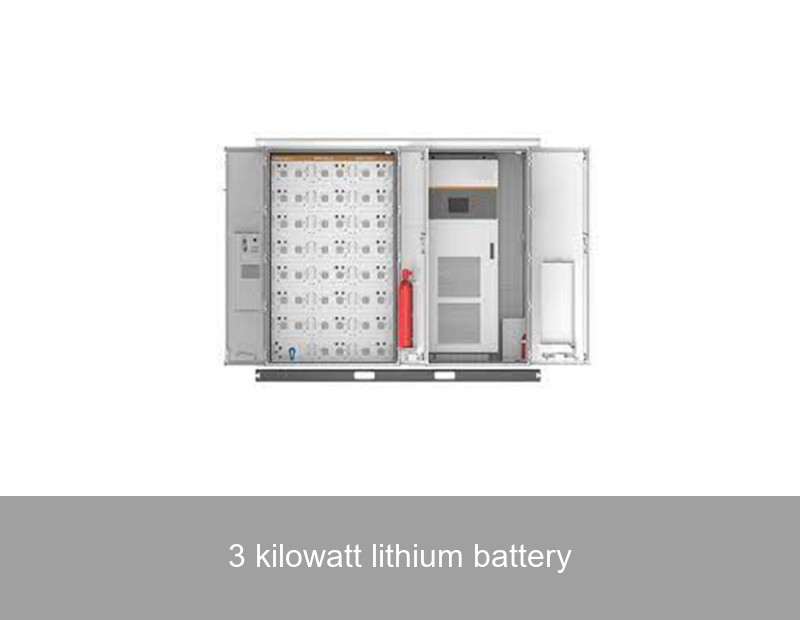
Have you ever watched your electricity meter spin after sunset, wondering how to make the most of your solar panels? Or felt a pang of anxiety during a storm warning, knowing the power could go out for hours? You're not alone. Across Europe and the United States, homeowners are seeking greater control over their energy. Enter the 3 kilowatt lithium battery—a compact, powerful unit that's becoming the cornerstone of modern home energy management. But what can it truly power, and is it a worthwhile investment for your specific needs? As a product technology expert at Highjoule, a global leader in advanced energy storage since 2005, I'll guide you through the realities, data, and potential of this popular storage size.
Table of Contents
- The Phenomenon: From Grid Dependency to Energy Resilience
- Understanding Your 3 kW Power Companion
- Data-Driven Decisions: ROI, Savings, and Grid Services
- A Case Study from Berlin: The Schmidt Family's Journey
- Expert Insights: System Design and Future-Proofing
- Highjoule's Smart Solutions for Home & Business
- Your Energy, Your Choice: What's Your Next Step?
The Phenomenon: From Grid Dependency to Energy Resilience
The energy landscape is shifting dramatically. Volatile electricity prices, an increase in extreme weather events, and the desire to maximize self-consumption of rooftop solar have created a perfect storm. Homeowners are no longer passive consumers; they want to be proactive "prosumers"—producing, storing, and managing their own power. A 3 kilowatt lithium battery system sits perfectly at the intersection of capability and affordability. It provides substantial backup power for essential loads and can significantly shift your solar energy usage from day to night, without the complexity and cost of a whole-house system designed for indefinite off-grid living.

Image: A modern home integrating solar and storage. Credit: Unsplash
Understanding Your 3 kW Power Companion
Let's break down the key term. "3 kilowatt" (3 kW) refers to the battery's power rating—the maximum rate at which it can deliver electricity at any single moment. Think of it like the width of a pipe: a 3 kW pipe can deliver a strong, steady flow of power to run multiple appliances simultaneously. However, how *long* it can deliver that power depends on its energy capacity, measured in kilowatt-hours (kWh).
The Crucial Partner: Battery Capacity (kWh)
Most residential 3 kilowatt lithium battery systems are paired with a capacity ranging from 5 kWh to 15 kWh or more. For example, Highjoule's ResiCore 3.6 system is a modular unit that pairs a 3.6 kW inverter with scalable battery modules starting at 5 kWh. This means it can deliver up to 3.6 kW of continuous power, and with a 10 kWh capacity, it could theoretically run a 1 kW load for 10 hours, or deliver its full 3.6 kW for nearly 3 hours.
Real-World Scenarios: What Can a 3 kW Battery Run?
This power level is strategically chosen for essential and high-priority loads. Here’s a practical breakdown:
| Appliance/System | Typical Power Draw (Watts) | Can a 3 kW Battery Run It? |
|---|---|---|
| Refrigerator | 150 - 400 W | Easily, with plenty to spare. |
| LED Lighting (Whole Home) | 100 - 500 W | Yes, effortlessly. |
| Wi-Fi & Modem | 20 W | Yes. |
| Furnace Fan (Gas Heat) | 500 - 800 W | Yes. |
| Sump Pump | 800 - 1500 W | Yes, even during surge. |
| Well Pump | 1000 - 2500 W | Likely, but check surge rating. |
| Central Air Conditioner | 3000 - 5000 W | No, exceeds continuous rating. |
| Electric Clothes Dryer | 3000 - 5000 W | No, exceeds continuous rating. |
The goal is intelligent load management. During an outage, a well-designed system like Highjoule's, managed by our AI-powered EnergyOS platform, can automatically prioritize circuits, keeping your lights, fridge, internet, and critical systems running for hours or even days, while avoiding overload by shedding non-essential loads.
Data-Driven Decisions: ROI, Savings, and Grid Services
The value isn't just in backup. In regions with Time-of-Use (TOU) rates or net metering policies that credit you less for exported solar, a 3 kilowatt lithium battery shines. Let's look at some numbers from the U.S. market. According to the U.S. Department of Energy's Solar Energy Technologies Office, the average U.S. residential electricity rate has been steadily increasing. In California, with high TOU differentials, a battery can store solar worth ~$0.12/kWh in the afternoon and discharge it at peak evening hours when electricity costs ~$0.45/kWh, creating an arbitrage of ~$0.33/kWh. A 10 kWh battery cycling daily can thus generate over $1,000 in annual bill savings, accelerating payback.
Furthermore, innovative programs like virtual power plants (VPPs) allow aggregated home batteries to provide grid stability services. Homeowners can earn additional revenue by allowing their utility to draw a small amount of power from their battery during times of peak grid demand.
A Case Study from Berlin: The Schmidt Family's Journey
Let's make this real with data from one of our European installations. The Schmidt family in a Berlin suburb installed a 8 kWp solar array in 2021. Despite generating ample power, their self-consumption was only 35%, exporting most surplus to the grid for a modest feed-in tariff. In early 2023, they added a Highjoule ResiCore 3.6 system with 10.8 kWh of storage.
- Goal: Increase self-consumption and gain backup power.
- Installation: The compact, wall-mounted unit was installed in their garage in one day.
- Results (12-month post-installation):
- Self-Consumption Rate: Increased from 35% to 78%.
- Grid Electricity Purchases: Reduced by 65%.
- Bill Savings: €720 annually, on top of solar savings.
- Backup Test: During a planned grid outage, the system seamlessly powered their essential loads (kitchen, office, lighting) for over 28 hours.
"The system works silently in the background," Mr. Schmidt noted. "The app shows us exactly where our power is going, and the peace of mind during storms is priceless. It feels like we've finally completed our energy transition."

Image: Real-time energy monitoring is key to optimization. Credit: Unsplash
Expert Insights: System Design and Future-Proofing
Choosing a battery isn't just about today's specs. Here’s what we at Highjoule, with nearly two decades of experience, consider critical:
- Chemistry & Longevity: We use Lithium Iron Phosphate (LFP) chemistry. It's inherently safer, with a longer cycle life (often 6,000+ cycles) compared to older NMC blends. This means a 25+ year design life under typical use. For a deeper dive into battery safety, the scientific literature on LFP is a great resource.
- Scalability: Can you add more capacity later? Our modular design allows the Schmidts to easily add another 5 kWh module if their needs change (e.g., buying an EV).
- Grid Interaction & Software: The "brain" is as important as the "brawn." Advanced software like our EnergyOS continuously learns household patterns, weather forecasts, and electricity rates to optimize charge/discharge cycles for maximum savings and readiness.
Highjoule's Smart Solutions for Home & Business
At Highjoule, we engineer systems with this holistic view. For the residential market, our ResiCore series, particularly the 3.6 kW model, is engineered for simplicity, safety, and intelligence. For small businesses, commercial properties, and microgrids, our scalable CommGrid systems start at higher power ratings and can be configured in parallel to deliver hundreds of kilowatts, ensuring operational continuity and demand charge management. Our global experience from California's microgrids to European industrial sites informs every product, ensuring they are robust, grid-compliant, and future-ready.
Your Energy, Your Choice: What's Your Next Step?
The journey to energy resilience is personal. A 3 kilowatt lithium battery system is a powerful step for many, but the right configuration depends entirely on your home's energy profile, local climate, utility rates, and personal resilience goals. I encourage you to look at your last 12 months of electricity bills. What's your average daily consumption? When is your peak usage? With that data in hand, what single question about energy storage would you most like answered to take control of your power?
 Inquiry
 Online Chat