


Demystifying the 3 Phase Energy Storage Cabinet: How It Powers Modern Businesses
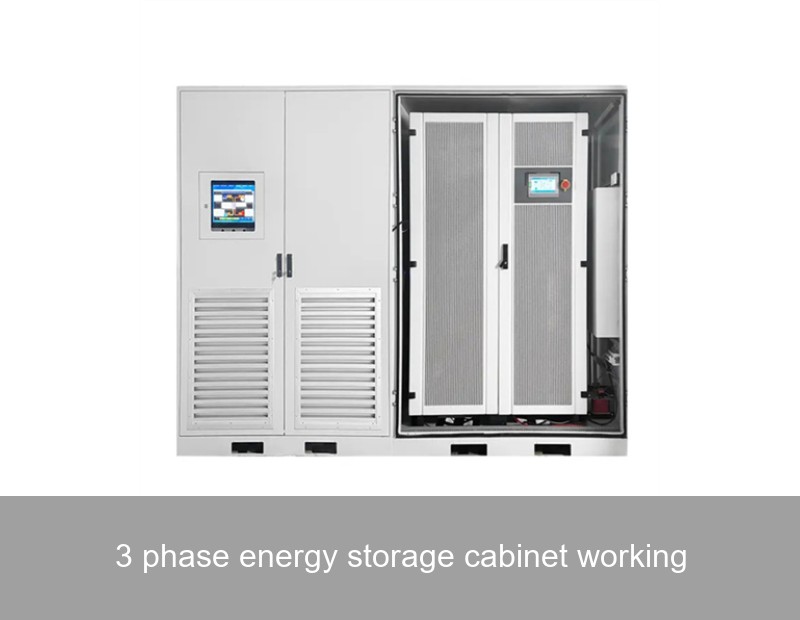
Have you ever wondered how large factories, commercial centers, or even entire neighborhoods can seamlessly integrate solar power, keep the lights on during outages, and dramatically cut their electricity bills? The answer often lies in a robust, unsung hero: the 3 phase energy storage cabinet. Unlike single-phase systems designed for typical homes, three-phase storage is the powerhouse for commercial and industrial (C&I) applications, handling the high-power, balanced loads that keep the economy running. As grid instability rises and energy costs soar across Europe and the U.S., understanding this technology is key to unlocking energy independence and sustainability. Let's break down how it works and why it's becoming a non-negotiable asset for forward-thinking businesses.
Table of Contents
What is a 3 Phase Energy Storage Cabinet?
At its core, a 3 phase energy storage cabinet is an integrated system that stores electrical energy—typically from the grid or renewable sources like solar PV—and delivers it back as stable, three-phase alternating current (AC). Think of it as a massive, intelligent battery bank specifically engineered for high-demand environments. It's not just a box of batteries; it's a complete power management solution housed in a secure, often containerized or rack-mounted cabinet. This system is fundamental for operations where power continuity is crucial, such as manufacturing lines, data centers, hospitals, and large retail complexes. The shift from single-phase to three-phase is akin to moving from a quiet country road to a multi-lane highway—it's about capacity, balance, and handling much larger loads efficiently and reliably.
How Does It Work? The Core Components Unveiled
To understand its operation, let's look inside the cabinet. A sophisticated 3-phase system is a symphony of key components working in unison:
- Battery Modules: The heart of the system. These are typically high-cycle life lithium-ion (like LFP - Lithium Iron Phosphate) cells arranged in series and parallel to achieve the required voltage and capacity. LFP chemistry is preferred for its safety, longevity, and stability.
- Power Conversion System (PCS): The brain and the muscle. This bi-directional inverter is the critical component that converts DC (Direct Current) from the batteries to 3-phase AC for the facility, and vice-versa for charging. It manages the frequency, voltage, and synchronization with the grid.
- Battery Management System (BMS): The guardian. It monitors every cell for voltage, temperature, and state of charge, ensuring safety, performance, and longevity by preventing overcharge, deep discharge, and thermal runaway.
- Energy Management System (EMS): The strategist. This software-based controller makes intelligent decisions. When should we store cheap grid energy? When should we discharge to avoid peak tariffs? How do we prioritize solar self-consumption? The EMS optimizes for cost and resilience.
- Thermal Management & Safety Systems: The protector. This includes cooling/heating systems (air or liquid) to keep batteries at optimal temperature, along with fire suppression and comprehensive electrical safety disconnects.
Here’s a simplified workflow: During the day, a factory's rooftop solar panels may generate excess power. Instead of sending it all to the grid, the EMS directs the PCS to convert and store this AC power as DC in the batteries. Later, during the expensive evening peak period, the EMS commands the system to discharge: the BMS safely mobilizes the battery energy, the PCS converts it back to perfectly synchronized 3-phase AC, and it powers the facility, slashing demand charges.
Why 3-Phase Power is Non-Negotiable for Commercial & Industrial Sites
You might ask, "Why not just use multiple single-phase units?" The answer lies in the fundamental design of industrial power. Three-phase power systems use three alternating currents, each out of phase by 120 degrees. This creates a constant, smooth power delivery that efficiently runs heavy machinery, large HVAC systems, and industrial motors without the "power pulsations" common in single-phase. It's more power-dense, uses less conductor material, and is inherently balanced. A dedicated 3 phase energy storage cabinet interacts directly with this native electrical architecture. It provides balanced charging and discharging across all three phases, preventing the voltage imbalances that can damage sensitive equipment and incur utility penalties. For businesses, this isn't just a technical detail—it's the foundation of operational reliability.
Real-World Impact: A Manufacturing Case Study from Bavaria, Germany
Let's move from theory to tangible results. Consider a mid-sized automotive parts manufacturer near Munich. Their challenges were universal: volatile energy prices, a desire to utilize their large rooftop solar PV system more effectively, and the critical need for uninterrupted production.
- Phenomenon: High grid dependency, solar curtailment during weekends, and crippling peak demand charges.
- Data & Solution: In 2023, they installed a Highjoule HI-Cube 300, a containerized 3 phase energy storage cabinet with a capacity of 300 kWh and a 150 kW inverter. The system was integrated with their existing 500 kWp solar array and factory energy management system.
- Results (12-month period):
- Peak Shaving: Reduced grid power draw during peak windows by over 95%, cutting demand charges by approximately €18,000 annually.
- Solar Self-Consumption: Increased the direct use of onsite solar from 35% to over 80%, minimizing feed-in to the lower-revenue grid.
- Backup Power: Provided critical 2-hour backup for key assembly lines, preventing an estimated €50,000 in potential downtime losses during two brief grid disturbances.
- ROI: Projected payback period of under 5 years, factoring in German energy price trends and available incentives.
This case exemplifies the multi-faceted value proposition. As noted by the International Renewable Energy Agency (IRENA), coupling renewables with storage is pivotal for industrial decarbonization and cost competitiveness. The Highjoule HI-Cube's intelligent EMS was pivotal, dynamically deciding between arbitrage (buy low, discharge high), peak shaving, and solar optimization every minute of the day.

A containerized 3-phase energy storage system, like the Highjoule HI-Cube, provides a scalable, plug-and-play solution for industrial sites.
The Future of Industrial Power Management: Beyond Basic Storage
The evolution of the 3 phase energy storage cabinet is moving from a passive backup asset to an active grid participant and a cornerstone of the energy transition. Modern systems, such as those developed by Highjoule, are now offering:
| Advanced Capability | Business & Grid Benefit |
|---|---|
| Virtual Power Plant (VPP) Integration | Aggregated storage fleets can sell services (frequency regulation, capacity) to the grid, creating a new revenue stream for the site owner. |
| Predictive Analytics & AI-driven EMS | Uses weather and production forecasts to optimize charging cycles with even greater precision, maximizing financial return. |
| Black Start Capability | Can restart critical operations independently after a total grid blackout, a feature increasingly valued by microgrids. |
For over 18 years, Highjoule has been at the forefront of this innovation. Our expertise lies in designing and deploying these intelligent systems—from our compact HI-Power Rack for medium commercial sites to our mega-watt scale HI-Matrix solutions for utility microgrids. We don't just sell cabinets; we provide a complete partnership: site assessment, system design, grid compliance support (key in markets like the U.S. with UL 9540 standards and Europe's diverse grid codes), installation, and lifetime performance monitoring.
Making the Decision: Is a 3-Phase System Right for Your Operation?
The technical and economic case is strong, but every facility is unique. Key drivers for adoption include: consistently high demand charges from your utility, existing or planned significant solar PV generation, exposure to unreliable grid power, and corporate sustainability targets. A qualified assessment will analyze your load profile, tariff structure, and physical space. The U.S. Department of Energy provides excellent resources on the value of storage for grid resilience.
As you look at your facility's electrical panel and your next energy bill, what single constraint—be it cost, carbon, or reliability—would solving with your own on-site power hub unlock for your business's future?
 Inquiry
 Online Chat