


Demystifying the 300 kW Solar Power Plant Cost: A Smart Investment Guide
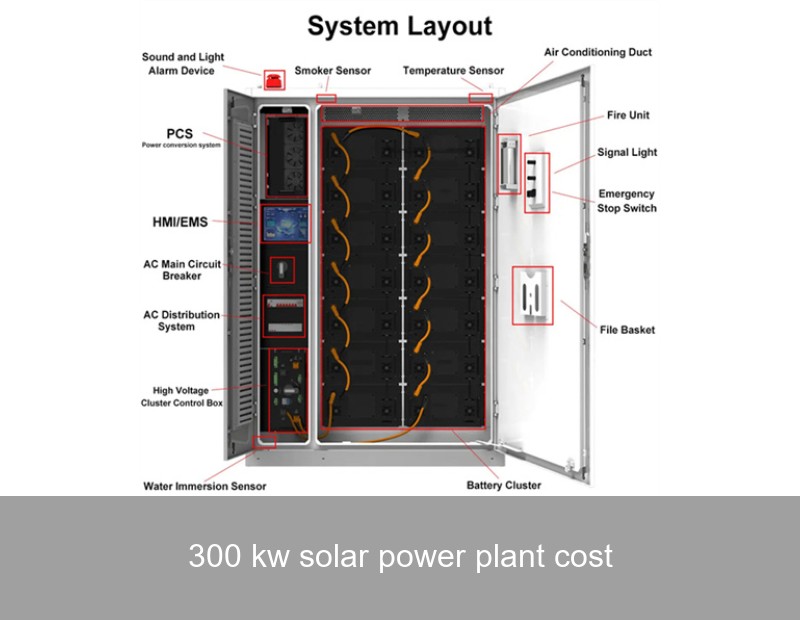
So, you're considering a 300 kW solar power plant. That's a fantastic move towards energy independence and sustainability. But let's be honest, the first question that comes to mind is almost always: "What's the total cost?" You might have seen a wide range of figures online, from $300,000 to over $600,000. This variance isn't just noise—it's a signal that the sticker price of solar panels is just the beginning of the story. The true cost, and more importantly, the true value, of a 300 kW system lies in a holistic understanding of the components, the long-term performance, and the intelligent technology that maximizes your return. As a commercial or industrial entity in Europe or the US, your goal isn't just to buy solar panels; it's to secure a reliable, low-cost energy supply for decades. Let's peel back the layers.
The 300 kW Solar Power Plant Cost Breakdown: More Than Just Panels
A 300 kW solar array is a significant infrastructure project. To understand the investment, we need to move beyond the simple "cost per watt" metric and look at the complete system architecture. Think of it like building a house: the foundation, wiring, and plumbing are as critical as the bricks.
Here’s a detailed breakdown of the key cost components for a typical 300 kW ground-mount or large commercial rooftop installation in markets like Germany or California:
| Cost Component | Description | Estimated Cost Range (USD) | % of Total |
|---|---|---|---|
| Solar Panels (Modules) | The photovoltaic cells that convert sunlight to DC electricity. Efficiency and warranty terms greatly affect price. | $90,000 - $150,000 | 25-35% |
| Inverters & Power Conversion | Critical hardware that converts DC electricity from panels to usable AC electricity. Includes central or string inverters. | $30,000 - $50,000 | 10-15% |
| Mounting & Racking System | The structural framework that securely attaches panels to the roof or ground. Design depends on site specifics. | $45,000 - $75,000 | 15-20% |
| Battery Energy Storage System (BESS) | Optional but increasingly critical. Stores excess solar energy for use at night or during peak rates. | $80,000 - $200,000+ | Variable |
| Electrical Balance of System (BOS) | Wiring, combiners, disconnects, switchgear, and the connection to the main grid (interconnection). | $40,000 - $70,000 | 12-18% |
| Installation Labor & Soft Costs | Engineering, permitting, installation labor, and project management. Varies significantly by region and complexity. | $75,000 - $120,000 | 20-25% |
As you can see, the panels themselves are only one piece of the puzzle. The "balance of system" and labor often constitute 50-60% of the total cost. This is where the PAS (Problem-Agitate-Solution) framework becomes clear:
- Problem: A traditional solar-only system generates power only when the sun shines. This means you're still vulnerable to high evening utility rates, demand charges, and grid outages. You're not fully capitalizing on your investment.
- Agitate: Without storage, a significant portion of your 300 kW plant's potential value—the energy produced at midday—might be sold back to the grid at low rates, only for you to buy it back at night at a premium. The National Renewable Energy Laboratory (NREL) notes the value of solar increases significantly when paired with storage, especially in areas with time-of-use rates.
- Solution: Integrating a smart Battery Energy Storage System (BESS) transforms your solar plant from a daytime generator into a 24/7 power asset. This is where the conversation shifts from mere cost to long-term value and ROI.
The Role of Intelligent Storage in Cost Optimization
Adding a battery system does increase the upfront capital expenditure. However, for a 300 kW plant, the financial dynamics change dramatically. An intelligent BESS allows you to:
- Arbitrage Energy: Store cheap solar energy and use it during expensive peak hours, slashing demand charges which can be a huge portion of commercial electricity bills.
- Ensure Resilience: Provide backup power during grid outages, avoiding operational downtime.
- Maximize Self-Consumption: Use more of the solar energy you produce on-site, increasing independence from utility price volatility.
Case Study: A Real-World 300 kW Solar + Storage Project
Let's look at a concrete example from the European market. A mid-sized food processing facility in Northern Italy was facing rising energy costs and frequent grid instability affecting its cold storage. They installed a 300 kW solar PV system.
The Initial Challenge: Their solar system covered 70% of their daytime load, but they still faced high costs from grid power in the early morning and evening. Their calculated simple payback period was around 7 years.
The Integrated Solution: The facility partnered with Highjoule to integrate a 250 kWh H-Stack Commercial Battery System into their existing solar plant. Our system's intelligent energy management software was configured to:
- Charge the batteries with excess solar production during the day.
- Discharge during the evening peak rate period (6 PM - 9 PM), offsetting the most expensive grid power.
- Provide seamless backup power for critical refrigeration units during grid sags.
The Result: By adding storage, the facility increased its on-site solar consumption from ~55% to over 90%. They reduced their peak demand charges by 40%. The combined system's payback period was improved to under 5.5 years due to these additional savings. The Levelized Cost of Energy (LCOE) for their self-generated power became significantly lower than the utility tariff, locking in low costs for the system's 25+ year lifespan.

Image Source: Unsplash (Representative image of a commercial solar installation)
The Highjoule Advantage: Intelligent Storage for Maximum ROI
At Highjoule, we understand that your 300 kW solar power plant is a major capital investment. Our role is to ensure you extract every possible kilowatt-hour of value from it. Founded in 2005, we specialize in designing and integrating advanced battery storage systems that turn solar infrastructure into intelligent, grid-responsive assets.
For a project of this scale, we would typically recommend our H-Stack Commercial Series. These modular, containerized or skid-mounted solutions are scalable from 100 kWh to multi-megawatt-hours, making them a perfect match for a 300 kW solar array. What sets them apart isn't just the robust lithium-ion phosphate (LFP) chemistry for safety and longevity, but the NeuroGrid AI software at its core.
NeuroGrid doesn't just store and release energy. It continuously learns your facility's load patterns, forecasts solar production, and integrates with local utility rate structures (like dynamic Time-of-Use in California or peak tariffs in Germany) to make autonomous, profit-optimizing decisions. It answers the question: "Should I store this kWh, use it now, or sell it back—and when should I discharge for maximum financial benefit?"
Image Source: Unsplash (Representative image of energy storage system monitoring)
Future-Proofing Your Investment
The energy landscape is shifting rapidly. Regulations like the EU's REPowerEU plan and the US Inflation Reduction Act (IRA) are creating strong incentives for paired solar and storage. Designing your 300 kW plant with storage readiness or direct integration is no longer a luxury; it's a strategic move for future-proofing.
When evaluating the total cost, consider the opportunity cost of not including smart storage. Will your solar-only system be able to adapt to future time-of-use rates? Can it participate in valuable grid services like frequency response? A Highjoule system is designed with this flexibility in mind, ensuring your asset remains revenue-agile for years to come.
Key Questions to Ask Your Provider
- Can you provide a detailed pro forma analysis showing LCOE and IRR for solar-only vs. solar+storage configurations?
- How does your energy management system integrate with my specific utility rate schedule?
- What is the expected cycle life and degradation profile of the battery system over 10-15 years?
- Can the system be easily expanded if my energy needs grow?
Ultimately, the "cost" of a 300 kW solar power plant is a single snapshot. The "value" is the long-term movie of energy savings, resilience, and strategic advantage. By partnering with an experienced provider like Highjoule, you're not just buying hardware; you're investing in a comprehensive energy intelligence platform designed to deliver the lowest possible cost of energy over the lifetime of your project. What specific energy challenge in your operations would you most want a 300 kW solar and storage plant to solve?
 Inquiry
 Online Chat