


Understanding the True Cost of a 10kV Solar System: A Complete Breakdown
So, you're considering a solar power installation for your business or large property, and you've heard about a "10kV solar system." It sounds like a substantial investment, and you're right to wonder: what exactly is the cost of a 10kV solar system? The quoted price is just the starting point. The true value—and final investment—is shaped by components, installation, incentives, and the long-term intelligence of the system itself. As a global leader in advanced energy storage, Highjoule has been navigating these calculations since 2005. Let's demystify the costs and explore how a smart, integrated approach can maximize your return.
Table of Contents
- What is a 10kV Solar System?
- The Complete Cost Breakdown
- Real-World Impact: A Case Study from California
- Beyond Panels: The Highjoule Advantage
- Calculating Your Real ROI
What Exactly is a 10kV Solar System?
First, a quick clarification: "10kV" typically refers to a system's capacity, measured in kilowatts-peak (kWp). A 10 kWp system is designed to produce up to 10,000 watts of power under ideal conditions. For context, this is a common size for larger homes, small to medium commercial operations, or agricultural facilities. It's powerful enough to make a significant dent in energy bills but requires careful planning to optimize. It's not just an array of panels; it's a complete energy ecosystem involving inverters, mounting, wiring, and increasingly, a battery storage system.
The Complete Cost Breakdown of a 10kV Solar System
Let's move beyond the single-number quote. The total installed cost is a sum of several components. Here’s a detailed table to illustrate a typical breakdown for a commercial-grade installation in the U.S. or Europe.
| Cost Component | Description | Estimated Cost Range (USD/EUR) | Percentage of Total |
|---|---|---|---|
| Solar Panels (Modules) | High-efficiency monocrystalline panels are the standard for premium installations. | $6,000 - $9,000 | 25-35% |
| Inverter(s) & Power Electronics | Converts DC solar power to usable AC power. Micro-inverters or string inverters with optimizers add cost but boost efficiency. | $1,500 - $3,000 | 10-15% |
| Mounting System & Racking | Structural hardware to secure panels to your roof or ground. Complexity affects price. | $1,000 - $2,500 | 5-10% |
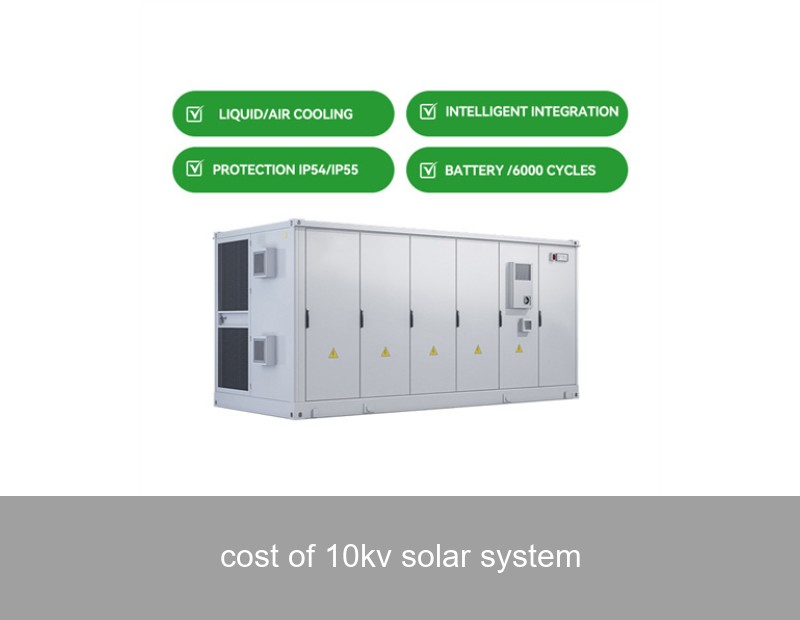
| Battery Energy Storage System (BESS) | Optional but highly recommended. Stores excess energy for use at night or during outages. This is where Highjoule excels. | $8,000 - $15,000+ | Varies Widely |
| Balance of System (BOS) | Wiring, conduits, switches, monitoring hardware, and safety equipment. | $1,000 - $2,000 | 5-10% |
| Installation Labor & Permits | Professional design, engineering, installation, and securing permits from local authorities. | $3,000 - $5,000 | 15-20% |
| Total Installed Cost (Before Incentives) | $20,500 - $36,500 | 100% |
Note: Prices are pre-incentive and can vary significantly by region, roof complexity, and component choices. Source: Highjoule market analysis & NREL Solar Cost Data.
Key Factors That Swing the Final Price
Why such a broad range? Several variables are at play:
- Location & Labor Rates: Installation costs in Germany or California differ from those in other parts of the U.S. or Southern Europe.
- Roof vs. Ground Mount: Ground mounts often require more materials and trenching, increasing cost.
- Panel Efficiency & Brand: Premium, higher-efficiency panels cost more but produce more power in limited space.
- The Storage Decision: Adding a battery is a significant upfront cost but transforms the system's value proposition.
- Local Incentives: This is the game-changer. The U.S. federal Investment Tax Credit (ITC) and various European subsidies can reduce net cost by 30-50%.
Real-World Impact: A Case Study from California
Let's move from theory to practice. Consider a mid-sized winery in Napa Valley, California. They faced high daytime energy costs for cooling and processing, with virtually no solar generation after sunset.
- Problem: High utility demand charges, unreliable grid during fire-prevention shutoffs.
- Solution: A 10.2 kWp solar array paired with a Highjoule HES-20 commercial battery storage system (20 kWh capacity).
- Cost & Data: The total installed cost was $38,000. After the 30% federal ITC and a local California incentive, the net investment was approximately $24,000. The system now covers 85% of the facility's annual energy use. Crucially, the Highjoule BESS allows the winery to "peak shave"—drawing from the battery during expensive peak rate hours—saving an additional $1,200 annually on demand charges. It also provides critical backup power for refrigeration during grid outages.
- Result: The payback period dropped from an estimated 9 years for solar-only to under 7 years for the solar+storage solution. The winery gained energy independence and resilience.

Image: A commercial solar installation on an agricultural facility. Source: Unsplash (User: @jontyson)
Beyond the Panels: The Highjoule Advantage in Your System Cost
When evaluating the cost of a 10kV solar system, the cheapest upfront option is rarely the most economical over 20+ years. This is where Highjoule's expertise transforms your investment. We don't just supply components; we provide intelligent, integrated Power Management Systems.
Our HES Series battery systems, like the one used in the winery case, feature advanced lithium-iron-phosphate (LFP) chemistry for safety and longevity. Coupled with our AI-driven Energy Management Software (EMS), the system doesn't just store energy—it learns your consumption patterns, automatically decides when to charge from solar or the grid (based on cheapest rates), and when to discharge to maximize savings.
For commercial and industrial clients, this intelligence directly attacks the often-overlooked "demand charges" on utility bills, which can constitute up to 50% of a commercial electricity bill. By integrating a Highjoule BESS, you're not just buying backup power; you're installing an automated financial optimizer for your energy spend.

Image: A modern, sleek battery energy storage system installed indoors. Source: Unsplash (User: @thisisengineering)
Calculating Your Real Return on Investment (ROI)
So, how do you assess value? Look at Levelized Cost of Energy (LCOE)—the average net present cost of electricity generation over the system's lifetime. According to Lazard's 2023 analysis, solar LCOE has fallen dramatically, making it highly competitive. Adding storage increases LCOE but delivers greater grid services and resilience value.
For a 10kV system with Highjoule storage, your ROI calculation should include:
- Direct savings on energy bills (reduced consumption & demand charges).
- Protection against future utility rate inflation.
- Potential revenue from grid services (in some markets).
- Quantifiable value of resilience (avoided downtime for businesses).
- Increased property value.
Suddenly, the net cost of a 10kV solar system looks less like an expense and more like a strategic capital investment with a compelling, multi-faceted return.
Ready to See Your Personalized Numbers?
The journey to energy independence starts with a precise assessment. What unique combination of solar generation and intelligent storage would deliver the fastest payback and greatest peace of mind for your specific property and energy profile?
 Inquiry
 Online Chat