


300 kWh Battery for Sale: Your Gateway to Energy Independence and Grid Resilience
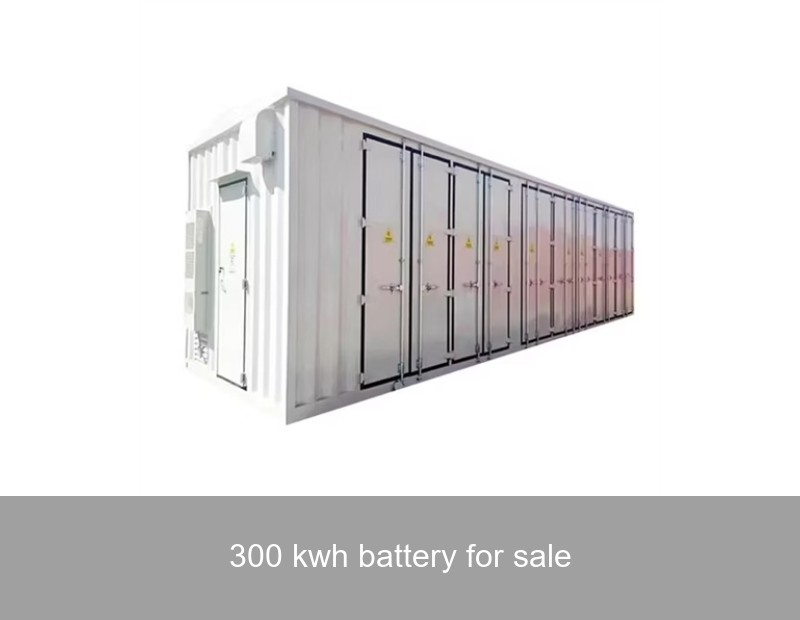
Have you ever watched your energy bills climb with the summer heat or winter chill, feeling like your business or home is at the mercy of the grid? You're not alone. Across Europe and the US, a quiet revolution is underway. It's not just about going green anymore; it's about taking control. The conversation is shifting from kilowatts to kilowatt-hours of resilience, and at the heart of this shift is a powerful asset: the 300 kWh battery for sale. This isn't just a product category; it's a pivotal solution for businesses, communities, and large homeowners ready to lock in energy costs, enhance sustainability, and build undeniable operational resilience.
Table of Contents
- The Rise of Mid-Scale Storage: Why 300 kWh Hits the Sweet Spot
- Beyond the Spec Sheet: What to Look for in a 300 kWh Battery System
- Real-World Power: A Case Study in Action
- The Highjoule Solution: Engineered for Intelligence and Durability
- Making the Investment: Economics and Implementation
The Rise of Mid-Scale Storage: Why 300 kWh Hits the Sweet Spot
Let's break down the "why" behind the number. A 300 kWh battery energy storage system (BESS) represents a critical tier in the storage market. It's substantially larger than residential units (typically 10-20 kWh) but more flexible and scalable than utility-scale projects (often 1 MWh+). This makes it the ideal workhorse for a vast array of applications.
Consider the data: According to the International Energy Agency (IEA), global energy storage capacity is set to multiply exponentially this decade, with behind-the-meter commercial and industrial systems leading a significant portion of growth. Why? Because the economic and operational logic has become undeniable.
- For a Commercial Business: A 300 kWh system can cover critical loads during a power outage, ensuring refrigeration, lighting, and point-of-sale systems stay online. It can also perform peak shaving—storing cheap energy overnight and using it during expensive peak afternoon rates, slashing demand charges that can make up 50% of a commercial electricity bill.
- For an Agricultural or Industrial Facility: It can manage the intermittent power of on-site renewables, like a large solar array, allowing a farm to power irrigation or cold storage through the night with sunlight captured during the day.
- For a Microgrid or Community: It serves as the foundational "heartbeat," stabilizing the local grid, integrating renewable sources, and providing backup power for essential services.
In essence, a 300 kWh battery for sale is more than storage; it's a strategic energy asset. It's the scale where sophisticated energy management software truly unlocks value, turning stored electrons into direct savings and security.
Beyond the Spec Sheet: What to Look for in a 300 kWh Battery System
Not all 300 kWh batteries are created equal. When evaluating a system, looking beyond the headline capacity is crucial. Here are the key differentiators:
| Feature | What It Means | Why It Matters |
|---|---|---|
| Cell Chemistry | Lithium Iron Phosphate (LFP) vs. other lithium-ion types. | LFP chemistry, used in Highjoule systems, is renowned for superior thermal stability, safety, and a longer cycle life—often exceeding 6,000 cycles. It's the industry benchmark for stationary storage. |
| Depth of Discharge (DoD) | The usable percentage of the battery's total capacity. | A system with a 95% DoD means you can use 285 kWh of a 300 kWh system without harming it. A lower DoD effectively means you paid for capacity you can't use. |
| Integrated Energy Management System (EMS) | The "brain" of the operation. | A smart EMS, like Highjoule's Neuron platform, is critical. It autonomously decides when to charge, discharge, or hold based on weather, tariffs, and consumption patterns to maximize ROI. |
| Scalability & Modularity | The ability to start at 300 kWh and expand later. | Your needs may grow. A modular system allows you to add battery "packs" seamlessly, protecting your initial investment and providing a future-proof path. |
Remember, you're not just buying a battery; you're investing in an integrated power solution. The hardware must be robust, but the intelligence that controls it is what delivers the promised financial and operational benefits.
Real-World Power: A Case Study in Action
Let's move from theory to practice. A compelling example comes from a medium-sized dairy processing plant in Bavaria, Germany. The facility had a 400 kW rooftop solar array but was still subject to high grid energy costs, especially during early morning and evening processing hours when solar production was low.
The Challenge: Reduce reliance on grid power during high-tariff periods, ensure uninterrupted cooling processes, and increase self-consumption of solar energy.
The Solution: The plant installed a 300 kWh battery storage system paired with an advanced inverter and energy management software. The system was configured to:
- Store excess solar generation from midday.
- Discharge during the 4 PM to 9 PM high-price window to power pasteurization and packaging lines.
- Maintain a 20% reserve for emergency backup to preserve critical cold storage in case of a grid failure.
- Grid Energy Cost Reduction: 34% decrease in electricity costs due to peak shaving and time-of-use optimization.
- Solar Self-Consumption: Increased from 55% to over 85%, maximizing the return on their PV investment.
- Backup Assurance: Gained 8+ hours of backup for critical loads, mitigating spoilage risk.
- ROI Timeline: Projected payback period of under 7 years, with a system warranty extending well beyond that.
This case illustrates the tangible, multi-faceted value a well-integrated 300 kWh system delivers. It’s a blueprint replicable across countless commercial and industrial settings in Europe and North America.

Image Source: Unsplash (Representative image of a commercial battery installation)
The Highjoule Solution: Engineered for Intelligence and Durability
At Highjoule, with nearly two decades of experience since 2005, we've engineered our H-Series Commercial Storage Systems to meet precisely these challenges. When you consider a 300 kWh battery for sale, our solution is designed from the ground up for performance and peace of mind.
Our H-Series 300 kWh rack-mount system is built with premium LFP cells, ensuring safety and a long operational life. It features a 95% usable DoD, meaning you get virtually all the energy you pay for. But where we truly excel is system intelligence.
Every Highjoule system is governed by our proprietary Neuron Energy Management Platform. Think of Neuron as your 24/7 energy autopilot. It doesn't just react; it predicts. By integrating weather forecasts, real-time electricity pricing data (crucial in dynamic markets like the US and parts of Europe), and your unique load profile, it makes thousands of optimizations daily to maximize your savings and system health.
Furthermore, our systems are inherently modular. Starting with a 300 kWh configuration is a powerful first step. As your needs evolve—perhaps you add more solar capacity or expand your facility—you can scale your storage in manageable increments without costly system replacements. This flexibility, combined with our global service and monitoring network, makes Highjoule a partner for the long term, not just a product vendor.
Highjoule Services: From Consultation to Long-Term Support
We provide a comprehensive suite of services to ensure your project's success:
- Feasibility & Design: Our experts analyze your energy data, site specifics, and goals to design an optimal system.
- Professional Installation & Grid Integration: Certified partners ensure safe, code-compliant installation and seamless connection.
- Commissioning & Training: We ensure the system is perfectly tuned and your team is confident in its operation.
- Remote Monitoring & Proactive Maintenance: Our team monitors system performance remotely, often identifying and resolving potential issues before they impact you.
Making the Investment: Economics and Implementation
Investing in a 300 kWh battery is a significant decision, and understanding the financial landscape is key. In the US, the Investment Tax Credit (ITC) now stands at 30-70% for standalone storage, dramatically improving economics. In Europe, various national grants, subsidies, and favorable depreciation schemes exist, such as those in Italy, Germany, and the UK.
The implementation process is methodical:
- Energy Audit & Proposal: A detailed analysis pinpoints your savings potential.
- Financing & Incentive Securement: We help navigate available incentives.
- Engineering & Permitting: Our team handles the complex paperwork.
- Installation & Commissioning: Swift, professional deployment.
- Activation & Optimization: Neuron goes live and starts saving you money from day one.
Image Source: Unsplash (Representative image of an energy management dashboard)
The question is no longer if battery storage makes sense, but when is the right time to act. With volatile energy prices and increasing grid instability, the value of resilience only grows.
What specific energy challenge—be it demand charges, renewable integration, or backup power concerns—is costing your business the most today, and how would gaining control over 300 kWh of your own power change that equation?
 Inquiry
 Online Chat