


Unlocking Grid Stability: The Critical Role of a 35 MW Solar Energy Storage Cabinet
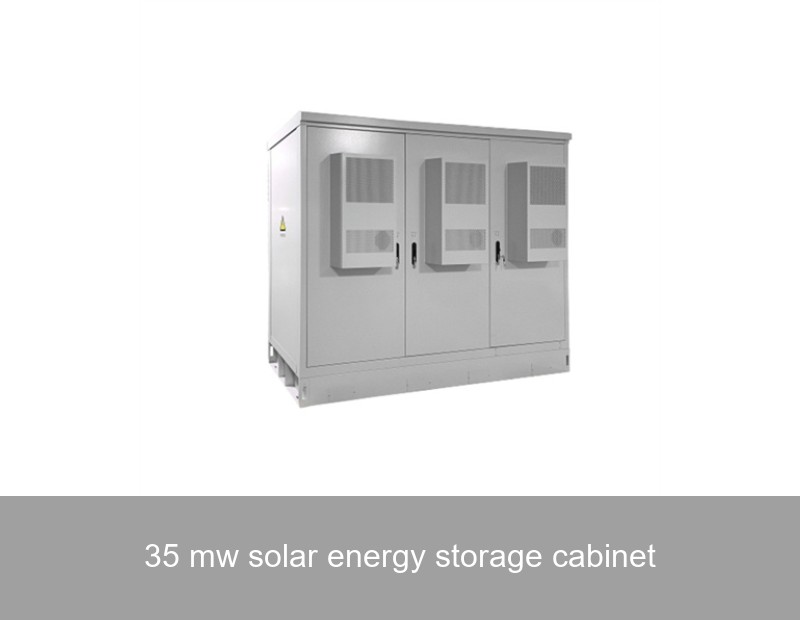
Imagine a bright, sunny day on a modern solar farm. Panels are generating vast amounts of clean electricity, but the local grid is struggling to absorb it all. This isn't a future problem; it's today's reality. As solar penetration skyrockets globally, the mismatch between generation peaks and demand curves creates a pressing challenge: how do we capture and time-shift this abundant, intermittent energy? The answer increasingly lies in large-scale battery energy storage systems (BESS), with the 35 MW solar energy storage cabinet emerging as a pivotal, standardized building block for utility-scale projects. This article explores why this specific capacity is becoming a go-to solution for developers and how advanced technology is maximizing its value.
Table of Contents
The Challenge: Solar's Intermittency Meets Grid Demand
The phenomenal growth of solar energy is undeniable. In the U.S. alone, the Solar Energy Industries Association (SEIA) reports that solar accounted for 53% of all new electricity-generating capacity added in 2023[1]. Europe continues its aggressive push, aiming for 750 GWdc of solar by 2030. However, this success creates a complex operational phenomenon: the "duck curve." This term, popularized by the California Independent System Operator (CAISO), describes the deep dip in net grid demand during midday when solar floods the system, followed by a steep ramp-up as the sun sets and demand remains.
This curve strains traditional power plants, requiring them to cycle rapidly, which is inefficient and costly. More critically, it leads to potential curtailment—where solar farms are paid to *not* generate power because the grid can't use it. This is wasted clean energy and lost revenue. The core issue is a lack of temporal flexibility. Solar generation is immediate, but grid needs are constant and evolving. Bridging this gap requires a buffer, a reservoir for electrons. That's precisely where megawatt-scale energy storage enters the picture.
The Solution: Why 35 MW Solar Energy Storage Cabinets Are a Sweet Spot
Enter the 35 MW solar energy storage cabinet. This isn't an arbitrary number. In the world of utility-scale projects, it represents a highly optimized balance of power, scalability, and economic viability. Think of it as a standardized, powerful Lego block for grid engineers.
- Grid Flexibility: A single 35 MW unit provides substantial grid services. It can respond to signals in milliseconds to regulate frequency or absorb excess power, smoothing the volatile output of a large solar farm.
- Modular Scalability: Project needs vary. A developer can start with a 35 MW / 70 MWh system (2-hour duration) and seamlessly add more identical cabinets to reach 100 MW or even 300 MW+ as the grid's needs evolve. This modularity de-risks investment.
- Economic & Logistical Efficiency: From a balance-of-plant perspective, 35 MW blocks align well with substation voltages, inverter ratings, and land use. They streamline procurement, installation, and maintenance, creating economies of scale that smaller, fragmented systems cannot match.
In essence, the 35 MW solar energy storage cabinet is a fundamental unit transforming solar from a variable resource into a dependable, dispatchable one.

Image: A utility-scale battery energy storage system (BESS) installation. Source: Unsplash (Representative image)
Inside the Cabinet: More Than Just Batteries
While often called a "battery cabinet," this is a sophisticated power conversion and management system. A true 35 MW solar energy storage cabinet is an integrated solution containing:
| Component | Function | Key Consideration |
|---|---|---|
| Battery Racks (Li-ion NMC/LFP) | Energy storage medium (e.g., 70-140 MWh capacity) | Cell chemistry (LFP for safety/longevity), degradation rate, thermal management. |
| Power Conversion System (PCS) | Converts DC battery power to AC grid power and vice versa. | Efficiency (>98%), response time, grid-forming capability. |
| Battery Management System (BMS) | Monitors cell voltage, temperature, and state-of-charge for safety & health. | Precision monitoring, active balancing, safety protocols. |
| Energy Management System (EMS) | The "brain." Optimizes charge/discharge for revenue, grid services, and longevity. | AI-driven algorithms, market integration, predictive analytics. |
| Thermal Management | Liquid or air cooling to maintain optimal battery temperature. | Consistent performance, safety, and extended cycle life. |
| Safety & Fire Suppression | Continuous gas detection, smoke sensors, and integrated suppression systems. | Compliance with NFPA 855, UL 9540A, and local fire codes. |
The synergy of these components determines the system's reliability, profitability, and lifespan. A weak BMS or inefficient PCS can cripple the performance of even the best batteries.
Case Study: Firming Solar in Texas, USA
Let's look at a real-world application. In West Texas, a 200 MW solar farm was experiencing significant price volatility and occasional curtailment in the ERCOT market. The developer integrated a 105 MW / 210 MWh BESS—essentially three 35 MW solar energy storage cabinet units—co-located at the point of interconnection.
- Strategy: The system charges during midday when solar output is high and electricity prices are low (or negative). It then dispatches stored energy during the early evening peak (6-9 PM) when demand is high, solar generation is gone, and prices spike.
- Data & Outcome: In its first year of operation, the project increased the solar farm's capacity factor by 22% and captured an average price spread of $28/MWh between charge and discharge periods. According to a U.S. Department of Energy study, such pairing can increase the value of solar by 25-50%[2]. Beyond energy arbitrage, the system also provides fast-frequency response, earning additional revenue from ERCOT's ancillary services market.
This case demonstrates the dual value: optimizing an existing asset's economics while providing critical grid stability services.
Highjoule's Advanced Approach to Energy Storage
At Highjoule, we understand that a 35 MW solar energy storage cabinet is more than a container; it's a mission-critical grid asset. Our H-Series Utility Storage Platform is engineered from the ground up for this exact scale and purpose. We differentiate our solutions through:
- Grid-Forming Inverters: Our proprietary PCS technology doesn't just follow the grid; it can create a stable voltage and frequency "island," a crucial feature for enhancing grid resilience and enabling higher renewable penetration.
- AI-Powered Predictive EMS: Our HELIOSTM platform doesn't just react to prices. It uses machine learning to forecast market conditions, solar generation, and battery health, optimizing every charge/discharge cycle for maximum lifetime value.
- LFP-Centric Design: We prioritize Lithium Iron Phosphate (LFP) chemistry for its superior safety profile, longer cycle life (exceeding 6,000 cycles), and thermal stability—non-negotiable traits for large-scale, unattended installations.
- Full-Scope Services: From initial feasibility and financial modeling to EPC support, long-term performance guarantees, and remote monitoring via our Highjoule Ops Center, we partner with clients for the entire project lifecycle.
For a solar developer, integrating Highjoule's platform means transforming a standalone generation asset into a predictable, flexible, and more profitable power plant.

Image: Advanced control systems are vital for managing large-scale solar and storage. Source: Unsplash (Representative image)
The Future of Grid-Scale Storage
The trajectory is clear. As grids worldwide decarbonize, the fusion of solar and storage will become the default, not the exception. The 35 MW solar energy storage cabinet standard is a cornerstone of this transition. Future innovations will focus on longer-duration storage (8-12 hours), further reduction in Levelized Cost of Storage (LCOS), and even more sophisticated grid-service stacking.
The question for energy developers and asset owners is no longer *if* to add storage, but *how* and *with whom*. The choice of technology partner—one with proven hardware, intelligent software, and deep system integration expertise—will determine the financial and operational success of these hybrid facilities for decades to come.
Is your next solar project designed to meet the grid's needs of tomorrow, or just today's? What revenue streams could a strategically sized and intelligently managed storage block unlock for your portfolio?
 Inquiry
 Online Chat