


Finding the Right Supplier of SES Energy: Your Guide to Sustainable Power Solutions
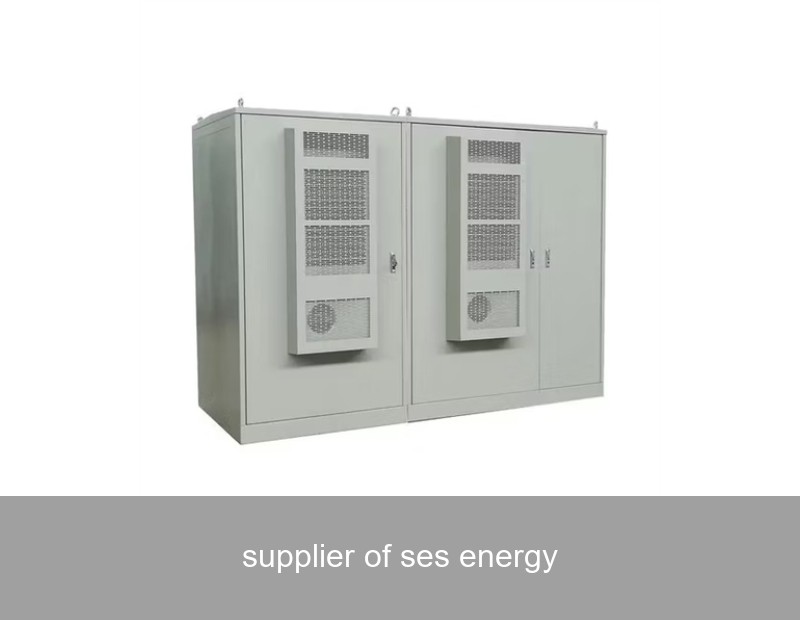
As the world accelerates its transition to clean energy, a critical question emerges for businesses, communities, and homeowners: how do you choose a reliable supplier of SES energy? SES, or Stationary Energy Storage, is the backbone of modern renewable systems, storing electricity from solar panels or the grid for use when it's needed most. But not all suppliers are created equal. The right partner doesn't just sell batteries; they provide intelligent, integrated solutions that ensure resilience, savings, and a genuine step toward sustainability. This guide will walk you through the key considerations, backed by data and real-world examples, to help you navigate this vital decision.
Table of Contents
What Makes a True Supplier of SES Energy?
Think of an SES system as the heart of your energy ecosystem. A simple battery supplier provides a component. A true supplier of SES energy delivers a functioning circulatory system—integrating hardware, software, and ongoing intelligence. This includes:
- Advanced Battery Technology: Lithium-ion chemistry (like LFP for safety and longevity), with robust thermal management.
- Intelligent Energy Management Software (EMS): The brain that decides when to store, discharge, or even sell energy back to the grid.
- Seamless Integration: Compatibility with existing solar PV, wind, generators, and grid connections.
- Full-Scope Services: From design and financing to installation, monitoring, and maintenance.
Choosing a partner who excels in all these areas is the difference between a project that merely stores power and one that actively optimizes your energy costs and carbon footprint.
The Data: Why SES is No Longer Optional
The global shift isn't just about green ideals; it's driven by compelling economics and urgent grid needs. Let's look at the numbers.
| Metric | Data Point | Implication |
|---|---|---|
| Global SES Market Growth | Expected to grow from $50B+ in 2024 to over $150B by 2030 (CAGR ~25%) | Massive investment and innovation are fueling rapid advancements. |
| Solar + Storage "Value Stack" | Commercial sites can see payback periods of 5-7 years, with 20+ year system life. | Combining solar with storage maximizes self-consumption and ROI. |
| Grid Demand Charges | For many US businesses, 30-70% of an electricity bill can be demand charges. | SES can strategically discharge to "shave" peak demand, delivering immediate savings. |
| Renewable Intermittency | Solar and wind generation can vary significantly hour-by-hour. | SES is essential for stabilizing the grid and ensuring a reliable power supply from renewables. |
As the International Energy Agency (IEA) highlights, energy storage is a key technology for the world’s clean energy transition. The data is clear: integrating SES is a strategic move for financial and operational resilience.
Case Study: A European Industrial Park's Transformation
Let's make this concrete. A major manufacturing park in Germany faced volatile energy prices and ambitious corporate sustainability targets. Their existing 2 MW solar array was exporting excess power at low noon prices, while they bought expensive power in the evening. They needed a supplier of SES energy that could handle large-scale, complex integration.
Solution & Results: The park partnered with Highjoule for a turnkey solution. Highjoule deployed a 1.5 MWh containerized battery energy storage system (BESS) alongside an upgrade to the site's energy management system. The Highjoule AI-powered platform now optimizes flow in real-time.
- Financial: Achieved a 40% reduction in peak demand charges. Increased on-site solar consumption from 35% to over 80%.
- Operational: Gained the ability to participate in grid frequency regulation services, creating a new revenue stream.
- Sustainability: Reduced the park's annual grid carbon footprint by an estimated 850 metric tons of CO2.
This case shows how the right supplier turns storage from a cost into a profit and sustainability center. 
Key Criteria for Selecting Your SES Partner
Based on such successes, here’s what you should demand from a prospective supplier:
- Proven Technology & Safety: Ask for certifications (UL, IEC), details on cell chemistry, and safety protocols (fire suppression, containment).
- Software Intelligence: Can their platform handle automated control, forecasting, and multiple value streams (arbitrage, demand response)?
- Domain Experience: Do they have references in your specific sector (commercial, industrial, utility, residential)?
- Financial Model Flexibility: Do they offer CAPEX, leasing, or Energy-as-a-Service (EaaS) models?
- Long-Term Partnership: What are their O&M (Operations & Maintenance) offerings and warranty terms?
The Highjoule Approach: Beyond the Battery Box
At Highjoule, our philosophy as a global supplier of SES energy is built on integration and intelligence. Since 2005, we've evolved from providing advanced battery systems to delivering comprehensive energy resilience platforms.
Our flagship product, the Highjoule H-Series BESS, is built with lithium iron phosphate (LFP) chemistry for maximum safety and cycle life. But the real magic lies in JouleMind OS™, our proprietary energy management platform. It doesn't just monitor; it learns your consumption patterns, weather forecasts, and real-time electricity prices to make autonomous decisions that maximize your economic return.
Whether it's for a residential community seeking energy independence, a hospital requiring critical backup, or a microgrid for a remote industrial site, Highjoule designs scalable solutions. Our services encompass everything from initial feasibility studies and system design to long-term performance guarantees and remote monitoring. We act as your partner in energy transformation, ensuring your investment delivers from day one and for decades to come.
Future Trends in Stationary Energy Storage
The landscape is evolving rapidly. As a forward-thinking supplier of SES energy, Highjoule is actively developing solutions aligned with these key trends:
- Second-Life EV Batteries: Repurposing electric vehicle batteries for stationary storage, a promising path for circular economy and cost reduction.
- Virtual Power Plants (VPPs): Aggregating thousands of distributed storage systems to act as a single, grid-stabilizing power plant. This is already a reality in markets like California and Australia.
- Non-Lithium Alternatives: While lithium dominates, technologies like flow batteries are gaining traction for very long-duration storage (8+ hours).
Staying ahead requires a partner committed to R&D and industry collaboration, like our work with research institutes on next-generation storage protocols. For more on grid integration challenges, see this report from the National Renewable Energy Laboratory (NREL).
Ready to Evaluate Your Energy Future?
The journey to a more resilient and sustainable energy profile begins with a conversation. What is the single biggest energy challenge your home or business is facing today—is it unpredictable costs, reliability concerns, or meeting sustainability goals? Identifying that is the first step toward finding the right supplier of SES energy to solve it.
 Inquiry
 Online Chat