


Understanding the True 350 kW Solar Panel Price: Investment vs. Long-Term Value
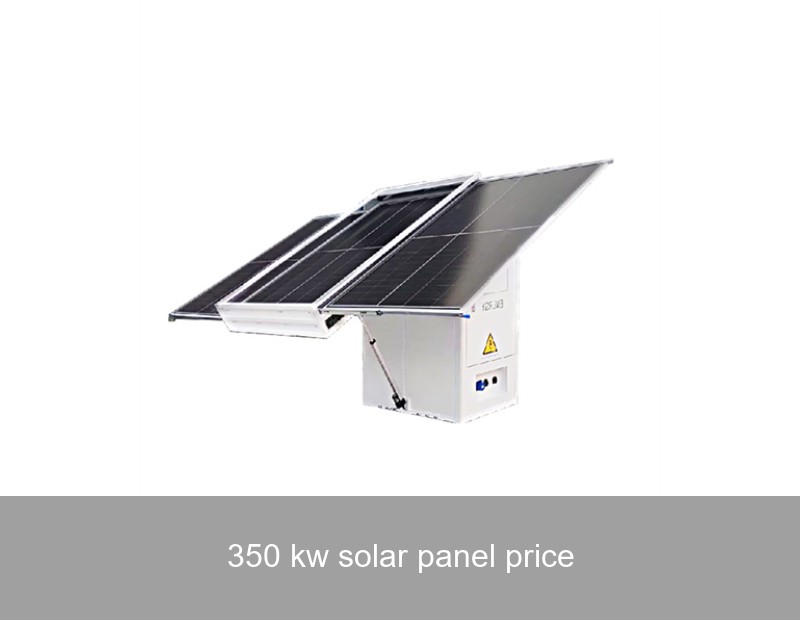
If you're researching a 350 kW solar panel price, you're likely evaluating a significant energy project for a commercial or industrial facility. The initial quote can be a startling figure, but focusing solely on that number is like buying a car based only on the sticker price—it misses the total cost of ownership and the long-term value. In today's energy landscape, especially in markets like Europe and the U.S. with volatile electricity costs, the true metric is the levelized cost of energy (LCOE) over 25+ years. This article will demystify the cost components, showcase real-world returns, and explain how integrating advanced energy storage, like solutions from Highjoule, transforms a solar purchase from a simple expense into a strategic, revenue-generating asset.
Table of Contents
The 350 kW Solar Price Breakdown: More Than Just Panels
So, what does a 350 kW solar system actually cost? In 2024, for markets in North America and Europe, the total installed price can range from approximately $700,000 to $1.2 million. This wide variance isn't arbitrary; it's dictated by several critical factors beyond the modules themselves.
Let's break down the key components that influence your final quote:
- Solar Panels (Modules): Typically 30-40% of the cost. High-efficiency monocrystalline panels command a premium but yield more power per square foot, crucial for space-constrained sites.
- Inverters: The "brains" of the system, converting DC to AC. Central inverters are common for this scale, but modular or string-level options can optimize performance, especially on uneven roofs.
- Balance of System (BOS): This includes mounting structures, wiring, combiners, and safety equipment. Site-specific conditions like roof type or ground-mount requirements heavily impact this cost.
- Soft Costs: Permitting, engineering, interconnection fees, and labor. These can vary dramatically by region and local regulations.
| Component | Cost Range (USD) | Percentage of Total | Notes |
|---|---|---|---|
| Solar Panels | $210,000 - $400,000 | 30-40% | Depends on efficiency tier & manufacturer. |
| Inverters & Power Electronics | $70,000 - $140,000 | 10-15% | Central vs. string inverter choice is key. |
| Balance of System (BOS) | $140,000 - $240,000 | 20-25% | Highly site-dependent (roof vs. ground). |
| Soft Costs (Install, Permits, etc.) | $280,000 - $420,000 | 30-40% | Labor rates and local bureaucracy are major factors. |
| Total Installed Cost | $700,000 - $1,200,000 | 100% | Before incentives and tax credits. |
It's vital to view this through the lens of incentives. In the U.S., the Investment Tax Credit (ITC) can reduce capital cost by 30-50% depending on bonus adders. Similarly, European countries offer various feed-in tariffs, grants, or accelerated depreciation. These incentives can effectively bring the net 350 kW solar panel price down by a third or more, dramatically improving the financial model.
The Storage Multiplier: Why Solar Alone Isn't Enough
Here's the pivotal insight: a solar-only system, while valuable, leaves significant money on the table. Solar generation peaks midday, but energy demand and cost peaks often occur in the early evening when solar production drops. Without storage, you're forced to buy expensive grid power precisely when you need it most, and you may even give excess solar energy back to the grid for a minimal credit.
This is where adding a Battery Energy Storage System (BESS) becomes a game-changer. Think of it not as an added cost, but as a value optimizer for your solar investment. A properly sized BESS allows you to:
- Maximize Self-Consumption: Store excess solar energy for use later, reducing grid purchases.
- Arbitrage Energy Costs: Charge batteries with cheap solar or off-peak grid power, discharge during expensive peak rate periods.
- Provide Resilience: Keep critical operations running during grid outages.
- Earn Grid Services Revenue: In some markets, you can sell frequency regulation or capacity services to the utility.

Image Source: Unsplash (Photographer: American Public Power Association)
Integrating storage fundamentally changes the economics. The question shifts from "What is the 350 kW solar panel price?" to "What is the optimal solar-plus-storage configuration for my specific load profile and utility rate structure?"
A Real-World Case: The German Manufacturing Plant
Let's look at concrete data. A medium-sized automotive parts manufacturer near Stuttgart, Germany, faced rising energy costs and grid instability concerns. In 2022, they installed a 350 kW rooftop solar array. Alone, it covered about 40% of their daytime load. However, they were still exposed to high evening energy prices and had no backup power.
In 2023, they partnered with Highjoule to integrate a 500 kWh Highjoule H2-Cube battery storage system. The results after one year were telling:
- Self-Consumption of Solar: Increased from 40% to over 85%.
- Peak Grid Demand Reduction: Reduced peak grid draw by 92%, eliminating costly demand charges.
- ROI Acceleration: The combined system's payback period was calculated at 6.2 years, compared to 8.5 years for solar alone, thanks to massive savings from peak shaving and optimized energy scheduling.
- Resilience: The system provided seamless backup for critical CNC lines during two brief grid disturbances, preventing an estimated €15,000 in production downtime.
This case underscores that the combined system's value proposition far outweighs the sum of its parts. The storage system didn't just add cost; it actively made the solar investment more valuable and reliable every single day.
The Highjoule Advantage: Intelligent Storage for Maximum ROI
Founded in 2005, Highjoule has evolved into a global leader not just by providing storage hardware, but by delivering intelligent, integrated energy solutions. For a project centered on a 350 kW solar panel price, our role is to ensure you extract the maximum possible financial and operational value from that investment.
Our approach centers on our core product: the Highjoule H-Series Modular Energy Storage System. Unlike simple battery cabinets, the H-Series is built with intelligence at its core:
- Advanced Battery Management System (BMS): Ensures longevity, safety, and optimal performance of each lithium iron phosphate (LFP) cell, the safest chemistry on the market.
- Integrated Energy Management System (EMS): This is the true brain. Our AI-driven EMS continuously forecasts solar production, analyzes real-time energy prices (crucial in volatile European markets), and learns your facility's load patterns to make autonomous, profit-maximizing decisions on when to charge, discharge, or hold.
- Scalable Architecture: Starting with a 250 kWh block, systems can be scaled seamlessly to multi-megawatt-hour capacities, allowing your storage to grow with your needs.

Image Source: Unsplash (Photographer: ThisisEngineering)
Our services extend beyond the hardware. Highjoule provides comprehensive feasibility studies and financial modeling. We'll model your specific site's solar production, layer in your utility tariff (be it a complex Time-of-Use rate in California or a feed-in tariff in Italy), and simulate the optimal storage size to deliver the fastest payback. We handle system design, grid interconnection support, and offer ongoing performance monitoring to guarantee your system performs as promised for decades.
Future-Proofing Your Energy Investment
The energy transition is accelerating. Regulations like the EU's REPowerEU plan and U.S. state-level clean energy mandates are creating both pressure and opportunity. Investing in solar today is a smart move, but investing in solar-plus-storage is a strategic one.
A system designed with intelligence, like Highjoule's, is an asset that adapts. It can participate in future virtual power plants (VPPs), respond to new grid service markets, and buffer your business against unforeseen electricity price spikes. The initial 350 kW solar panel price becomes a line item in a much larger, positive equation of energy independence, cost predictability, and operational resilience.
So, as you evaluate proposals and numbers, we leave you with this question to discuss with your team: Is your goal simply to install solar panels, or is it to achieve the lowest possible cost of energy and the highest degree of control over your power for the next 25 years? The path to the latter answer begins with a conversation that looks beyond the module price.
 Inquiry
 Online Chat