


Battery Storage Association: The Collective Power Driving a Smarter Energy Future
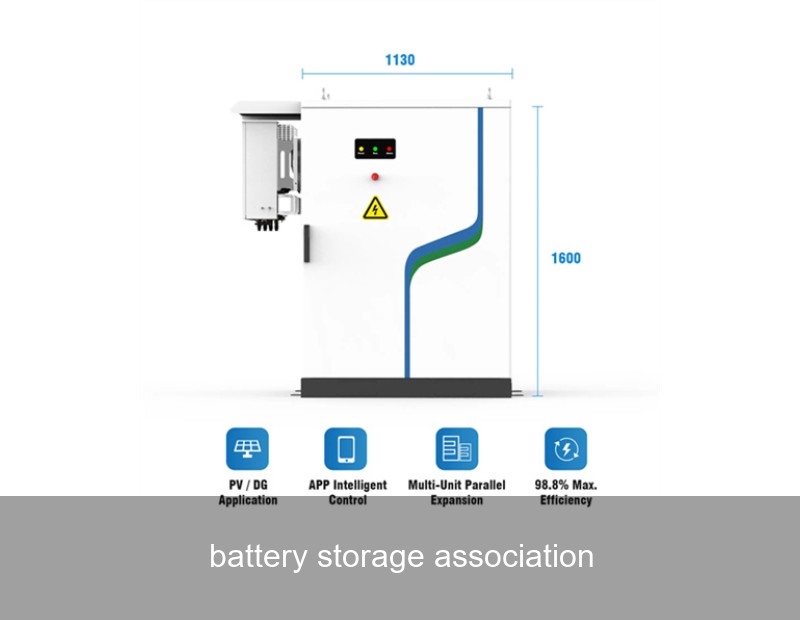
Imagine a world where your home's solar panels power your evening, even after the sun sets. Picture a factory that seamlessly rides out a grid outage without losing productivity. Envision entire communities becoming more resilient against extreme weather. This isn't a distant utopia; it's the reality being built today, and a key force behind it is the growing, influential battery storage association ecosystem. These collectives—comprising manufacturers, integrators, utilities, and policymakers—are the backbone of the energy transition. For businesses and homeowners navigating this shift, understanding the role of a battery storage association is crucial to unlocking the full potential of this transformative technology.
Table of Contents
The Phenomenon: From Niche Tech to Grid Cornerstone
Just a decade ago, large-scale battery storage was primarily a topic for engineering seminars. Today, it's a headline-grabbing solution to our most pressing energy challenges. The phenomenon is clear: renewable energy sources like solar and wind are inherently variable. The sun doesn't always shine, and the wind doesn't always blow. This creates a fundamental mismatch between when energy is generated and when it's needed most. Enter the modern battery energy storage system (BESS). It acts as a buffer, storing excess renewable energy and releasing it on demand, effectively "time-shifting" green power.
This capability transforms renewables from intermittent resources into reliable, dispatchable ones. For grid operators, it's a tool for stability and peak shaving. For businesses, it's a way to manage energy costs and ensure continuity. For homeowners, it's energy independence. The rapid adoption of this technology didn't happen in a vacuum; it was accelerated by the advocacy, standardization, and education efforts of various national and regional battery storage association groups.
The Data: Quantifying the Storage Boom
The numbers tell a compelling story. According to the U.S. Energy Information Administration (EIA), the United States alone is projected to add nearly 63 gigawatts (GW) of utility-scale battery storage capacity from 2023 through 2050. To put that in perspective, 1 GW can power roughly 750,000 homes. Europe is on a similar trajectory, driven by ambitious REPowerEU plans and the need for energy security.
But it's not just about capacity. The economic value is staggering. A study by the National Renewable Energy Laboratory (NREL) found that deploying 100 GW of storage on the U.S. grid could save billions in annual electricity system costs. These savings come from avoiding the need to build and run expensive "peaker" plants—typically fossil-fuel facilities that only operate during periods of highest demand. The data underscores a critical insight: storage is no longer just an add-on; it's a fundamental, cost-effective pillar of a modern, clean grid.

Image: Utility-scale battery storage systems are becoming a common sight alongside solar farms. Source: Unsplash
The Case Study: California's Community Resilience in Action
Perhaps no case is more illustrative than the one unfolding in California. The state, a global leader in renewables, has also faced increasing grid stress from heatwaves and wildfires. In response, community-level battery storage association projects have emerged as lifesavers.
Consider the “Resilience Hub” in the town of Borrego Springs. This microgrid project, supported by the local utility and state grants, integrates a 13 MW solar array with a 4.5 MW / 18 MWh battery storage system. During a planned public safety power shutoff (PSPS) in 2022—a measure to prevent wildfires—the hub successfully islanded from the main grid and provided continuous, clean power to critical facilities like the community center (which served as a cooling station), a grocery store, and a pharmacy for over 48 hours.
| Project Component | Specification | Outcome |
|---|---|---|
| Solar Generation | 13 Megawatts (MW) | Primary energy source |
| Battery Storage | 4.5 MW / 18 Megawatt-hours (MWh) | 48+ hours of backup for critical loads |
| Key Services Powered | Cooling Center, Pharmacy, Food Storage | Maintained community health & safety during outage |
This real-world example demonstrates the triple bottom line of modern storage: economic (reducing loss from outages), environmental (using stored solar, not diesel), and social (protecting community well-being). It's a blueprint being studied by communities worldwide.
The Role of Industry Associations: Advocacy, Safety, and Education
So, how does a battery storage association fit into this landscape? These organizations are the critical connective tissue. Groups like the U.S. Energy Storage Association (now part of the American Clean Power Association) and the European Association for Storage of Energy (EASE) work tirelessly on several fronts:
- Policy Advocacy: Lobbying for clear market rules, investment tax credits (like the ITC in the U.S.), and streamlined permitting processes.
- Safety Standards: Developing and promoting best practice guidelines for installation, operation, and fire safety—a paramount concern for widespread adoption.
- Market Intelligence: Providing data and reports that help members and the public understand trends and opportunities.
- Public Awareness: Demystifying storage technology for regulators, firefighters, and consumers.
For a company like Highjoule, active engagement with these associations is vital. It allows us to stay at the forefront of safety standards, contribute to shaping a fair market, and ensure our solutions meet the evolving needs highlighted by collective industry research.
The Highjoule Approach: Intelligence at the Core of Storage
Drawing on nearly two decades of experience since 2005, Highjoule’s philosophy extends beyond simply providing battery cells. We see the hardware as the body, but the intelligence as the soul. Our H-IQ Energy Management Platform is what transforms a static battery into a dynamic grid asset.
For our commercial and industrial clients, this means systems that don't just provide backup. They autonomously perform energy arbitrage—buying and storing electricity when rates are low, and using or selling it when prices peak—delivering a rapid return on investment. For residential customers, our EverHome Series seamlessly integrates with solar, learning household patterns to maximize self-consumption and preparedness.
Our work with a municipal utility in Germany exemplifies this. By deploying a 10 MWh Highjoule system with advanced grid-forming inverters and our H-IQ software, the utility can now defer a costly substation upgrade, integrate more local wind power, and offer new tariff options to its customers. The system automatically decides, in milliseconds, whether to stabilize voltage, store excess wind, or discharge to meet a peak—all while optimizing for longevity and revenue.

Image: Integrated home energy systems with solar and storage are key for residential energy independence. Source: Unsplash
Future Challenges and the Road Ahead
Despite the progress, hurdles remain. Supply chain robustness, responsible sourcing of critical minerals, and the development of a skilled installer workforce are ongoing challenges that require industry-wide collaboration—precisely the forum a strong battery storage association provides.
The next frontier is the proliferation of virtual power plants (VPPs), where thousands of distributed systems, like those from Highjoule, are aggregated to act as a single, powerful grid resource. This requires not only smart technology but also new regulatory frameworks. The question for policymakers and grid operators is: Are our market structures agile enough to harness the collective power of millions of behind-the-meter batteries?
As you consider the role of storage for your business or home, we encourage you to look beyond the kilowatt-hour rating. Look at the intelligence of the system, the track record of the provider, and their commitment to the safety and standards championed by the industry's collective voice. What specific energy challenge—be it cost volatility, reliability concerns, or sustainability goals—could a smart storage solution help you solve today?
 Inquiry
 Online Chat