


Navigating the 350W Solar Panel Price in Nigeria: A Guide to Smart Solar Investment
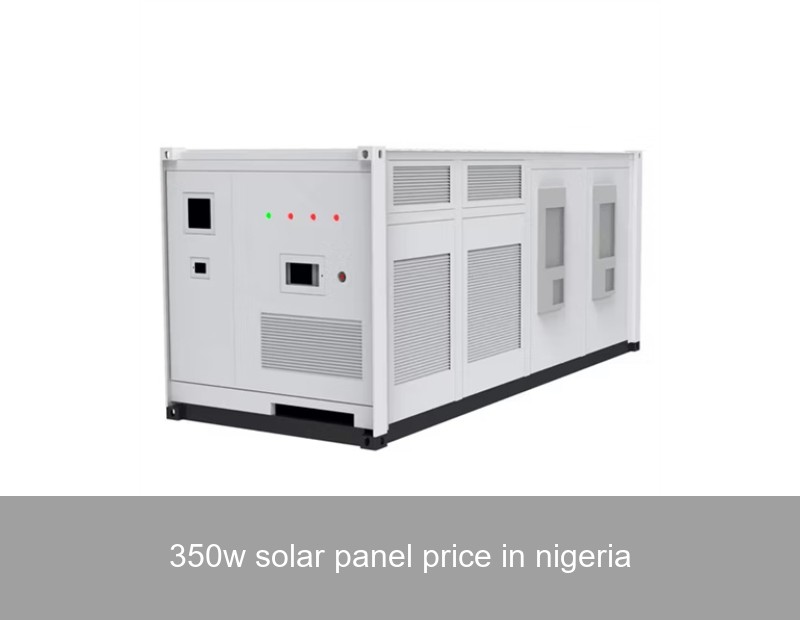
If you're researching the "350W solar panel price in Nigeria," you're likely looking for more than just a cost figure. You're seeking a reliable, cost-effective path to energy independence. The quoted price per panel is just the starting point of a much larger conversation about system value, long-term performance, and the peace of mind that comes with a properly engineered solution. In a market with growing potential but varying quality, understanding the true drivers of cost and value is key to making an investment that powers your home or business for decades.
Table of Contents
- The Real Cost Breakdown: Beyond the Sticker Price
- The Nigerian Solar Phenomenon: Demand, Challenges, and Data
- Case Study: A Lagos Business's Journey from Price to Performance
- Expert Insights: What Truly Determines Solar ROI in Nigeria?
- The Highjoule Approach: Integrated Systems Over Isolated Components
- Your Energy Future: What's the First Question You Should Ask?
The Real Cost Breakdown: Beyond the Sticker Price
A standalone 350W monocrystalline panel in Nigeria might range from ₦85,000 to ₦150,000. But here’s the crucial part: that panel is essentially a sophisticated sheet of glass without the ecosystem that makes it useful. The true investment encompasses the Balance of System (BOS):
- Inverter: The brain of the system, converting DC to AC power. Its quality dictates efficiency and grid/generator compatibility.
- Battery Storage: The heart for nighttime and backup power. Battery chemistry, depth of discharge, and cycle life are paramount.
- Mounting & Racking: Engineered to withstand local weather conditions for 25+ years.
- Cabling, Protection, & Installation: Professional design and installation ensure safety, maximize yield, and prevent costly failures.
Think of it like buying an engine versus a complete, reliable car. The panel's price tag is only about 30-40% of a functional off-grid or hybrid system's total cost. The value lies in how intelligently all components work together.
The Nigerian Solar Phenomenon: Demand, Challenges, and Data
Nigeria's solar adoption is driven by a clear need: bridging the gap between rising energy demand and an unreliable grid. The World Bank reports that over 85 million Nigerians lack grid access, while those connected face extensive outages. This isn't just an inconvenience; it's a economic drag. Businesses run on expensive diesel, and households plan their days around power availability.
This demand has created a vibrant but complex market. You'll find a wide spectrum of 350W panel prices, often reflecting differences in:
- Panel Tier & Origin: Tier-1 manufacturers (with vertically integrated production) offer longer warranties and proven degradation rates compared to uncertified generic panels.
- Logistics & Forex: Import costs and currency fluctuations directly impact final pricing.
- Supplier Expertise: Is the vendor simply box-moving, or can they provide technical design and after-sales support?

Image Source: Unsplash - Professional solar installation is critical for long-term performance.
Case Study: A Lagos Business's Journey from Price to Performance
Consider the experience of a mid-sized Lagos bakery, "Golden Crust." In 2022, they sought to reduce a ₦4.8M monthly diesel bill. Their initial quote was for a low-cost 20kW system using budget 350W panels. The panel price seemed attractive, but the system design lacked sufficient battery storage and used a basic inverter.
After a deeper audit, they opted for a premium solution featuring Highjoule's HJ-IntelliHub hybrid inverter and HJ-PowerStack lithium-ion batteries, paired with Tier-1 350W panels. The upfront cost was 40% higher.
| Metric | Budget System (Projected) | Highjoule-Integrated System (Actual) |
|---|---|---|
| Diesel Cost Savings | ~60% (₦2.9M/month) | 92% (₦4.4M/month) |
| System Uptime | Estimated 85% | 99.8% |
| Payback Period | 4.5 years | 3.2 years |
| Warranty & Support | Component-only, fragmented | Single-point, 10-year system support |
The data speaks volumes. The focus on the lowest "350W solar panel price" would have led to a suboptimal ROI. The integrated, intelligent system delivered far greater financial and operational value.
Expert Insights: What Truly Determines Solar ROI in Nigeria?
As a technology expert at Highjoule, I advise clients to shift the question from "What does a panel cost?" to "What does reliable, affordable power cost over 10 years?" Here are the critical, often overlooked factors:
- Inverter Intelligence: In regions with unstable grids, a smart inverter must seamlessly manage between solar, battery, grid, and generator. Highjoule's inverters use AI-driven logic to prioritize the cheapest source, extending battery life and slashing fuel costs.
- Battery Longevity: Not all lithium batteries are equal. Our HJ-PowerStack uses Lithium Iron Phosphate (LFP) chemistry, which is inherently safer and lasts 2-3 times longer than standard NMC batteries in high-temperature Nigerian conditions, fundamentally improving lifecycle cost.
- Holistic Design: We model your specific load profile, solar irradiation (using data from sources like Global Solar Atlas), and tariff rates to right-size every component. An oversized or undersized system is a wasted investment.

Image Source: Unsplash - LFP battery technology, known for safety and longevity, is ideal for demanding climates.
The Highjoule Approach: Integrated Systems Over Isolated Components
Since 2005, Highjoule has moved beyond being just a component supplier. We deliver intelligent, software-driven energy platforms. For our clients in Nigeria and globally, this means:
- The HJ-EnergyOS Platform: A proprietary system that monitors, controls, and optimizes your energy assets in real-time. You can see exactly how each 350W panel is performing, track savings, and diagnose issues remotely.
- Scalable Architecture: Whether you start with a 10-panel residential setup or a 1000-panel industrial microgrid, our systems are modular. You can easily expand capacity as your needs grow.
- Local Partnership & Support: We work through certified local partners, ensuring that expert installation, training, and maintenance are always available. This support network is a critical part of the value proposition, often missing when chasing the lowest component price.
Our solutions for the Nigerian market are built on global experience from Europe and North America, adapted for local environmental and grid challenges. We don't just sell you panels; we provide a guaranteed outcome: predictable, clean, and affordable power.
Your Energy Future: What's the First Question You Should Ask?
The journey to energy independence starts with reframing your inquiry. Instead of asking for the price of a 350W panel, consider asking potential suppliers: "Can you provide a detailed, site-specific proposal that shows my total cost of ownership, projected energy savings, and system performance guarantee over 10 years?"
This question immediately shifts the conversation from commodity pricing to value engineering. It separates transactional vendors from strategic partners like Highjoule, who are invested in your long-term success.
So, as you evaluate your options in Nigeria's dynamic solar market, what specific energy challenge—whether it's unpredictable downtime, soaring diesel costs, or the need for scalable future-proof power—is most critical for you to solve first?
 Inquiry
 Online Chat