


Al Gore Energy: How Much Has a Visionary's Work Actually Powered Our World?
When we hear "Al Gore energy," a specific image often comes to mind: the passionate advocate, the impactful slideshows of "An Inconvenient Truth," and the urgent call to address the climate crisis. But for those of us in the renewable energy and cleantech industry, this phrase evokes a more tangible question. Beyond raising global awareness, how much has this decades-long advocacy actually translated into real, measurable energy transformation? How many megawatts of solar, how many gigawatt-hours of stored clean power, can we attribute to this cultural and political shift? Let's move beyond the lecture hall and into the grid to explore the tangible impact of a movement and the technology making it reliable.
Beyond the Screen: How to Measure the "Al Gore Energy" Impact?
It's impossible to plug a meter directly into a documentary and measure its kilowatt output. The influence of Al Gore's work isn't about direct generation; it's about catalyzing a societal and economic pivot. We measure it in the explosion of renewable energy capacity, the plummeting costs of solar PV, and the mainstreaming of terms like "net-zero." This awareness created a fertile ground for policymakers, businesses, and homeowners to demand and adopt clean energy solutions. The question evolves from "Is climate change real?" to a more practical one: "Now that we are building renewables, how do we ensure this energy is reliable, efficient, and truly replaces fossil fuels?" This is where the conversation gets technical, and where companies like Highjoule step in.

Image Source: Unsplash - A visual representation of the scaled renewable energy capacity driven by global awareness.
The Phenomenon in Numbers: A Surge in Renewable Adoption
Let's look at the data. The correlation between heightened public awareness and renewable growth is stark. According to the International Energy Agency (IEA), the world added nearly 510 gigawatts (GW) of renewable power capacity in 2023 alone, the fastest growth rate in two decades. Solar PV accounted for a staggering 75% of this expansion. In the United States, solar generation has increased over 40-fold since 2005, the year "An Inconvenient Truth" was released.
| Metric | ~2005 Baseline | 2023/2024 Status | Growth Factor |
|---|---|---|---|
| Global Solar PV Capacity | ~5 GW | ~1,400 GW | 280x |
| US Solar Generation | ~2 TWh | > 160 TWh | > 40x |
| Global Wind Capacity | ~59 GW | ~1,000 GW | ~17x |
This isn't just coincidence. It's the result of activated demand, improved policy, and technological innovation. But this massive influx of variable renewable energy creates a new challenge: intermittency. The sun doesn't always shine, and the wind doesn't always blow. So, how do we keep the lights on?
Case Study: From Awareness to Kilowatt-Hours in California
California serves as a perfect microcosm of this entire journey. A leader in environmental policy, the state has aggressively pursued renewable mandates. However, by the late 2010s, it faced a familiar paradox: it was sometimes generating so much solar power during the day that it had to curtail it, while still relying on fossil fuel "peaker" plants in the evening when demand spiked and solar faded.
The solution? Massive investment in energy storage. The state mandated storage procurement, leading to a boom. A landmark project, like the Moss Landing Energy Storage Facility (Phase III is 350 MW / 1,400 MWh), acts as a giant battery for the grid. It stores excess solar energy during the day and discharges it during the critical evening peak. The results are concrete: in 2022, California's battery storage resources discharged a record 2.4 GWh of electricity to the grid in a single evening, directly offsetting natural gas use. This is the tangible, hardware-driven answer to the "how much" question. It's about gigawatt-hours of fossil fuel generation avoided.
The Critical Piece: Why Energy Storage is the Unsung Hero
This case study highlights the indispensable role of Battery Energy Storage Systems (BESS). Think of the renewable energy journey in three acts:
- Act I: Awareness & Adoption (The "Al Gore Energy" effect).
- Act II: Generation & Deployment (Massive rollout of solar and wind farms).
- Act III: Integration & Reliability (This is where storage dominates).
Without Act III, the first two acts lose their full impact. Storage is the enabling technology that:
- Time-shifts energy: Uses the sun's power after sunset.
- Stabilizes the grid: Provides critical frequency regulation services.
- Enhances resilience: Provides backup power for critical infrastructure.
- Maximizes ROI: Allows commercial users to avoid peak demand charges.
How Highjoule Empowers the "Gore Energy" Vision
Founded in 2005, at the very dawn of this renewed climate consciousness, Highjoule has been dedicated to solving the Act III challenge. We don't just see batteries; we see intelligent systems that unlock the true potential of renewable energy. For a business owner inspired to go green, the question isn't just about installing solar panels—it's about how much of their own clean energy they can actually use, and how much they can save.
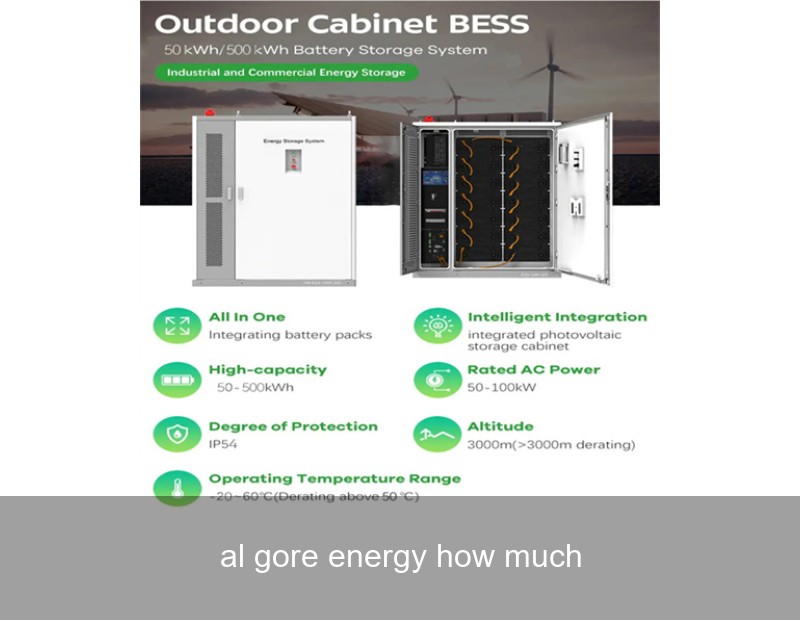
Our commercial and industrial (C&I) energy storage solutions are designed precisely for this. By integrating our smart BESS with a site's solar array, we enable:
- Peak Shaving: Automatically discharge stored energy during expensive utility peak periods, slashing demand charges—a major line item for businesses.
- Solar Self-Consumption Optimization: Store excess solar generation for use later, increasing the share of self-consumed clean energy from ~30-40% to over 80%.
- Grid Services Participation: In some markets, our systems can even generate revenue by providing stability services to the local grid.
For microgrids and utilities, our large-scale storage systems provide the same grid-balancing benefits seen in California, ensuring reliability as renewable penetration grows. We turn the promise of "Al Gore energy" into a stable, predictable, and economical reality for our clients.

Image Source: Unsplash - Example of a modern commercial battery energy storage system (BESS) installation.
Your Energy, Your Future: What's Your Next Move?
The legacy of climate advocacy is no longer just a film reel; it's embedded in our power lines, on our rooftops, and in the sophisticated battery systems managing our modern grid. The answer to "Al Gore energy, how much?" is ultimately being written by every business, community, and utility that chooses to invest in intelligent storage solutions. The awareness has been created. The renewable technology is cost-effective. The missing link for many is the ability to control and optimize that energy flow.
Is your organization ready to move from simply generating clean energy to truly mastering its use, ensuring every kilowatt-hour produced has maximum impact on your bottom line and the planet's health?
 Inquiry
 Online Chat