


3kW Solar Off-Grid Inverter: Your Key to True Energy Independence
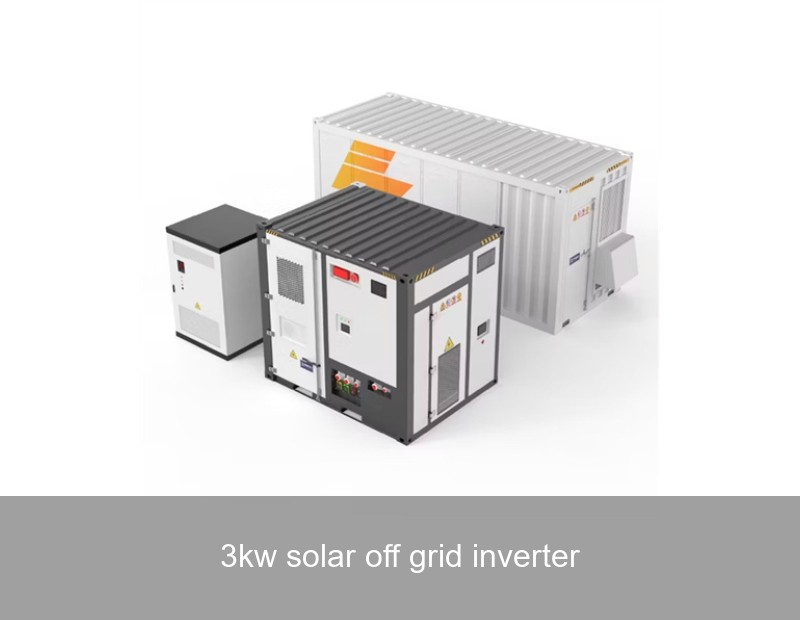
Imagine a powerful, quiet box humming away in your garage or utility room. It's the heart of a system that transforms free sunlight into reliable electricity for your home, completely disconnected from the utility grid. This is the reality enabled by a 3kW solar off-grid inverter. As energy prices fluctuate and a desire for resilience grows, more homeowners and small business operators in Europe and the US are asking: "Can I power my life entirely on my own terms?" For many, a well-designed 3kW off-grid system is the perfect starting point for that journey to energy autonomy. In this guide, we'll demystify this critical technology and explore how it can unlock sustainable, self-sufficient power.
Table of Contents
- What is a 3kW Solar Off-Grid Inverter?
- Why Choose a 3kW System? The Data Behind the Decision
- Key Components of a Robust Off-Grid System
- A Real-World Case Study: The Alpine Homestead
- Choosing the Right Inverter: Beyond the Basic Specs
- The Highjoule Solution: Engineered for Reliability
- Key Installation and Maintenance Considerations
What is a 3kW Solar Off-Grid Inverter?
Let's break it down. A 3kW solar off-grid inverter is the central brain and powerhouse of a standalone solar energy system. Unlike grid-tied inverters that shut down during a blackout, an off-grid inverter is designed to operate independently. Its primary job is to convert the direct current (DC) electricity produced by your solar panels into the clean, stable alternating current (AC) that powers your household appliances. The "3kW" rating refers to its continuous output power—meaning it can simultaneously power a load of up to 3000 watts. To put that in perspective, that's enough to run a refrigerator, lights, a television, a laptop, and a water pump all at once. Crucially, it manages energy flow between the solar panels, a battery bank (where excess energy is stored for use at night or on cloudy days), and your home's electrical circuits.
Why Choose a 3kW System? The Data Behind the Decision
The choice of a 3kW system isn't arbitrary. It represents a strategic sweet spot for off-grid living. According to data from the U.S. Department of Energy, the average American home uses about 30 kWh of electricity per day. A 3kW solar array, properly sized with adequate battery storage, can generate a significant portion of this, especially when paired with energy-efficient appliances and mindful consumption.
- Cabins & Vacation Homes: Remote properties where grid connection is prohibitively expensive.
- Resilient Primary Homes: Homeowners in areas prone to frequent or prolonged grid outages seeking backup power.
- Small Workshops & Farms: Powering tools, irrigation systems, or agricultural equipment.
- Essential Load Circuits: A system dedicated to keeping critical circuits (lights, comms, refrigeration) running during emergencies.
The logic is a ladder: start with understanding your essential power needs (phenomenon), analyze your consumption data (data), then size a system like a 3kW setup to meet those core requirements reliably (solution).
Key Components of a Robust Off-Grid System
A successful off-grid system is more than just an inverter. It's a symphony of components working in harmony:
| Component | Role | Consideration for a 3kW System |
|---|---|---|
| Solar Panels | Generate DC electricity from sunlight. | Typically 3-4kW of panel capacity to account for losses and ensure battery charging. |
| Off-Grid Inverter | Converts DC to AC, controls system. | Must be a true off-grid/standalone inverter; 3kW continuous rating. |
| Battery Bank | Stores energy for use when sun isn't shining. | Lithium-ion (e.g., LiFePO4) is now preferred for longer lifespan, depth of discharge, and efficiency. |
| Charge Controller | Regulates voltage/current from panels to batteries. | MPPT (Maximum Power Point Tracking) type is essential for maximizing harvest. |

Image Source: Unsplash - A typical off-grid cabin setup with solar panels and storage.
A Real-World Case Study: The Alpine Homestead
Let's look at a concrete example from the Swiss Alps. The Müller family owns a 90m² mountain homestead, previously dependent on a noisy, expensive diesel generator. Their goal was silent, zero-emission energy independence for year-round living.
- System Installed: 3.6kW solar array, a 3kW pure sine wave off-grid inverter, and a 14.4kWh LiFePO4 battery bank from Highjoule.
- Result: The system covers 100% of their energy needs from March to October. In deep winter, they supplement with a small, efficient wood stove (which also heats the home). Their diesel consumption dropped by over 95%.
- Data Point: Monitoring over 12 months showed an average daily production of 14.2 kWh in summer and 6.5 kWh in winter. The 3kW inverter perfectly handled their peak loads, including starting a well pump (a high-surge device). "The reliability has been astounding," says Mr. Müller. "We no longer 'manage' power; we simply live, with the system working seamlessly in the background."
Choosing the Right Inverter: Beyond the Basic Specs
When selecting your 3kW off-grid inverter, technical specs are just the beginning. Here’s what truly matters for long-term satisfaction:
- Waveform: Always choose a Pure Sine Wave output. It's compatible with all appliances, especially sensitive electronics like medical equipment or variable-speed motors, preventing damage and odd noises.
- Surge Capacity: Can the inverter handle the brief, high-power surge needed to start motors (pumps, power tools)? A quality 3kW inverter should have a surge rating of at least 6,000 watts.
- Integration & Monitoring: Modern inverters offer smart monitoring via apps, allowing you to track energy flow, battery state, and system health from your phone—a game-changer for off-grid peace of mind.
- Efficiency: Look for peak efficiency ratings above 93%. Every percentage point of loss is energy you must generate and store, costing you in extra panels and batteries.
The Highjoule Solution: Engineered for Reliability
At Highjoule, with nearly two decades of experience since 2005, we understand that an off-grid system isn't a luxury—it's your essential utility. That's why our H-PowerCube Off-Grid 3.0 system is engineered for the demands of real-world energy independence.
Our all-in-one solution integrates a high-efficiency 3kW pure sine wave inverter, an MPPT charge controller, and advanced battery management system (BMS) designed specifically for seamless integration with our modular lithium iron phosphate (LiFePO4) batteries. What does this mean for you?
- Unmatched Simplicity: Pre-engineered compatibility eliminates guesswork and ensures optimal performance between all components.
- Robust Performance: With a 200% surge capacity (6,000W), it confidently starts demanding loads like well pumps or workshop equipment.
- Intelligent Control: The Highjoule EnergyOS platform provides intuitive remote monitoring and control, allowing you to optimize consumption and diagnose issues instantly.
- Scalable Design: Start with what you need. Our modular battery design allows you to easily expand storage capacity as your needs grow.

Image Source: Unsplash - Example of a modern, integrated energy storage unit similar to an all-in-one system.
We provide more than just hardware; we offer complete design support and technical expertise to ensure your 3kW off-grid system is perfectly tailored to your site conditions and load profile, whether for a home in rural Texas or a chalet in the Austrian Alps.
Key Installation and Maintenance Considerations
Professional installation is non-negotiable for safety and performance. Key steps include:
- Professional Site Audit: A detailed analysis of your location's solar potential (using tools like PVGIS for Europe), shading, and load assessment.
- Proper Wiring & Safety: Correct cable sizing, DC and AC disconnect switches, and grounding are critical to prevent fire hazards.
- Battery Environment: Installing batteries in a temperature-controlled environment (typically between 0°C and 30°C) dramatically extends their life.
- Low-Maintenance, Not No-Maintenance: While lithium batteries require minimal upkeep, periodic visual inspections, keeping components clean and dust-free, and monitoring system alerts are essential habits.
Ready to Design Your Energy Independent Future?
The journey to energy freedom starts with a clear understanding of your own power needs and the technology that can meet them. A 3kW solar off-grid inverter system is a powerful, practical step toward taking control. What's the first critical load you would want to secure with your own reliable, clean power?
 Inquiry
 Online Chat