


Understanding the 3kW Solar System Battery Price: A Smart Investment for Energy Independence
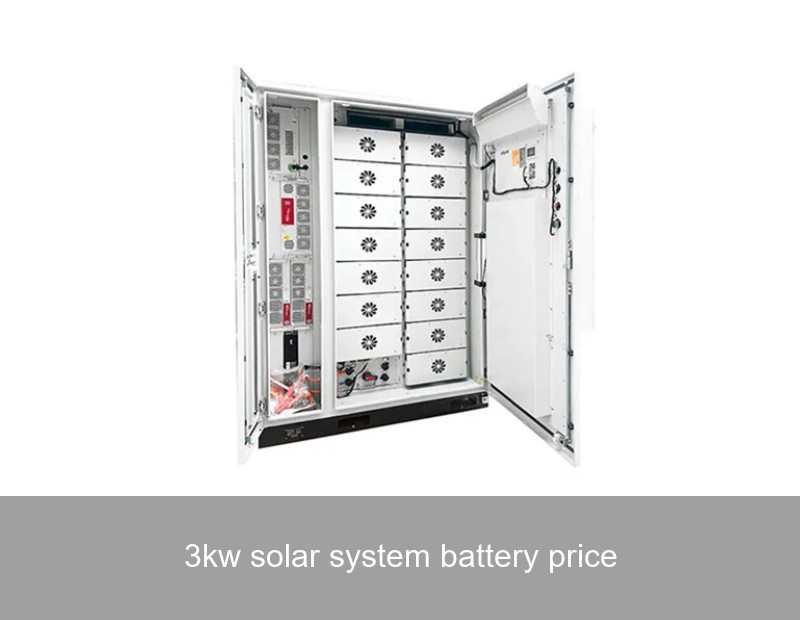
So, you're considering a 3kW solar system. That's a fantastic choice for many households, a size that often hits the sweet spot for offsetting a significant chunk of a typical home's electricity bill. But the conversation inevitably turns to batteries. "What's the real 3kW solar system battery price, and is it worth it?" This isn't just about a number on a quote; it's about understanding the value of energy resilience, maximizing self-consumption, and building a sustainable future. Let's unpack the factors that determine the cost and how pairing your panels with a smart battery system transforms your solar investment.
Table of Contents
- The Real Price Breakdown: More Than Just a Battery
- Why a Battery is a Game-Changer for Your 3kW System
- A Real-World Case: The Johnson Family in Hamburg
- The Technology Inside Matters: Chemistry, Intelligence, and Longevity
- Highjoule's Integrated Solution: Beyond the Sticker Price
- Making the Right Choice for Your Home
The Real Price Breakdown: More Than Just a Battery
When we talk about the 3kW solar system battery price, we're rarely talking about a single component. The cost is an ecosystem of hardware, software, and expertise. Here’s a typical breakdown for a quality installation in markets like Germany or California:
- The Battery Module (kWh): This is the storage capacity, often ranging from 5kWh to 15kWh for a 3kW system. Price is largely per kWh.
- The Battery Inverter/System Controller: The brain that manages DC-AC conversion, charging, and discharging. It's a critical component for safety and efficiency.
- Balance of System (BOS): Wiring, safety disconnects, mounting hardware, and energy management systems.
- Installation & Professional Services: Certified electrician labor, system design, permitting, and grid interconnection fees.
A complete, installed residential battery storage system in the US and Europe typically ranges from $800 to $1,500 per kWh, depending on brand, technology, and complexity. For a 10kWh battery—a common and effective pairing with a 3kW solar array—you might be looking at a total system price between $8,000 and $15,000 before incentives.
However, focusing solely on upfront cost is a mistake. The true metric is value over time—how much that battery saves you, protects you, and pays back over its 10-15+ year lifespan.
Why a Battery is a Game-Changer for Your 3kW System
Without a battery, a 3kW solar system exports excess midday power to the grid, often at a low feed-in tariff, and you buy back expensive power in the evening. A battery flips this script.
| Scenario | Without Battery | With Highjoule Smart Battery |
|---|---|---|
| Daytime Solar Production | Excess power sold to grid at low rate (e.g., $0.05/kWh) | Excess power stored for personal use (value at retail rate, e.g., $0.30/kWh) |
| Evening/Night Energy Use | Power purchased from grid at high rate | Power used from battery, minimizing grid purchases |
| Power Outage | Home is in the dark | Essential loads continue to run seamlessly |
| Self-Consumption Rate | ~30-40% | 70-90%+ |
This shift from being a passive producer to an active manager of your energy is profound. It's the difference between just saving a bit on your bill and achieving true energy autonomy.
A Real-World Case: The Johnson Family in Hamburg
Let's look at real data. The Johnson family in Hamburg, Germany, installed a 3.2kW solar PV system in 2020. In 2023, they added a Highjoule HomePower 10 battery (10.2kWh capacity).
- Before Battery: Their self-consumption was 38%. They exported over 60% of their solar generation to the grid for a feed-in tariff of €0.082/kWh.
- After Battery: Their self-consumption jumped to 89%. They now use almost all their solar power directly, avoiding grid electricity priced at €0.32/kWh.
- Financial Impact: Their annual electricity bill savings increased by approximately €850. Factoring in Germany's attractive storage subsidies at the time, they projected a battery payback period of just under 8 years.
- Resilience Benefit: During a winter storm that caused a local 5-hour outage, their home's lights, internet, and refrigerator operated without interruption.

Image Source: Unsplash - Representative image of a modern home with solar.
The Technology Inside Matters: Chemistry, Intelligence, and Longevity
Not all batteries are created equal. The core chemistry, battery management system (BMS), and thermal management define performance, safety, and lifespan—and therefore, long-term value.
- Lithium Iron Phosphate (LFP): This is now the dominant chemistry for home storage, used by leading providers like Highjoule. LFP batteries offer superior safety (thermal stability), a longer cycle life (often 6,000+ cycles), and excellent performance without using cobalt.
- Advanced BMS: A smart BMS is the guardian of your battery. It ensures each cell operates optimally, prevents over-charge/discharge, and provides detailed performance data. Highjoule's proprietary BMS includes AI-driven algorithms to predict usage patterns and optimize cycles for longevity.
- Modular Design: The ability to start with a smaller capacity and expand later is a cost-effective strategy. Look for systems that allow easy, plug-and-play expansion.
When evaluating the 3kW solar system battery price, always ask about the underlying technology. A slightly higher upfront cost for an LFP system with a robust BMS will almost always yield a lower total cost of ownership over 15 years compared to a cheaper, less advanced alternative. For more on battery safety and chemistry, the U.S. Department of Energy provides excellent resources.
Highjoule's Integrated Solution: Beyond the Sticker Price
At Highjoule, we believe the right price delivers peace of mind and maximum return. Our approach to pairing a battery with your 3kW system isn't just about hardware; it's about delivering a complete, intelligent energy ecosystem.
For residential clients, our HomePower Series is engineered for seamless integration. Starting with the compact HomePower 5 (5.1kWh) up to the scalable HomePower 15 (15.3kWh), these systems feature our market-leading LFP cells and are managed by the Highjoule Energy Hub—a unified inverter and controller that simplifies your setup.
What truly sets our solution apart and adds intangible value to the price?
- Predictive Energy AI: Our system learns your household patterns and weather forecasts to optimize when to store, use, or (if beneficial) export energy, squeezing every cent of value from your system.
- Grid Services Ready: In some markets, our systems can participate in virtual power plant (VPP) programs, where you can earn additional income by allowing the utility to use a tiny fraction of your stored energy for grid stability during peak demand.
- Professional Design & Support: Our global network of certified installers ensures your system is perfectly sized and configured for your home's unique energy profile, not a one-size-fits-all solution.

Image Source: Unsplash - Representative image of a sleek home battery installation.
Making the Right Choice for Your Home
So, how do you navigate this decision? Start by asking the right questions:
- What are my goals? Is it bill savings, backup power, or environmental impact? Your primary goal will guide the battery size and features you need.
- What incentives are available? In the US, the federal Investment Tax Credit (ITC) now covers 30% of the cost of a solar-plus-storage system. Many European countries also have subsidies. The DSIRE database is a great resource for US incentives.
- Who will install and service it? Choose an experienced, certified partner who understands both solar and storage integration.
The 3kW solar system battery price is your entry ticket to a more resilient, efficient, and intelligent home energy system. It's an investment that pays dividends in savings, security, and sustainability for decades.
What's the first energy-dependent item in your home you'd want to keep running during an outage, and how would that priority shape the battery capacity you choose?
 Inquiry
 Online Chat