


Understanding Solar Panel 250 Watt Price in Sweden: A Smart Buyer's Guide
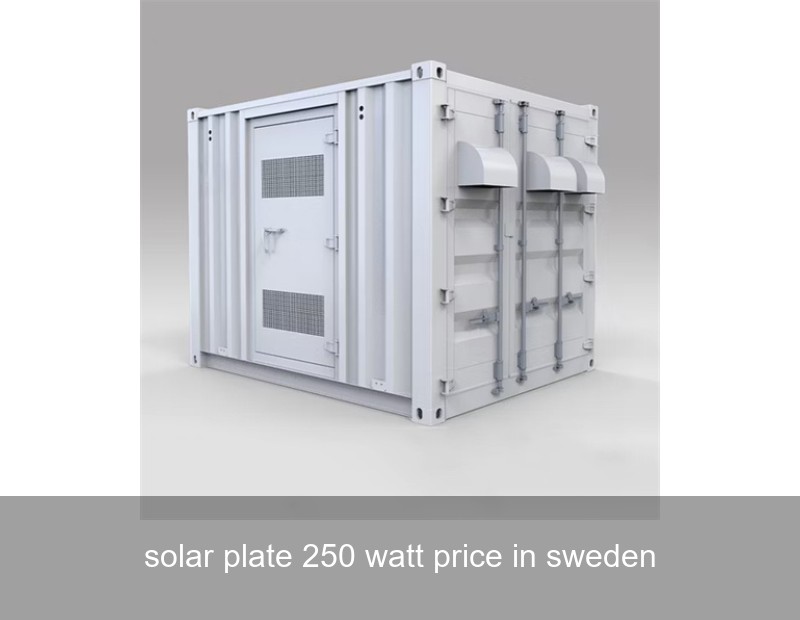
Thinking about investing in solar power in Sweden? You're likely encountering a key question: "What's the deal with solar panel 250 watt price in Sweden?" While the price per panel is a common starting point, the true value of your solar investment hinges on a much broader picture—system efficiency, long-term reliability, and the intelligence of the overall energy solution. In Sweden's unique climate, with its generous summer sun and energy-intensive dark winters, pairing solar panels with advanced battery storage isn't just an upgrade; it's becoming essential for maximizing self-consumption and energy independence. Let's break down the factors and explore how a holistic approach can deliver the best return on your investment.
Table of Contents
- Breaking Down the Solar Plate 250 Watt Price in Sweden
- The Real Cost: Looking Beyond the Panel Price Tag
- The Game Changer: Integrating Smart Battery Storage
- How Highjoule Complements Your Swedish Solar Investment
- Making an Informed Decision for Your Home
Breaking Down the Solar Plate 250 Watt Price in Sweden
The quoted price for a 250-watt solar panel in Sweden can vary, typically ranging between 800 to 1,500 SEK per panel, depending on the brand (premium vs. standard), technology (monocrystalline vs. polycrystalline), and supplier. However, this is merely the component cost. The total installed cost of a residential solar photovoltaic (PV) system in Sweden averaged around 15,000 to 25,000 SEK per kilowatt-peak (kWp) before subsidies in recent years. A system using 250-watt panels would require more panels and potentially higher balance-of-system costs for the same total capacity compared to using higher-wattage modern panels.
It's crucial to consider that the market has largely moved towards higher-efficiency panels in the 350W to 450W+ range. While 250W panels might be available at a lower unit cost, a system built with them may require more roof space, more mounting hardware, and more labor for installation. The Swedish Energy Agency provides valuable data on energy trends and can be a resource for understanding the broader context of solar adoption.
Key Cost Components of a Solar PV System
| Cost Component | Description | Approximate Share of Total Cost |
|---|---|---|
| Solar Panels | The modules themselves (e.g., 250W panels). | 25-35% |
| Inverter(s) | Converts DC solar power to AC for home use. | 10-15% |
| Mounting System & Hardware | Rails, brackets, and fasteners for roof installation. | 10-15% |
| Installation Labor | Professional design, installation, and electrical work. | 15-25% |
| Planning, Permits & Grid Connection | Administrative costs and grid fee. | 5-10% |
| Battery Storage (Optional but Recommended) | Stores excess solar energy for use at night or during low production. | Varies significantly; a critical add-on. |
The Real Cost: Looking Beyond the Panel Price Tag
Focusing solely on the "solar plate 250 watt price" is like buying a car based only on the cost of the seats. The long-term performance and financial benefits are determined by the entire system's quality and its synergy with your energy consumption patterns. In Sweden, where winter days are short, the summer surplus is golden. Without a way to store it, a significant portion of your clean, free energy is fed back to the grid at a lower price than you buy it for later. This is the phenomenon of low self-consumption that can dampen your ROI.
Data from energy analysts consistently shows that adding storage can increase a household's self-consumption of solar electricity from 30-50% to 70-90%. This directly shields you from rising electricity prices, a concern for many in Europe and the US. The real metric to discuss with your installer is the levelized cost of energy (LCOE) for your system over its 25+ year lifespan, factoring in storage, not just the upfront panel cost.

Image Source: Unsplash. A modern solar installation on a Swedish home.
Case Study: A Swedish Family's Journey to Energy Independence
Let's look at a real-world example. The Nilsson family in Västerås installed a 6 kWp solar PV system in early 2022 using higher-wattage panels. Their initial monitoring showed they were exporting over 60% of their July production back to the grid. While beneficial, they wanted to maximize their own use. In 2023, they decided to integrate a battery storage system.
- Before Storage: Annual self-consumption rate: ~38%. They still purchased significant power from the grid during evenings and winter.
- After Storage: They installed a modular 10 kWh lithium iron phosphate (LiFePO4) battery system. Their self-consumption rate jumped to 85% in the first year post-installation.
- Financial Impact: Their calculated payback period for the combined system improved by 2 years compared to solar alone, thanks to avoiding peak-time electricity purchases and utilizing more of their own production. They also gained crucial backup power during grid outages.
This case, echoed by studies from institutions like the International Energy Agency (IEA), highlights that the endpoint isn't just panels on the roof; it's a resilient, intelligent energy ecosystem for the home.
The Game Changer: Integrating Smart Battery Storage
This is where the conversation evolves. A battery energy storage system (BESS) acts as the heart of your modern home energy system. It stores the excess energy your "solar plates" produce during sunny hours. But not all storage is created equal. Key considerations for the Swedish homeowner include:
- Battery Chemistry: LiFePO4 batteries are increasingly favored for home use due to their long cycle life, safety, and excellent performance across a wide temperature range—a perfect fit for Swedish seasons.
- Modularity & Scalability: Can you start with a smaller capacity and expand later as your needs grow or EV charging demands increase?
- System Intelligence: Can the system learn your habits, weather forecasts, and electricity price signals to optimize charging and discharging automatically?
This intelligent management is what transforms a simple battery into a true asset, turning your home into a proactive participant in the energy market.
How Highjoule Complements Your Swedish Solar Investment
At Highjoule, we understand that the journey doesn't end with solar procurement. As a global leader in advanced energy storage solutions since 2005, we provide the critical piece that unlocks the full potential of your solar investment. Our expertise is not in manufacturing solar panels, but in designing and delivering the intelligent storage systems that make every kilowatt-hour you generate more valuable.
For residential applications in markets like Sweden and the US, our HomePower Series offers scalable, smart LiFePO4 battery solutions. These systems seamlessly integrate with leading solar inverters, featuring:
- Adaptive AI Software: Our system learns and predicts energy patterns to maximize self-consumption and can be set to capitalize on variable electricity tariffs.
- Robust Design for Diverse Climates: Engineered to operate reliably in the temperature variations typical of the Nordic region and North America.
- Modular Design: Start with a base capacity and expand your storage as needed, protecting your initial investment.
- Integrated Safety: Built with multiple layers of protection for complete peace of mind.

Image Source: Unsplash. A clean, wall-mounted home battery storage unit.
For commercial, industrial, and microgrid applications, Highjoule's solutions scale accordingly, ensuring businesses can stabilize energy costs, participate in demand response, and enhance their sustainability credentials. Our systems are designed to be the brain and buffer for renewable energy generation worldwide.
Making an Informed Decision for Your Home
So, when you're researching "solar plate 250 watt price in Sweden," use it as a stepping stone. Engage with certified, reputable installers who can provide a holistic analysis. Ask them not just for a panel quote, but for a comprehensive home energy system design that includes:
- An assessment of your annual energy consumption.
- Simulated solar production for your location and roof orientation.
- A proposal for an appropriately sized solar array (likely using modern, higher-wattage panels).
- A detailed analysis of the added value and ROI of integrating a smart battery storage system, like those from Highjoule.
Request a side-by-side financial model comparing solar-only vs. solar-plus-storage over 10-15 years. The right partner will be eager to have this conversation.
Ready to Explore Your Potential?
What would a day look like for your household if you could store the midday sun to power your evening, charge your EV overnight, and have a reliable backup during the next grid interruption? The technology to make this a reality is here and proven. We invite you to look beyond the price tag of a single component and envision the complete energy solution your home deserves.
 Inquiry
 Online Chat