


Understanding the 4 Battery Solar BESS Price: A Smart Investor's Guide
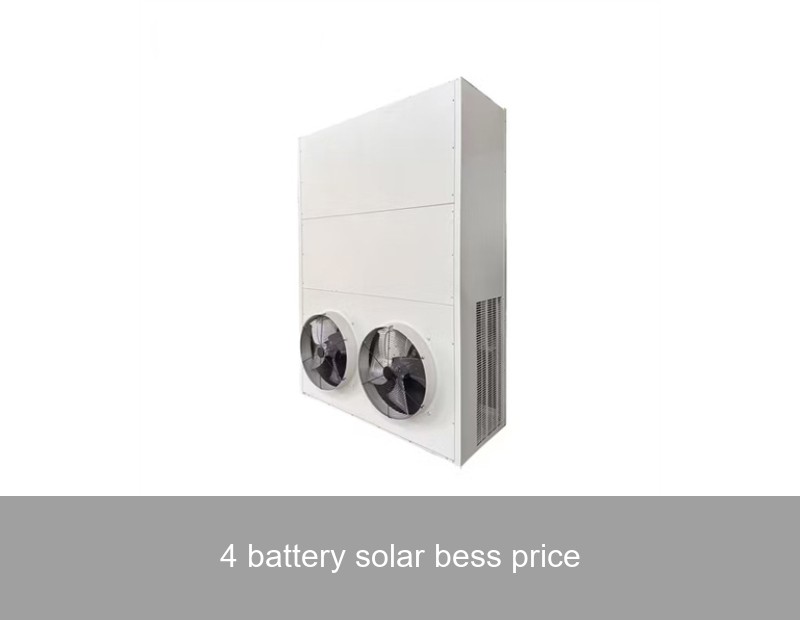
As a homeowner or business leader exploring solar power, you've likely encountered a crucial term: Battery Energy Storage System (BESS). The promise of energy independence is compelling, but a key question often arises: "What's the real price for a 4 battery solar BESS setup, and is it worth it?" The quoted price is just one piece of the puzzle. True cost encompasses technology, longevity, and the intelligence of the system. In this guide, we'll demystify the factors influencing the 4 battery solar BESS price and how to evaluate value beyond the initial sticker shock.
Table of Contents
The Solar + Storage Price Puzzle: More Than Just Batteries
You see a headline price for a "4 battery system," but what does it actually include? Often, the advertised figure might only cover the battery modules themselves. The total installed price of a functional 4 battery solar BESS integrates several critical components: the battery cells (chemistry and brand), the battery management system (BMS), the hybrid inverter, thermal management, safety systems, and professional installation & software commissioning. Think of it like buying a car—the engine price is separate from the chassis, transmission, and onboard computer. A low upfront cost for inferior components can lead to higher long-term costs through reduced efficiency, shorter lifespan, or lack of support.

Image Source: Unsplash - A professional BESS installation is key to safety and performance.
The 4 Key Factors Driving Your BESS Price
Let's break down the core elements that determine the final 4 battery solar BESS price.
1. Battery Chemistry & Performance
Lithium-ion is the standard, but not all Li-ion is equal. Lithium Iron Phosphate (LFP) has become the dominant chemistry for stationary storage due to its superior safety, longer cycle life (often 6,000+ cycles), and stability, though it may have a slightly higher upfront cost than older NMC chemistries. The cycle life directly impacts your levelized cost of storage (LCOS)—the true cost per kWh used over the system's life.
2. System Capacity & Power Rating
"4 battery" typically refers to capacity, often in the 20-40 kWh range, suitable for whole-home backup or significant commercial load shifting. However, the power rating (in kW) determines how much electricity you can draw at once. A 20 kWh system with a 5 kW inverter cannot run a 10 kW appliance. You need both sufficient capacity (kWh) and power (kW).
3. Intelligence & Integration (The "Brain")
This is where value truly diverges. A basic system stores and discharges. An intelligent system, like those developed by Highjoule, forecasts energy production and consumption, integrates with utility rate schedules for automated peak shaving, and can participate in grid services. This software intelligence can generate revenue or savings that substantially offset the 4 battery solar BESS price.
4. Installation, Grid Compliance & Aftercare
Permitting, certified electrical work, and grid interconnection approvals vary by region (like U.S. grid codes or EU market rules). A reputable provider includes this expertise. Highjoule, with nearly two decades of global experience, provides turn-key solutions that ensure seamless, compliant integration and long-term performance monitoring.
| Component | Cost Contribution | Why It Matters |
|---|---|---|
| Battery Modules (LFP, ~30 kWh) | ~40-50% | Core energy reservoir; defines cycle life and safety. |
| Hybrid Inverter & BMS | ~25-30% | The "heart and brain"; manages power flow and health. |
| Installation & Hardware | ~15-20% | Safety, compliance, and system longevity depend on it. |
| Smart Energy Management Software | ~5-10% | Unlocks financial returns via optimization. |
Case Study: A California Business Cracks the Price-Value Code
Let's look at real data. A mid-sized craft brewery in San Diego, California, faced rising demand charges and unreliable grid power during fire season. Their goal: reduce operational costs and ensure production continuity.
- Challenge: High peak demand charges, $18,000+ annual energy cost vulnerability.
- Solution: A Highjoule IntelliStack Commercial BESS (4 battery cabinet configuration, 42 kWh capacity, 21 kW power) integrated with existing solar.
- Intelligence in Action: The system's AI-driven platform learned the brewery's load patterns and California's (CPUC) utility rate structure. It automatically stored solar energy and strategically discharged during peak price periods (4-9 pm).
- Result: The system achieved a 28% reduction in monthly demand charges and provided full backup for critical refrigeration. The 4 battery solar BESS price was offset by an estimated payback period of under 5 years, not including state incentive (SGIP) rebates which accelerated it further. The ROI was calculated not just on equipment cost, but on avoided losses and operational savings.

Image Source: Unsplash - Commercial operations like breweries benefit greatly from solar BESS for cost control.
The Highjoule Approach: Engineering Value into Every System
At Highjoule, we view the 4 battery solar BESS price as an investment in a resilient, efficient energy asset. Our products, like the Highjoule HomePower and IntelliStack Commercial Series, are built with this philosophy. We use premium LFP cells, coupled with our proprietary Adaptive BMS that extends battery life by actively managing cell balance and temperature. Our GridSync™ inverter technology ensures flawless integration with both solar arrays and the grid.
More importantly, the value is unlocked through our EnergyOS platform. This cloud-based intelligence doesn't just monitor—it optimizes. For our European and North American customers, it can automatically adjust to dynamic pricing (like the UK's Octopus Agile or Texas' ERCOT markets), participate in virtual power plant (VPP) programs for additional income, and provide detailed analytics on your energy ecosystem. This transforms a static storage unit into a dynamic financial tool.
Future-Proofing Your Investment
The energy landscape is shifting rapidly. With the rise of electric vehicles and heat pumps, home and business energy demands are increasing. When evaluating a 4 battery solar BESS price, consider modularity. Can you easily add more capacity later? Highjoule systems are designed for scalable expansion. Also, consider software updates—will your system's intelligence evolve with new market opportunities? Our EnergyOS receives regular updates to leverage new utility programs and maximize owner revenue.
Finally, look at warranties and company longevity. A 10-year warranty on a battery that degrades significantly after year 5 offers little value. Highjoule stands behind its products with robust, transparent performance warranties, backed by nearly 20 years of industry leadership. We ensure your system delivers on its promised value for its entire lifespan.
Ready to Move Beyond Sticker Price?
The conversation shouldn't end at "how much does a 4 battery system cost?" The more pertinent question is: "What is the long-term value and return I can expect from a smart, integrated energy storage solution for my specific needs?" What energy cost problem are you most eager to solve—peak shaving, backup power, or maximizing your solar self-consumption?
 Inquiry
 Online Chat