


Battery Energy Storage System Fire: Understanding Risks and Building Trust in Clean Energy
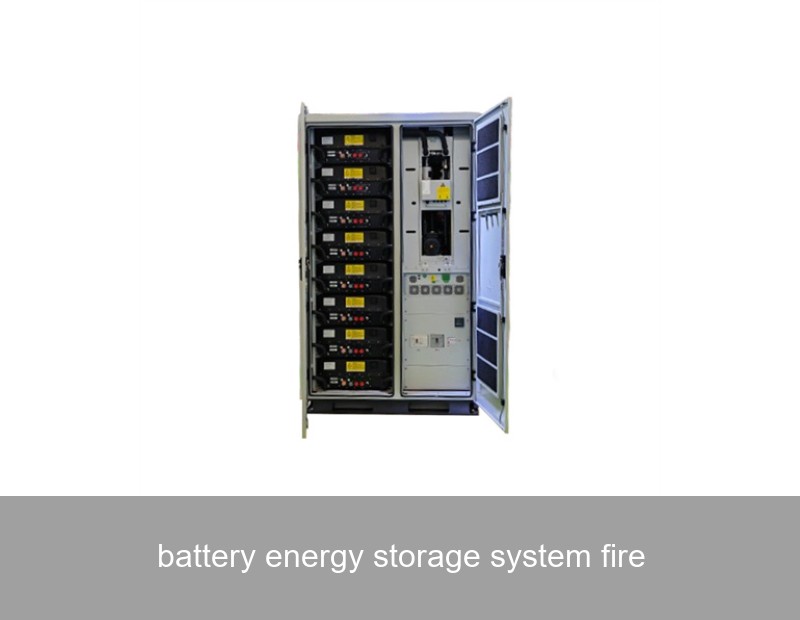
Let's be honest: the phrase "battery energy storage system fire" is a headline grabber. It sparks concern, and rightly so. As a society investing heavily in renewable energy and grid resilience, we're deploying more battery storage than ever. But with this growth comes a critical responsibility to address safety head-on. The conversation isn't about fearmongering; it's about smart, transparent engineering. The goal isn't just to store energy—it's to do so with unwavering reliability and safety. At Highjoule, with nearly two decades of experience powering homes, businesses, and microgrids globally, we believe that true sustainability is built on a foundation of trust, and trust is earned through demonstrable safety.
The Data Behind the Flames: How Common Are BESS Fires?
First, some crucial perspective. While any fire is one too many, large-scale battery energy storage system fires are statistically rare events. Research from the Electric Power Research Institute (EPRI) indicates that the frequency of significant fire incidents in grid-scale BESS is low, especially when compared to the vast and growing fleet of operational systems. However, the potential severity of such events means the industry cannot be complacent.
Think of it like aviation: plane crashes are extremely rare, but the entire industry is built around relentless, multi-layered safety protocols. The BESS industry is on a similar journey. The key is to move from seeing fires as shocking anomalies to understanding their root causes and designing systems that prevent them. The primary technical culprits often trace back to a process called thermal runaway.
- Thermal Runaway: This is a chain reaction within a lithium-ion cell. If a cell is damaged, defective, or overheats, it can start to decompose internally, releasing more heat. This heat spreads to neighboring cells, causing them to overheat and fail, propagating the reaction through the entire module or rack.
- Contributing Factors: This process can be triggered by manufacturing defects, mechanical damage (like from an impact), electrical abuse (overcharging, short circuits), or exposure to extreme external heat.
- The Challenge: Once initiated, thermal runaway can be difficult to stop. It produces its own oxygen and flammable gases, making traditional firefighting methods less effective.

Image Source: Unsplash (Representative image of battery system inspection)
A Real-World Case Study: Lessons from the Arizona Incident
To move from theory to reality, one of the most instructive incidents occurred at the McMicken Battery Energy Storage System in Arizona, USA, in 2019. A detailed investigation report by the utility APS provided critical data and lessons for the global industry.
| Factor | Detail |
|---|---|
| System Size | 2 MW / 2 MWh (Lithium-ion) |
| Trigger | Internal cell defect leading to thermal runaway. |
| Propagation | Fire spread from one cell to the entire rack within seconds, and eventually to the entire container. |
| Critical Finding | Explosive gas mixture built up inside the container and ignited, causing significant damage. |
| Industry Impact | Led to major revisions in codes (like NFPA 855) emphasizing gas detection, ventilation, and spatial separation. |
This case wasn't just a failure; it was a catalyst. It proved that safety couldn't be an afterthought. It highlighted the need for continuous gas monitoring, advanced ventilation systems, and physical barriers (both between cells and between containers) to contain any single event. The response wasn't to abandon BESS technology, but to engineer it smarter. This is precisely the philosophy we've embedded in Highjoule's design and manufacturing process since our inception in 2005.
Beyond the Cell: A Multi-Layered Safety Philosophy
Preventing a battery energy storage system fire requires a "Swiss Cheese" model of defense, where multiple layers of protection ensure that if one fails, another stops the hazard. This philosophy moves from the cell level all the way to system-wide intelligence.
Layer 1: Cell & Module Design
It starts with the chemistry and packaging. While Highjoule works with various premium cell providers, we prioritize chemistries with higher inherent thermal stability. Our module design includes robust mechanical housing, integrated thermal fuses, and current interrupt devices that act as "circuit breakers" at the cell level.
Layer 2: Advanced Battery Management System (BMS)
This is the brain of the system. Our proprietary BMS doesn't just monitor voltage and temperature; it uses predictive algorithms to detect subtle voltage imbalances and temperature gradients that hint at future problems. It can proactively isolate a underperforming string or module long before it becomes a hazard.
Layer 3: Integrated Thermal Management
Passive air cooling is often insufficient for large-scale storage. Highjoule systems feature closed-loop, liquid-based thermal management that maintains a precise, uniform temperature across all cells, drastically reducing stress and the risk of thermal runaway initiation.
Layer 4: Physical Compartmentalization & Detection
We design our containerized solutions, like our Highjoule GridMax Industrial Series, with fire-rated barriers between racks. Combined with early detection systems—including not just smoke and heat sensors, but also volatile organic compound (VOC) and hydrogen gas detectors—we can identify off-gassing, the earliest sign of cell failure, and trigger ventilation and isolation protocols immediately.

Image Source: Unsplash (Representative image of modern BESS installation)
The Highjoule Approach: Engineering Safety from the Inside Out
Our experience across European, North American, and global markets has taught us that safety is not a checkbox, but a culture. For our commercial and industrial clients, this means:
- Pre-Installation Risk Assessment: Our team works with you to evaluate site-specific risks, ensuring proper spacing, ventilation, and emergency access are part of the blueprint.
- Compliance as a Baseline: Our systems are engineered to meet and exceed the latest international standards, including UL 9540, IEC 62619, and the evolving NFPA 855 code.
- Remote Monitoring & Proactive Service: Safety doesn't end at commissioning. Our Highjoule EnergyOS platform allows for 24/7 remote monitoring of every critical safety parameter. We don't just alert you to anomalies; our technical experts often identify and recommend preventative maintenance before you're even aware of a potential issue.
This holistic approach transforms the battery energy storage system from a potential liability into a resilient, trusted asset on your property or grid.
The Future of BESS Safety: What's Next?
The industry is innovating rapidly. We're seeing developments in solid-state batteries that promise even greater thermal stability. Advanced fire suppression systems that flood modules with non-conductive, cooling aerosols are becoming more effective. Furthermore, AI-driven analytics are moving from predictive maintenance to true prescriptive safety, advising operators on optimal charge/discharge cycles to maximize both battery life and safety margins.
At Highjoule, we are actively integrating these advancements. But the core principle remains: safety must be designed in, not added on. It requires a partnership between manufacturer, installer, operator, and first responders.
So, as you consider integrating a battery energy storage system into your home, business, or community microgrid, what specific safety protocols and design features will you demand from your provider to ensure your investment is not only green but also genuinely secure for the long term?
 Inquiry
 Online Chat