


Finding the Right 40 kWh Battery for Sale: Your Guide to Intelligent Energy Storage
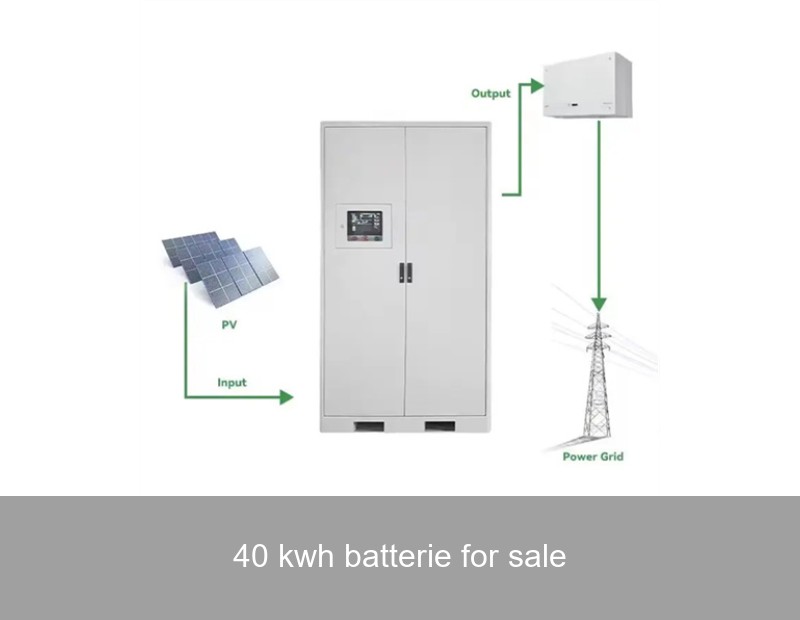
You're likely here because you've heard the buzz about energy independence, or you've seen your utility bills climb one too many times. Perhaps you're a business owner looking to lock in energy costs, or a homeowner with solar panels wanting to maximize every sunbeam. The search for a "40 kWh battery for sale" is more than just shopping for equipment; it's about investing in a new relationship with power. A 40 kWh capacity sits in that sweet spot—substantial enough to power a typical home for a full day or more, or to provide critical backup and load-shifting for small to medium businesses. But not all batteries are created equal. Let's navigate the key considerations together, moving from the basic need to the smart, long-term solution.
Table of Contents
- Understanding the 40 kWh Capacity: What Can It Really Power?
- Beyond Capacity: The Critical Factors in a Quality Battery System
- A Real-World Case: How a 40 kWh System Transformed a German Winery
- Choosing Your Partner: Why the System Provider Matters as Much as the Battery
- The Highjoule Solution: Intelligent Storage Built for Your Needs
- Your Energy Future: What's the First Step?
Understanding the 40 kWh Capacity: What Can It Really Power?
Think of kilowatt-hours (kWh) as the fuel tank of your battery. A 40 kWh battery holds energy, just as a 40-liter tank holds fuel. But what does that mean in practice? It's crucial to remember that usable capacity is often less than the total nameplate capacity due to built-in safeguards (like depth of discharge limits) that protect battery longevity.
For a typical American or European household consuming between 20-30 kWh per day, a 40 kWh system (with, say, 36 kWh usable) can cover a full day's consumption easily. This allows for:
- Full Self-Consumption of Solar: Store excess solar energy from midday to use in the evening and night, drastically reducing grid reliance.
- Reliable Backup Power: Keep essential loads—refrigeration, lighting, internet, heating systems—running through extended grid outages.
- Industrial & Commercial Applications: For a small workshop, farm, or retail store, it can shave peak demand charges (a significant portion of commercial bills) and provide uninterrupted power for critical processes.
| Application | How a 40 kWh Battery is Utilized |
|---|---|
| Residential with Solar | Time-shift solar energy, achieve 70-90% grid independence, provide backup. |
| Small Business | Peak shaving to reduce demand charges, backup for POS systems and refrigeration. |
| Microgrids / Remote Sites | Core storage component paired with diesel generators or renewables for stable off-grid power. |
Beyond Capacity: The Critical Factors in a Quality Battery System
Focusing solely on "40 kWh for sale" is like buying a car based only on fuel tank size. The engineering inside dictates performance, safety, and value.
- Battery Chemistry: Lithium Iron Phosphate (LFP) has become the dominant standard for stationary storage, and for good reason. It offers superior thermal and chemical stability, a longer cycle life (often 6,000+ cycles), and avoids the cobalt used in some other chemistries. It's the safe, durable choice for your home or business.
- Depth of Discharge (DoD): A battery with a 90% DoD means you can safely use 36 kWh of a 40 kWh unit. A lower DoD effectively reduces your usable, paid-for capacity.
- Round-Trip Efficiency: This measures how much energy you get out versus what you put in. A 95% efficient system loses less power as heat during charging/discharging, putting more of your solar or off-peak energy to work.
- Integrated Energy Management: This is the brain. A smart inverter and software can optimize your system for self-consumption, tariff arbitrage, or grid services, maximizing your financial return.

Image: Modern LFP battery modules are the cornerstone of safe, long-life residential and commercial storage systems. (Source: Unsplash)
A Real-World Case: How a 40 kWh System Transformed a German Winery
Let's move from theory to practice. Consider the case of a family-run winery in the Rhine Valley, Germany. Their challenges were twofold: volatile energy costs impacting production margins, and the need for flawless temperature control in their fermentation tanks and cellar—a single grid outage could ruin an entire vintage.
They installed a 40 kWh intelligent battery storage system, coupled with an existing 25 kW solar array. The system was configured for peak shaving and backup. Here are the results after one year:
- Demand Charge Reduction: By discharging the battery during periods of high simultaneous equipment use (e.g., cooling compressors + pumps), they reduced their peak grid draw by over 60%. This alone cut their overall electricity bill by nearly 30%.
- Solar Self-Consumption: Increased from 35% to over 85%, meaning they bought minimal electricity from the grid during high-price evening hours.
- Reliability: The system provided seamless backup power during two brief grid faults, maintaining perfect cellar conditions. The winery estimated this protected tens of thousands of euros in inventory.
This case illustrates that the value of a 40 kWh system extends far beyond simple storage; it's an active financial management and risk mitigation tool. (Data inspired by aggregated, anonymized project data from the Fraunhofer Institute for Solar Energy Systems).
Choosing Your Partner: Why the System Provider Matters as Much as the Battery
Purchasing a battery is not like buying a consumer appliance. It's a long-term investment integrated into your property's electrical system. The provider's expertise dictates the system's safety, performance, and longevity.
Key questions to ask: Do they offer comprehensive design and grid compliance support? What is the warranty term and what does it specifically cover (throughput, end-of-life capacity)? Do they provide remote monitoring and proactive maintenance? The right partner ensures your 40 kWh battery is a workhorse for decades, not a disposable gadget.
The Highjoule Solution: Intelligent Storage Built for Your Needs
At Highjoule, with nearly two decades of experience since 2005, we understand that a battery is just one component of a complete energy solution. Our HPS Series of modular storage systems is engineered around the robust LFP chemistry and is available in scalable configurations, including a high-performance 40 kWh solution perfect for the needs we've discussed.
What sets a Highjoule system apart is its Adaptive Energy OS. This intelligent platform doesn't just store and release energy; it learns your consumption patterns, integrates with local weather forecasts, and can respond to real-time grid signals (where available) to optimize for your specific goals—whether that's maximizing savings, ensuring backup readiness, or supporting community resilience.

Image: A seamlessly integrated home energy storage system, like those from Highjoule, provides clean, reliable power. (Source: Unsplash)
Our services extend from initial consultation and custom design through professional installation and lifelong system monitoring. We ensure your investment is compliant, optimized, and supported, whether for a residential property in California or an industrial facility in Bavaria.
Your Energy Future: What's the First Step?
The journey to energy resilience and control begins with a clear assessment. Before you search for a "40 kWh battery for sale," we encourage you to ask: What are my true energy goals—is it pure bill savings, absolute backup security, reducing my carbon footprint, or a combination? How does my current energy consumption and solar production profile look?
We invite you to share your primary motivation for exploring energy storage. Is there a specific concern about grid reliability in your area, or is a particular aspect of your electricity bill driving your search? Your insight will help shape the most effective solution.
 Inquiry
 Online Chat