


Understanding the 48 Lithium Battery Price: A Guide to Value in Energy Storage
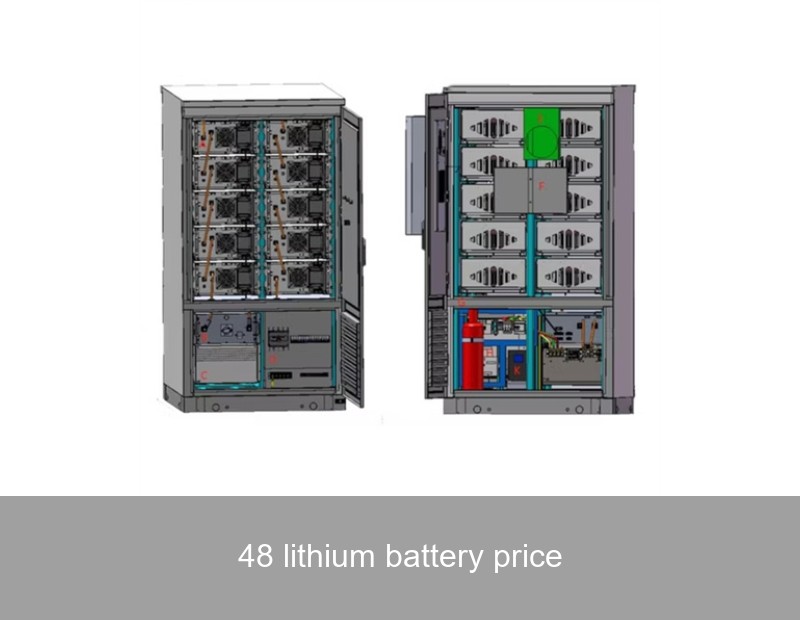
If you're researching energy storage for your home, business, or community project, you've likely encountered the term "48V lithium battery" and a dizzying array of prices. The initial quote for a 48 lithium battery price can be a point of sticker shock, or conversely, a tempting lure that raises questions about quality. But what are you really paying for? As a product technology expert at Highjoule, a global leader in advanced energy storage since 2005, I spend my days looking beyond the price tag to understand the true value—safety, longevity, and intelligence—that defines a superior battery system. Let's demystify the cost factors together.
Table of Contents
- The 48V Standard: Why It's the Backbone of Modern Storage
- Deconstructing the 48 Lithium Battery Price: Key Cost Drivers
- The Hidden Cost of Cheap Batteries: A Data-Driven Reality
- Case Study: A German Bakery's Recipe for ROI
- Highjoule's Approach: Engineering Value Beyond the Kilowatt-Hour
- Making an Informed Investment in Your Energy Future
The 48V Standard: Why It's the Backbone of Modern Storage
The 48-volt DC system has emerged as the sweet spot for residential and commercial energy storage. It strikes an optimal balance between efficiency, safety, and component cost. Higher voltages reduce current for the same power, meaning thinner, less expensive wiring and lower energy losses. At the same time, 48V is considered a safe low-voltage level in many regions, simplifying installation and compliance. Most modern inverters and hybrid solar systems are designed around this voltage, making 48V lithium battery banks the universal building block for everything from whole-home backup to sophisticated commercial peak-shaving applications.

Image: A modern 48V lithium-ion battery installation. Source: Unsplash (Representative image)
Deconstructing the 48 Lithium Battery Price: Key Cost Drivers
When you see a price, it's the sum of deeply engineered components and research. Let's break it down:
- Cell Chemistry & Quality: Not all lithium is equal. Lithium Iron Phosphate (LFP) cells, now the dominant choice for stationary storage, are inherently safer and longer-lasting than older NMC chemistries, but they come with a different material cost. Premium cells from tier-1 manufacturers ensure consistency and durability, directly impacting the upfront 48 lithium battery price.
- Battery Management System (BMS): This is the brain of the system. A sophisticated BMS doesn't just monitor voltage; it performs active cell balancing, precise state-of-charge calculation, thermal management, and safety interlocks. Investing in a high-grade BMS is investing in the battery's lifespan and safety.
- Energy Density & Scalability: Price is often quoted per kilowatt-hour (kWh). Systems with higher energy density (more kWh in a smaller space) use advanced cell packaging and cooling, which adds to cost. Modular designs, like those in Highjoule's H-Series, allow you to start small and expand, offering long-term value.
- Integration & Intelligence: Can the battery communicate seamlessly with your solar inverters and home energy management system? Smart, integrated systems, such as Highjoule's platform, provide value through software updates, grid-service capabilities, and detailed energy analytics, which are factored into the total solution price.
The Hidden Cost of Cheap Batteries: A Data-Driven Reality
The market is flooded with options. A dangerously low 48 lithium battery price often signals critical compromises. According to a 2021 report by the National Renewable Energy Laboratory (NREL), the levelized cost of storage (LCOS)—the total cost of ownership over a system's life—is the most critical metric. A cheap battery with a 3-year warranty and 2,000-cycle life will have a far higher LCOS than a premium battery with a 10-year warranty and 6,000+ cycle life.
| Cost Factor | Budget Battery | Premium Battery (e.g., Highjoule H-Series) |
|---|---|---|
| Warranty | 3-5 years | 10+ years |
| Expected Cycle Life | 2,000 - 3,000 | 6,000+ |
| BMS Complexity | Basic monitoring | Active balancing, thermal management, grid-support ready |
| Software & Support | Limited or none | Lifetime updates, monitoring platform, technical support |
Case Study: A German Bakery's Recipe for ROI
Let's look at a real example from Bavaria, Germany. A family-owned bakery with high electricity demand for ovens and refrigeration was facing steep time-of-use charges and grid connection fees. Their goal was to maximize solar self-consumption and reduce peak demand.
- Challenge: High peak demand charges, intermittent solar production.
- Solution: A 48V lithium battery system from Highjoule, sized at 50 kWh, integrated with their existing solar PV and a new smart inverter.
- Implementation: The system was configured for peak shaving and solar time-shift. The intelligent BMS and energy management system learned the bakery's load patterns, automatically discharging the battery during expensive peak periods and charging from excess solar or off-peak grid power.
- Result: Within the first year, the bakery reduced its peak demand from the grid by over 60%, cutting its monthly power bill by an average of 40%. The levelized cost of electricity from storage for this project is calculated to be below €0.15/kWh over the system's lifetime, making it more economical than drawing from the grid during peak times. The initial 48 lithium battery price was justified by a projected payback period of under 7 years, with well over a decade of additional savings ahead.

Image: Commercial solar installation, similar to a bakery project. Source: Unsplash (Representative image)
Highjoule's Approach: Engineering Value Beyond the Kilowatt-Hour
At Highjoule, we don't just sell batteries; we deliver intelligent, integrated power solutions. Our products, like the H-Series Commercial and Residential energy storage systems, are built around the 48V architecture but are engineered for a 20-year design life. We use automotive-grade LFP cells and a proprietary, multi-layer BMS that is UL 9540A certified for safety. What does this mean for you?
- Future-Proof Software: Our cloud-based platform turns your battery into a dynamic grid asset, potentially enabling revenue through future grid-service programs.
- Scalable Design: Start with what you need and add modules as your needs grow, protecting your initial investment.
- Global Support: With a presence in Europe and North America, we provide localized technical support and warranty service, a critical factor often omitted from the online 48 lithium battery price.
Beyond the Battery: Highjoule's Ecosystem
For a complete solution, we offer integrated system design, pairing our storage with compatible solar inverters and our own energy management gateways. For microgrid and large-scale industrial applications, our containerized Megapack solutions provide utility-scale power in a plug-and-play format. This holistic approach ensures every component works in harmony, maximizing efficiency and reliability.
Making an Informed Investment in Your Energy Future
So, when you evaluate a 48 lithium battery price, I encourage you to shift the question. Instead of asking "What does it cost?" start asking "What is its value over time?" and "What risks does it mitigate?" Request detailed specifications on cycle life, warranty terms, and BMS functionality. Ask for case studies or projected LCOS calculations from your provider.
Your energy storage system is a long-term partner in resilience and savings. What specific energy challenge—be it unpredictable bills, frequent outages, or a desire for true energy independence—is leading you to consider this investment today, and how can we help you model its true lifetime value?
 Inquiry
 Online Chat