


How Much Sine Wave Energy Does Your Home or Business Actually Need?
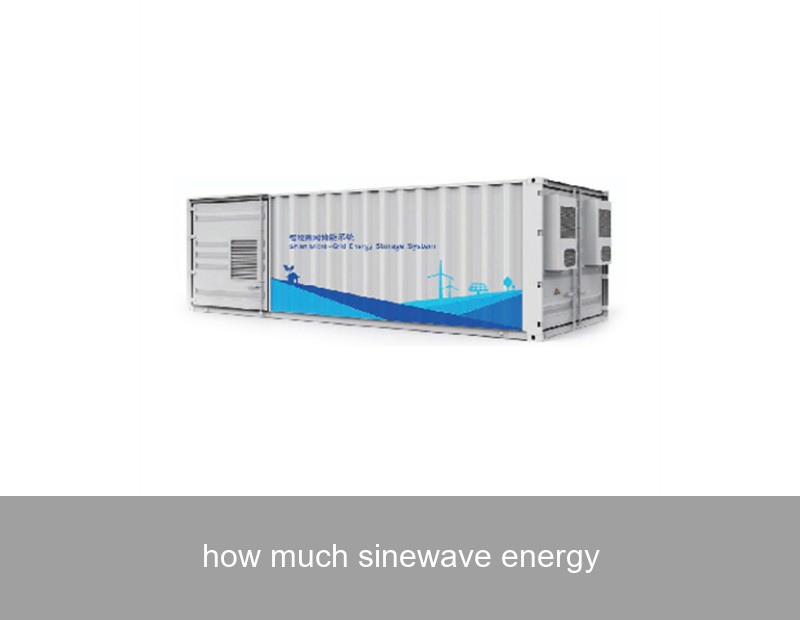
You've likely heard that "pure sine wave" is the gold standard for power from your inverter or energy storage system. But when it comes to powering your life with renewable energy, a crucial question emerges: how much sine wave energy is necessary for reliable, efficient, and safe operation? This isn't just about technical specs; it's about understanding the quality of power required to protect your appliances, maximize your energy independence, and ensure your investment delivers. Let's demystify the power behind the plug.
Table of Contents
- What is Sine Wave Energy and Why Does Its "Purity" Matter?
- Measuring Your Need: The Appliance Audit
- Case Study: A German Bakery's Recipe for Reliable Power
- Beyond Watts: Surge Power, Efficiency, and System Longevity
- The Highjoule Solution: Smart Energy Storage Built for Real Needs
- What's Your Energy Profile?
What is Sine Wave Energy and Why Does Its "Purity" Matter?
Think of the electricity from the utility grid as a perfectly smooth, continuous wave—a pure sine wave. This smooth flow is what sensitive electronics, variable-speed motors, and appliances with microprocessors (think modern refrigerators, DSLR camera chargers, or medical equipment) are designed to consume. They don't just need power; they need clean power.
Now, many basic inverters or low-cost backup systems output a "modified sine wave" (a blocky, stair-stepped approximation). While it might run a simple light bulb, it can cause:
- Audible buzzing in speakers, motors, and transformers.
- Excess heat generation in appliances, reducing their lifespan.
- Malfunctions or complete failure to operate in sensitive devices like laser printers, certain battery chargers, and Wi-Fi routers.
So, the question "how much sine wave energy do I need?" truly means: "What is the continuous and surge power capacity of pure sine wave output required to run everything I care about, safely and efficiently?" The answer lies in an audit of your energy lifestyle.

Image Source: Unsplash (Representative image of electrical infrastructure)
Measuring Your Need: The Appliance Audit
Determining your sine wave energy requirement is a practical exercise. You don't need to be an electrician, just a good observer. Focus on two key metrics for every device: Running Watts and Starting/Surge Watts.
| Appliance Category | Example Devices | Running Watts (Approx.) | Surge Watts (Crucial!) | Pure Sine Wave Critical? |
|---|---|---|---|---|
| Sensitive Electronics | Laptop, Wi-Fi Router, LED TV | 50-300W | Low | Yes - prevents damage |
| Kitchen Essentials | Refrigerator (modern), Espresso Machine | 150-800W | 3x Running Watts | Yes - for motors & controls |
| Motor-Driven Tools | Furnace Blower, Water Pump, Power Tools | 500-1500W | Up to 5x Running Watts | Yes - ensures efficient start |
| Heating/Cooling | Space Heater, Air Conditioner (small) | 1000-2000W | High (compressor start) | Recommended |
The Surge Power Secret: The biggest mistake is sizing a system only for running watts. A refrigerator needing 200W to run might require 600W for a second to start its compressor. Your sine wave energy system must cover this surge. For a typical European or US home seeking meaningful backup, the continuous pure sine wave output need often falls between 3kW to 8kW, with surge capabilities of 6kW to 15kW+.
Case Study: A German Bakery's Recipe for Reliable Power
Let's ground this in reality. A family-run bakery in Bavaria, Germany, faced frequent micro-outages disrupting their proofing chambers, electric ovens, and point-of-sale system. Their goal wasn't just off-grid living, but power quality and continuity.
- Challenge: Protect sensitive fermentation control electronics and ensure electric oven thermostats operated without fault during grid fluctuations.
- Solution: A detailed audit revealed a critical load need of 12kW continuous, with a 25kW surge for oven compressor and mixer motor starts. A modified sine wave inverter was not an option.
- Implementation: They installed a Highjoule H-Series Commercial Energy Storage System, configured for 15kW continuous / 30kW peak pure sine wave output. The system's advanced inverter technology ensures the precise voltage and frequency regulation needed for industrial equipment.
- Result: Zero production downtime due to power issues in the last 18 months. The bakery reports energy cost savings of ~22% through strategic peak shaving, and the consistent power has extended the service intervals for their mixing equipment. This case shows that "how much sine wave energy" is a business continuity question.

Image Source: Unsplash (Representative image of commercial bakery equipment)
Beyond Watts: Efficiency and System Longevity
Choosing a high-quality pure sine wave inverter isn't just about compatibility; it's about economics. A high-fidelity sine wave reduces "crossover distortion," which means appliances draw current more efficiently. This can translate to 5-10% lower energy consumption for motor loads compared to running on a modified sine wave. Over a decade, that savings compounds significantly.
Furthermore, the stress of a "dirty" power supply contributes to the gradual degradation of appliance insulation and components. By investing in sufficient, clean sine wave energy, you're also investing in the longevity of your connected devices—from your HVAC system to your home entertainment center.
The Highjoule Solution: Smart Energy Storage Built for Real Needs
At Highjoule, we engineer solutions that start with your actual power quality and quantity requirements. Our Residential H-Core and Commercial H-Series systems are built around advanced hybrid inverters that deliver premium pure sine wave output as standard. We don't cut corners on power quality because your appliances shouldn't have to either.
Our systems help you answer the "how much sine wave energy" question through:
- Intelligent Load Profiling: Our monitoring software helps identify your true continuous and surge demands before you install.
- Scalable Architecture: Start with what you need now. Our modular design allows you to increase both battery capacity and inverter output power later.
- Grid-Support Functionality: For markets like Germany and California with volatile grid prices, our systems can seamlessly blend solar, battery, and grid power to ensure you're always using the most economical and cleanest sine wave energy available, while always protecting your home's circuits with premium power quality.
We provide more than just a battery; we provide an integrated power quality management platform. For deeper insights into grid power quality issues, resources like the U.S. Department of Energy offer valuable context.
What's Your Energy Profile?
The journey to energy resilience and efficiency begins with understanding your unique profile. Have you considered which devices in your home would be most vulnerable to a "dirty" power supply? Or how a momentary surge demand during a storm might trip a less capable system, just when you need it most?
We invite you to look at your circuit breaker panel. Which circuits are essential? What's on them? That list is the first step to defining your personal or business answer to "how much sine wave energy" is truly needed. What would be the cost—in convenience, safety, or euros/dollars—of getting that answer wrong?
 Inquiry
 Online Chat